Philosopher
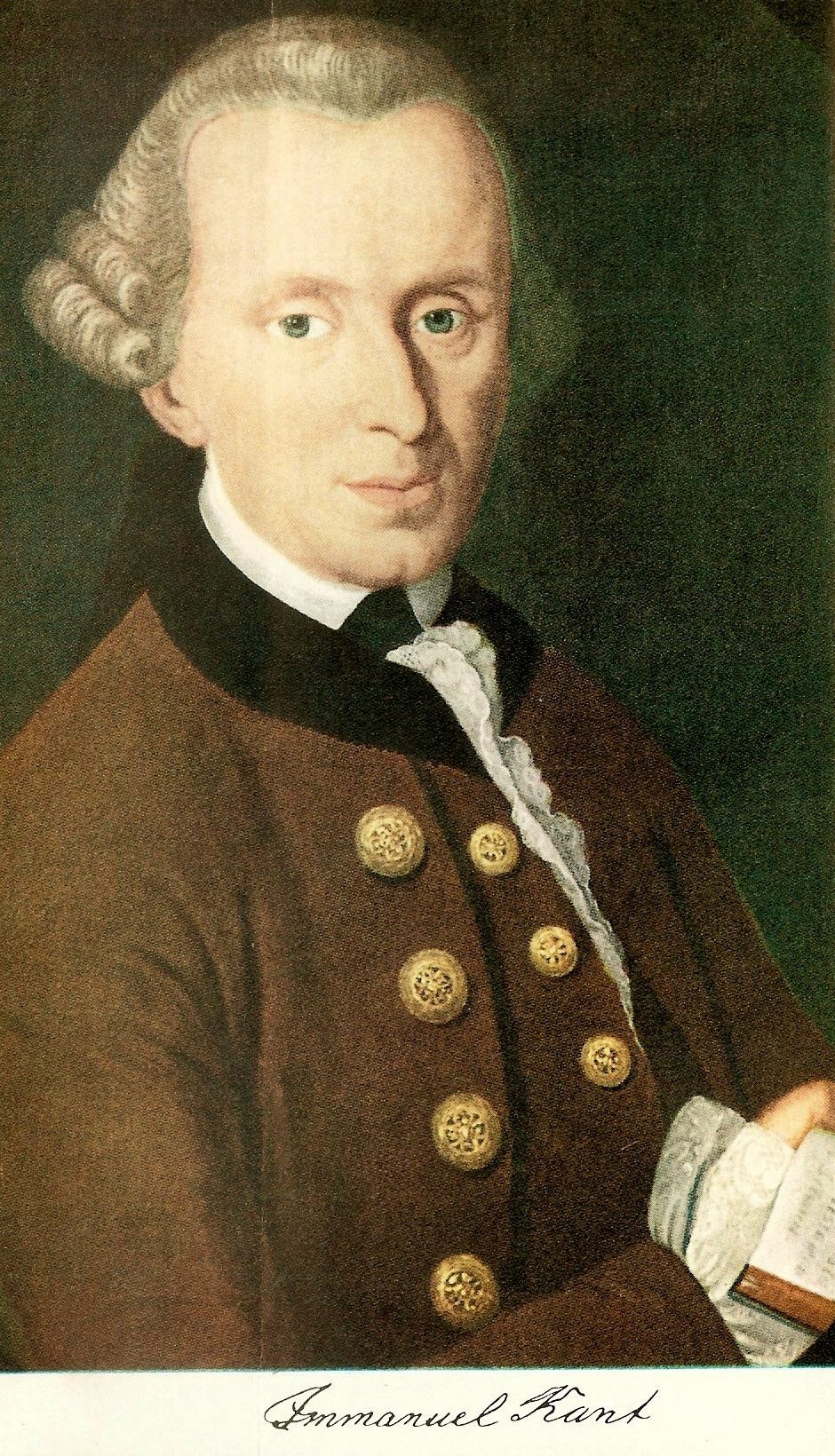
Immanuel Kant
1724–1804
Argued that the mind actively structures experience, reconciling rationalism and empiricism, and grounded morality in the rational will.

Act only on that maxim whereby thou canst at the same time will that it should become a universal law.
Two things fill the mind with ever new and increasing admiration and awe, the oftener and the more steadily we reflect on them: the starry heavens above and the moral law within.
Kant said that reading Hume woke him from his “dogmatic slumber”. In the Critique of Pure Reason he argued that space, time and categories such as causality are not learned from experience but are forms the mind itself brings to it — so we can have certain knowledge of the world as it appears to us, though not of things as they are in themselves.
In ethics he held that the moral law is one that reason gives itself: act only on principles that you could will to be universal laws.
Key ideas
- The Copernican revolution
- Some laws of nature, such as the rule that every event has a cause, can be known before experience, because the mind itself imposes them on what we experience. Objects must conform to our ways of knowing, not the other way round.
- Argues against David Hume’s Cause and effect
- Transcendental idealism
- Our knowledge reaches only to things as they appear to us. Things in themselves, as they are independently of the human mind, exist but can’t be known by us.
- The categorical imperative
- Morality rests on a single fundamental principle. An action is permissible only if its maxim, the policy behind it, is one we could will everyone to follow. The test isn’t whether we’d like everyone to act that way.
- Autonomy
- The general laws of nature have their source in the human understanding, and the moral law in reason’s legislation for itself. Kant argued that science, morality and religious belief all rest on this foundation of autonomy.
- Morality and freedom
- Morality and freedom go together: acting morally is acting freely, and we are fully free only when we act morally, from the recognition that an action is required, not merely from desire.
- Tradition
- Western
- Region
- Königsberg, Prussia
- Period
- Early modern
Influences
Influenced by
- Gottfried Wilhelm Leibniz1646–1716criticised
- George Berkeley1685–1753
- David Hume1711–1776criticised
- Jean-Jacques Rousseau1712–1778
- Moses Mendelssohn1729–1786criticised
Immanuel Kant1724–1804
Influenced
1400 – 1800
1800 – 1900
- Charles Sanders Peirce1839–1914critic
- Hermann Cohen1842–1918
- William James1842–1910
- Friedrich Nietzsche1844–1900critic
- Henri Bergson1859–1941critic
- Bertrand Russell1872–1970critic
- G. E. Moore1873–1958critic
- Zhang Junmai1887–1969
- Martin Heidegger1889–1976critic
- Rudolf Carnap1891–1970critic
1900 onwards
- Theodor W. Adorno1903–1969critic
- Hannah Arendt1906–1975
- Simone de Beauvoir1908–1986
- Mou Zongsan1909–1995critic
- Simone Weil1909–1943critic
- Iris Murdoch1919–1999critic
- John Rawls1921–2002
- Jean-François Lyotard1924–1998
- Gilles Deleuze1925–1995
- Michel Foucault1926–1984
- Lao Sze-kwang1927–2012
- Bernard Williams1929–2003critic
- Jürgen Habermas1929–2026
- Robert Nozick1938–2002
- Jean-Luc Nancy1940–2021
- Slavoj Žižekborn 1949critic
Influenced by
- Gottfried Wilhelm Leibniz1646–1716criticised
- George Berkeley1685–1753
- David Hume1711–1776criticised
- Jean-Jacques Rousseau1712–1778
- Moses Mendelssohn1729–1786criticised
Immanuel Kant1724–1804
Influenced
1400 – 1800
1800 – 1900
- Charles Sanders Peirce1839–1914critic
- Hermann Cohen1842–1918
- William James1842–1910
- Friedrich Nietzsche1844–1900critic
- Henri Bergson1859–1941critic
- Bertrand Russell1872–1970critic
- G. E. Moore1873–1958critic
- Zhang Junmai1887–1969
- Martin Heidegger1889–1976critic
- Rudolf Carnap1891–1970critic
1900 onwards
- Theodor W. Adorno1903–1969critic
- Hannah Arendt1906–1975
- Simone de Beauvoir1908–1986
- Mou Zongsan1909–1995critic
- Simone Weil1909–1943critic
- Iris Murdoch1919–1999critic
- John Rawls1921–2002
- Jean-François Lyotard1924–1998
- Gilles Deleuze1925–1995
- Michel Foucault1926–1984
- Lao Sze-kwang1927–2012
- Bernard Williams1929–2003critic
- Jürgen Habermas1929–2026
- Robert Nozick1938–2002
- Jean-Luc Nancy1940–2021
- Slavoj Žižekborn 1949critic
Where these links come from
- Immanuel Kant drew on and argued against Gottfried Wilhelm Leibniz. Source: Michael Rohlf, Immanuel Kant, Stanford Encyclopedia of Philosophy
- Immanuel Kant drew on George Berkeley. Source: Lisa Downing and David Hilbert, George Berkeley, Stanford Encyclopedia of Philosophy
- Immanuel Kant drew on and argued against David Hume. Source: Graciela De Pierris and Michael Friedman, Kant and Hume on Causality, Stanford Encyclopedia of Philosophy
- Immanuel Kant drew on Jean-Jacques Rousseau. Source: Michael Rohlf, Immanuel Kant, Stanford Encyclopedia of Philosophy
- Immanuel Kant argued against Moses Mendelssohn. Source: Daniel Dahlstrom, Moses Mendelssohn, Stanford Encyclopedia of Philosophy
- Salomon Maimon drew on and argued against Immanuel Kant. Source: Peter Thielke and Yitzhak Y. Melamed, Salomon Maimon, Stanford Encyclopedia of Philosophy
- G. W. F. Hegel drew on Immanuel Kant. Source: Paul Redding, Georg Wilhelm Friedrich Hegel, Stanford Encyclopedia of Philosophy
- Arthur Schopenhauer drew on and argued against Immanuel Kant. Source: Robert Wicks, Arthur Schopenhauer, Stanford Encyclopedia of Philosophy
- Charles Sanders Peirce drew on and argued against Immanuel Kant. Source: Robert Burch, Charles Sanders Peirce, Stanford Encyclopedia of Philosophy
- Hermann Cohen drew on Immanuel Kant. Source: Scott Edgar, Hermann Cohen, Stanford Encyclopedia of Philosophy
- William James drew on Immanuel Kant. Source: Russell Goodman, William James, Stanford Encyclopedia of Philosophy
- Friedrich Nietzsche drew on and argued against Immanuel Kant. Source: R. Lanier Anderson, Friedrich Nietzsche, Stanford Encyclopedia of Philosophy
- Henri Bergson argued against Immanuel Kant. Source: Leonard Lawlor and Valentine Moulard-Leonard, Henri Bergson, Stanford Encyclopedia of Philosophy
- Bertrand Russell argued against Immanuel Kant. Source: Andrew David Irvine, Bertrand Russell, Stanford Encyclopedia of Philosophy
- G. E. Moore argued against Immanuel Kant. Source: Tom Baldwin, George Edward Moore, Stanford Encyclopedia of Philosophy
- Zhang Junmai drew on Immanuel Kant. Source: Joseph Ciaudo, Zhang Junmai (Carsun Chang), Internet Encyclopedia of Philosophy
- Martin Heidegger drew on and argued against Immanuel Kant. Source: Mark Wrathall, Martin Heidegger, Stanford Encyclopedia of Philosophy
- Rudolf Carnap drew on and argued against Immanuel Kant. Source: Hannes Leitgeb and André Carus, Rudolf Carnap, Stanford Encyclopedia of Philosophy
- Theodor W. Adorno drew on and argued against Immanuel Kant. Source: Henry Pickford and Lambert Zuidervaart, Theodor W. Adorno, Stanford Encyclopedia of Philosophy
- Hannah Arendt drew on Immanuel Kant. Source: Tatjana Tömmel and Maurizio Passerin d’Entrèves, Hannah Arendt, Stanford Encyclopedia of Philosophy
- Simone de Beauvoir drew on Immanuel Kant. Source: Debra Bergoffen and Megan Burke, Simone de Beauvoir, Stanford Encyclopedia of Philosophy
- Mou Zongsan drew on and argued against Immanuel Kant. Source: Jason Clower, Mou Zongsan (Mou Tsung-san), Internet Encyclopedia of Philosophy
- Simone Weil drew on and argued against Immanuel Kant. Source: A. Rebecca Rozelle-Stone and Benjamin P. Davis, Simone Weil, Stanford Encyclopedia of Philosophy
- Iris Murdoch drew on and argued against Immanuel Kant. Source: Lawrence Blum, Iris Murdoch, Stanford Encyclopedia of Philosophy
- John Rawls drew on Immanuel Kant. Source: Leif Wenar, John Rawls, Stanford Encyclopedia of Philosophy
- Jean-François Lyotard drew on Immanuel Kant. Source: Peter Gratton, Jean François Lyotard, Stanford Encyclopedia of Philosophy
- Gilles Deleuze drew on Immanuel Kant. Source: Daniel Smith, John Protevi and Daniela Voss, Gilles Deleuze, Stanford Encyclopedia of Philosophy
- Michel Foucault drew on Immanuel Kant. Source: Gary Gutting and Johanna Oksala, Michel Foucault, Stanford Encyclopedia of Philosophy
- Lao Sze-kwang drew on Immanuel Kant. Source: Andrew Ka Pok Tam, Lao Sze-kwang (Lao Siguang), Internet Encyclopedia of Philosophy
- Bernard Williams argued against Immanuel Kant. Source: Sophie-Grace Chappell and Nicholas Smyth, Bernard Williams, Stanford Encyclopedia of Philosophy
- Jürgen Habermas drew on Immanuel Kant. Source: James Gordon Finlayson and Dafydd Huw Rees, Jürgen Habermas, Stanford Encyclopedia of Philosophy
- Robert Nozick drew on Immanuel Kant. Source: Edward Feser, Robert Nozick, Internet Encyclopedia of Philosophy
- Jean-Luc Nancy drew on Immanuel Kant. Source: Ignaas Devisch, Jean-Luc Nancy, Internet Encyclopedia of Philosophy
- Slavoj Žižek drew on and argued against Immanuel Kant. Source: Matthew Sharpe, Slavoj Žižek, Internet Encyclopedia of Philosophy
Key works
- Critique of Pure Reason (Kritik der reinen Vernunft), 1781
- Read free at Project Gutenberg (translated by J. M. D. Meiklejohn)
- Groundwork of the Metaphysics of Morals (Grundlegung zur Metaphysik der Sitten), 1785
- Read free at Project Gutenberg (translated by Thomas Kingsmill Abbott, as Fundamental Principles of the Metaphysic of Morals)
- Critique of Practical Reason (Kritik der praktischen Vernunft), 1788
- Read free at Project Gutenberg (translated by Thomas Kingsmill Abbott)
Sources
- Michael Rohlf, Immanuel Kant, Stanford Encyclopedia of Philosophy
- Graciela De Pierris and Michael Friedman, Kant and Hume on Causality, Stanford Encyclopedia of Philosophy
- Lisa Downing and David Hilbert, George Berkeley, Stanford Encyclopedia of Philosophy
- Daniel Dahlstrom, Moses Mendelssohn, Stanford Encyclopedia of Philosophy
- Crispin Sartwell, Beauty, Stanford Encyclopedia of Philosophy