Philosopher
Jean-François Lyotard
1924–1998
French philosopher whose The Postmodern Condition defined the postmodern as "incredulity towards metanarratives", and then asked what justice could mean without such grand stories.
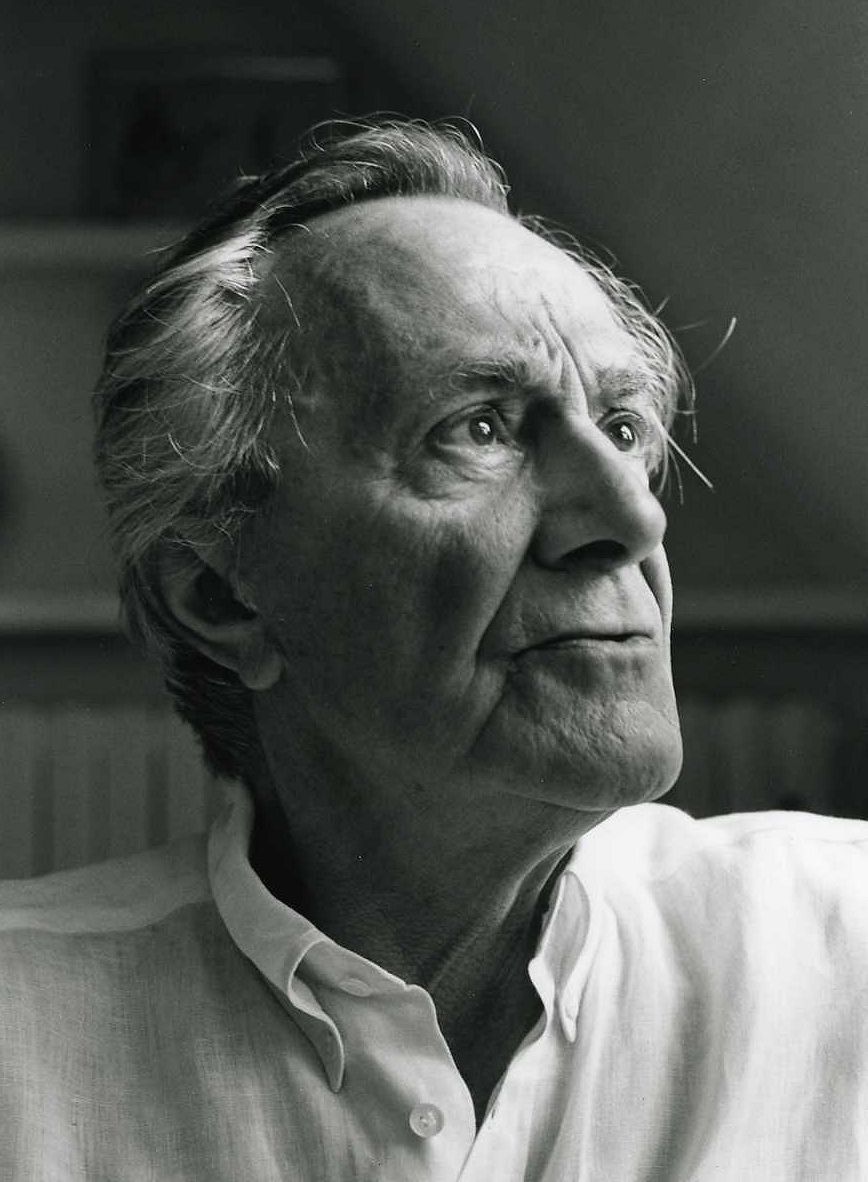

Jean-François Lyotard was born in Vincennes in 1924. After studying literature and philosophy at the Sorbonne, where he met Gilles Deleuze, he taught at a lycée in Constantine, in French Algeria, just as the war of independence began. There he read Marx closely, joined the radical group Socialisme ou Barbarie alongside Cornelius Castoriadis and Claude Lefort, and spent some fifteen years as a militant writer and editor.
His report on knowledge for the universities of Quebec, The Postmodern Condition (1979), brought the word “postmodernism” into philosophy, and to his frustration became the book he was known by; critics soon used the term to lump together thinkers who disagreed with one another. In The Differend (1983), his masterwork, he set out instead to think about justice after the grand narratives, without giving up the ability to name wrongs. He also wrote widely on art, aesthetics and the philosophy of science.
Key ideas
- Incredulity towards metanarratives
- Modern knowledge justified itself by appeal to grand stories, such as the progress of Spirit or the emancipation of the worker. The postmodern condition is the loss of faith in such stories, which leaves only smaller, local narratives in competition.
- The differend
- A differend is a conflict between parties that no shared rule can settle. Judging it by the rules of one side, as if it were an ordinary lawsuit, wrongs the other, and the colonised before the coloniser is one example.
- Justice without relativism
- The collapse of grand narratives is not licence for “anything goes”. Lyotard’s later work looks for a way of judging that respects the many incompatible kinds of discourse while still refusing, for instance, the denial of the Holocaust.
- The sublime and the event
- Drawing on Kant’s account of the sublime, he finds at the heart of all creation the question “is it happening?”: the mixed pleasure and terror of facing a blank page, canvas or silence where something new might, or might not, arrive.
- Tradition
- Western
- Region
- France and French Algeria
- Period
- Contemporary
- Themes
- Knowledge and scepticism
Influences
Influenced by
Jean-François Lyotard1924–1998
Influenced by
Jean-François Lyotard1924–1998
Where these links come from
- Jean-François Lyotard drew on Immanuel Kant. Source: Peter Gratton, Jean François Lyotard, Stanford Encyclopedia of Philosophy
- Jean-François Lyotard argued against G. W. F. Hegel. Source: Peter Gratton, Jean François Lyotard, Stanford Encyclopedia of Philosophy
- Jean-François Lyotard drew on Karl Marx. Source: Peter Gratton, Jean François Lyotard, Stanford Encyclopedia of Philosophy
- Jean-François Lyotard drew on Gilles Deleuze. Source: Peter Gratton, Jean François Lyotard, Stanford Encyclopedia of Philosophy
Key works
- Libidinal Economy, 1974
- The Postmodern Condition, 1979
- Just Gaming, 1979
- The Differend, 1983
Terms on this page
- differend
- Lyotard’s term for a conflict that cannot be settled fairly because no rule of judgement applies to both sides, so that judging by one side’s rules wrongs the other.
Sources
- Peter Gratton, Jean François Lyotard, Stanford Encyclopedia of Philosophy