Philosopher
Salomon Maimon
1753–1800
Also known as Solomon Maimon, Salomon ben Joshua
Lithuanian-born Jewish philosopher whose "sceptical rationalism" made him the critic Kant said understood him best, and whose objections shaped German Idealism.
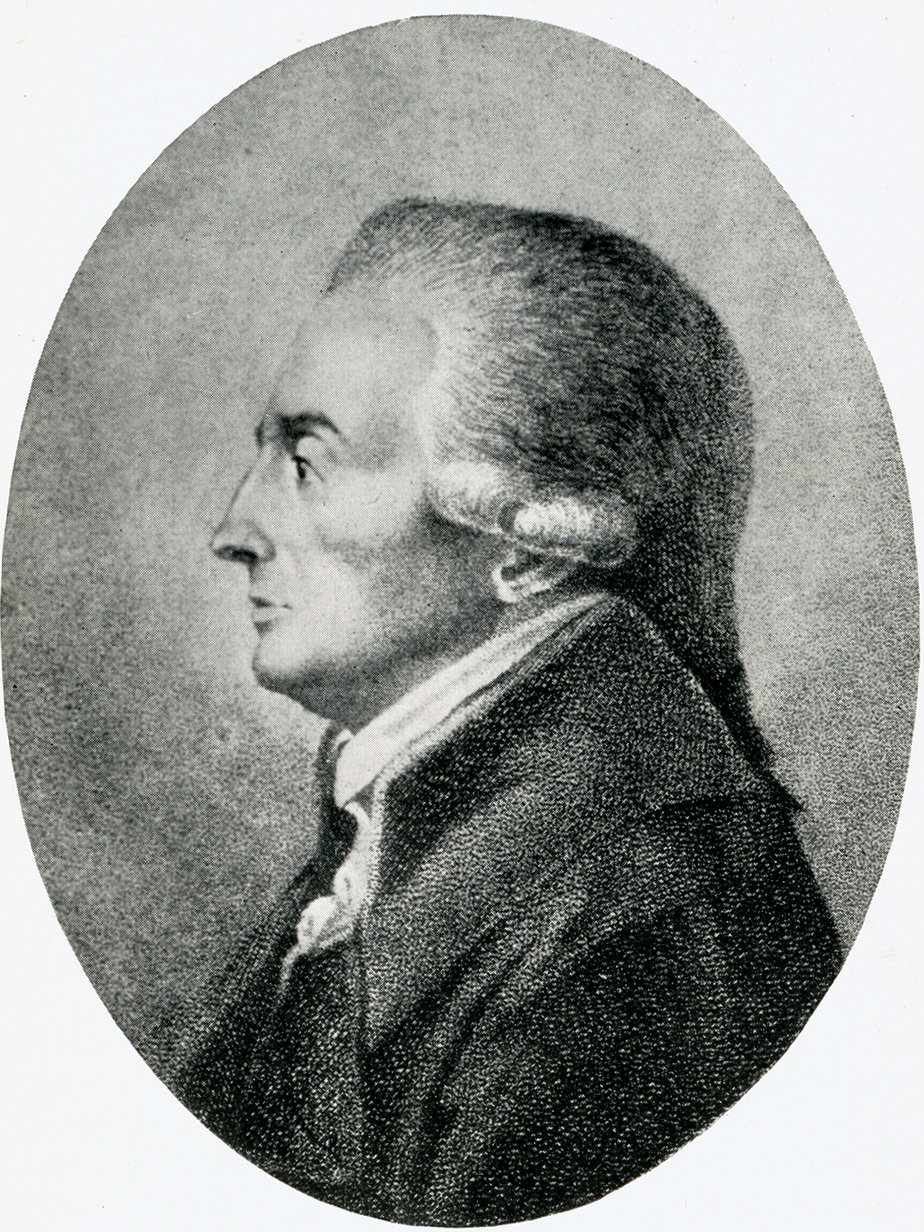
.png)
Maimon was born in a Lithuanian village near Mir and had a traditional Talmudic education; at eleven he was married in an arranged ceremony. Maimonides’ Guide of the Perplexed opened philosophy to him, and he later took the name Maimon in Maimonides’ honour. He briefly visited the court of the Maggid of Mezrich, one of the founders of Hasidism, and his autobiography is among the most valuable sources on the early movement. In his twenties he left his family for Berlin, where he joined the circle of Moses Mendelssohn, though his open Spinozism and bohemian life led Mendelssohn to ask him to leave.
In 1787 he studied Kant’s Critique of Pure Reason and sent him his objections. Kant replied that none of his critics had understood him as well as Maimon, and Maimon’s Essay on Transcendental Philosophy followed in 1790. He lived in poverty in Berlin until a Silesian nobleman gave him a home on his estate, where he died in 1800. His criticisms of Kant’s division of the mind into understanding and sensibility deeply influenced Fichte and the rise of German Idealism. He was also, it seems, the first to describe Spinoza’s philosophy as acosmism, which denies the reality of the world, not of God, a reading later adopted by Hegel.
Key ideas
- The thing in itself as a limit
- Kant’s thing in itself cannot be a real entity lying behind experience. It is the full determination of an object by concepts, which our knowledge can only approach without end, “nothing other than the complete cognition of appearances”.
- No separate source of the given
- What seems simply given in experience is produced by the mind’s own activity, though a finite mind is unaware of how. An infinite intellect would produce all its content consciously; we do so only in mathematics. Space and time mark where our concepts of things are still incomplete.
- The law of determinability
- A genuine connection between concepts, as opposed to an arbitrary one made by the imagination, must satisfy the law of determinability, which Maimon made the principle of all real thought. Mathematics meets it; empirical knowledge never can.
- Humean dogmatism
- Maimon called himself a “Humean dogmatist”. Reason tells us what genuine knowledge would require, but, as Hume showed, we can never prove that it applies to experience, which we must explain by habit and regularity. We see the promised land from afar but cannot enter it.
- The good is the true
- Practical reason has no primacy over theoretical. “The moral good is good only because it is true”, and nothing can be called good without limitation except the striving after knowledge.
- Tradition
- Jewish
- Region
- Lithuania and Berlin
Influences
Influenced by
- Maimonides1138–1204
- Baruch Spinoza1632–1677
- Gottfried Wilhelm Leibniz1646–1716
- David Hume1711–1776
- Immanuel Kant1724–1804criticised
Salomon Maimon1753–1800
Influenced
Influenced by
- Maimonides1138–1204
- Baruch Spinoza1632–1677
- Gottfried Wilhelm Leibniz1646–1716
- David Hume1711–1776
- Immanuel Kant1724–1804criticised
Salomon Maimon1753–1800
Influenced
Where these links come from
- Salomon Maimon drew on Maimonides. Source: Peter Thielke and Yitzhak Y. Melamed, Salomon Maimon, Stanford Encyclopedia of Philosophy
- Salomon Maimon drew on Baruch Spinoza. Source: Peter Thielke and Yitzhak Y. Melamed, Salomon Maimon, Stanford Encyclopedia of Philosophy
- Salomon Maimon drew on Gottfried Wilhelm Leibniz. Source: Peter Thielke and Yitzhak Y. Melamed, Salomon Maimon, Stanford Encyclopedia of Philosophy
- Salomon Maimon drew on David Hume. Source: Peter Thielke and Yitzhak Y. Melamed, Salomon Maimon, Stanford Encyclopedia of Philosophy
- Salomon Maimon drew on and argued against Immanuel Kant. Source: Peter Thielke and Yitzhak Y. Melamed, Salomon Maimon, Stanford Encyclopedia of Philosophy
- Gilles Deleuze drew on Salomon Maimon. Source: Daniel Smith, John Protevi and Daniela Voss, Gilles Deleuze, Stanford Encyclopedia of Philosophy
Key works
- Essay on Transcendental Philosophy (Versuch über die Transcendentalphilosophie), 1790
- Autobiography (Lebensgeschichte), 1792
- Read free at Project Gutenberg (translated by John Clark Murray)
- An Attempt at a New Logic, or Theory of Thinking (Versuch einer neuen Logik, oder Theorie des Denkens), 1793
Sources
- Peter Thielke and Yitzhak Y. Melamed, Salomon Maimon, Stanford Encyclopedia of Philosophy