Philosopher
Mou Zongsan
1909–1995
Also known as Mou Tsung-san
New Confucian who argued, against Kant, that human beings have intellectual intuition, a direct moral knowing that makes sagehood possible and gives the world its moral meaning.
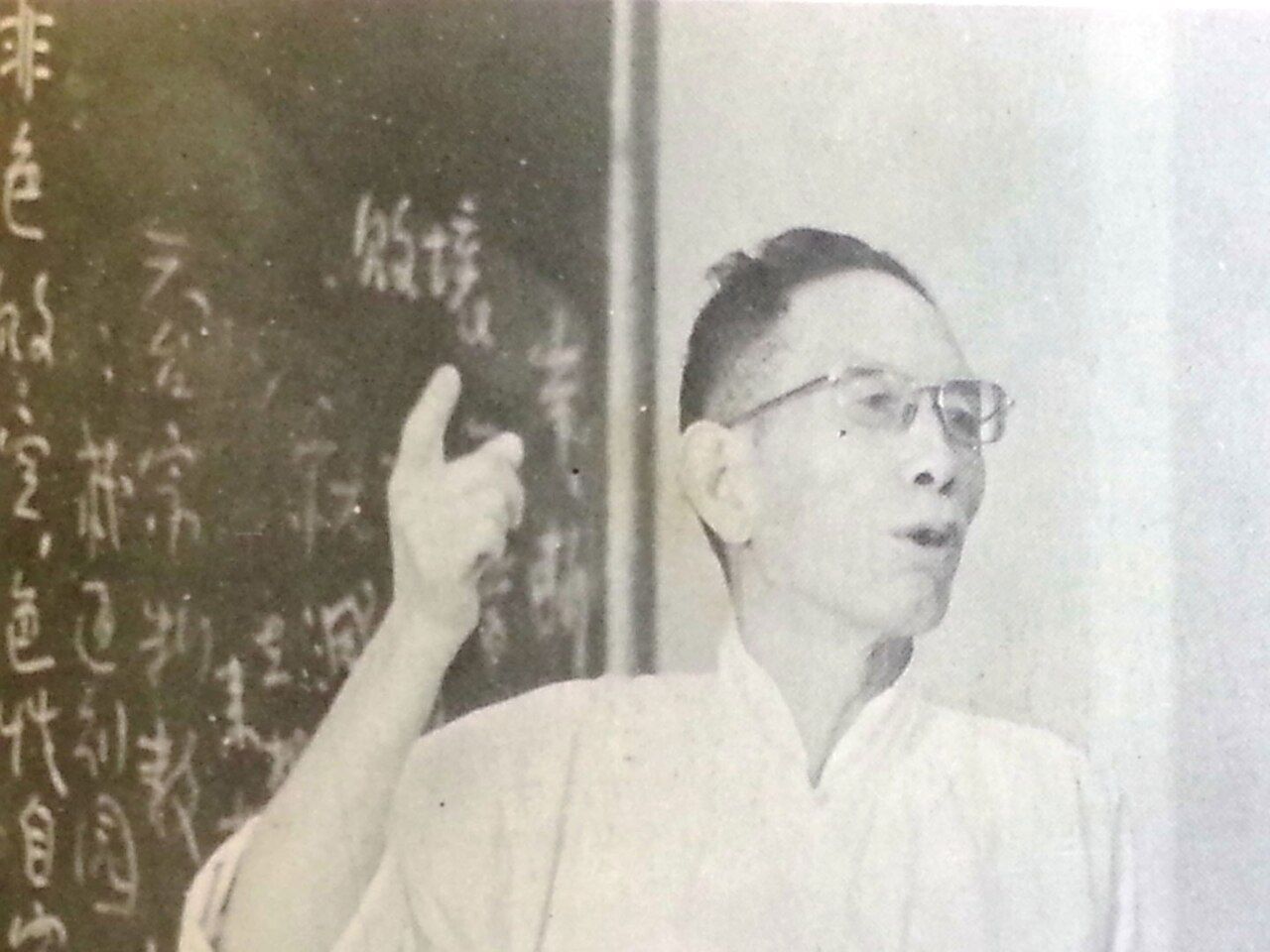

Mou Zongsan was born into a rural innkeeper’s family that admired classical learning. At Peking University, then fiercely modernist, he studied Russell and Whitehead’s Principia Mathematica and Whitehead’s process philosophy, which led him back to the Book of Changes; there he met Xiong Shili, who mentored him for years. An outspoken opponent of the Communists, he left for Taiwan in 1949, and in 1960 moved to Hong Kong, where his mature work began. In the thirty-five years that followed he published seven major books and translated all three of Kant’s Critiques into Chinese.
A nationalist, Mou believed that China’s fate depended on its philosophy, and that Confucianism, unequalled in “inner sagehood”, had to find in its own resources the science and democracy of “outer kingship”. He conducted the last thirty years of his work as a conversation with Kant, whom he thought the greatest Western philosopher, though he changed the meaning of the terms he borrowed. Critics have charged him with irrationalism and with asserting his views instead of arguing for them. He became a leader of the New Confucian movement, and remains the main modern point of reference for Confucian philosophy in China.
Key ideas
- Intellectual intuition
- Kant reserved intellectual intuition, direct knowledge of reality without the senses or the categories, to God. Mou called this Kant’s greatest mistake. Confucians, Buddhists and Daoists all hold that humans have such a knowing, which, perfected, makes a sage or a buddha.
- Moral knowing comes first
- Intellectual intuition is essentially moral and creative, and shows itself in everyday life. The instant alarm we feel on seeing a child on the point of falling into a well is an example: spontaneous, uncaused, and the source of the moral value that things have.
- A two-level ontology
- All of reality is mind, with two aspects. As intellectual intuition, mind knows things-in-themselves directly; by “self-negation” it also becomes the cognitive mind, which knows separate objects in space, time and causal relations, as Kant described. Humans are “finite yet infinite”.
- The perfect teaching
- Borrowing from Tiantai Buddhism, Mou ranked teachings by how completely they express the truth, the highest being a “perfect teaching” put as a paradox, that subject and object are simply one. Only such a teaching, he held, guarantees that virtue and happiness coincide, without God or an afterlife.
- Three lineages
- Besides the School of Principle of Zhu Xi and the School of Mind of Wang Yangming, Mou identified a third Neo-Confucian lineage, of Hu Hong and Liu Zongzhou, as the true orthodoxy, and criticised Zhu Xi for making heavenly principle too transcendent.
- Tradition
- Chinese
- Region
- Taiwan and Hong Kong
- Schools
- Confucianism
Influences
Influenced by
- Menciusc. 372 – c. 289 BCE
- Cheng Hao1032–1085
- Zhu Xi1130–1200criticised
- Immanuel Kant1724–1804criticised
- G. W. F. Hegel1770–1831
- Xiong Shili1885–1968teacher
Mou Zongsan1909–1995
Influenced
Influenced by
- Menciusc. 372 – c. 289 BCE
- Cheng Hao1032–1085
- Zhu Xi1130–1200criticised
- Immanuel Kant1724–1804criticised
- G. W. F. Hegel1770–1831
- Xiong Shili1885–1968teacher
Mou Zongsan1909–1995
Influenced
Where these links come from
- Mou Zongsan drew on Mencius. Source: Jason Clower, Mou Zongsan (Mou Tsung-san), Internet Encyclopedia of Philosophy
- Mou Zongsan drew on Cheng Hao. Source: Jason Clower, Mou Zongsan (Mou Tsung-san), Internet Encyclopedia of Philosophy
- Mou Zongsan argued against Zhu Xi. Source: Jason Clower, Mou Zongsan (Mou Tsung-san), Internet Encyclopedia of Philosophy
- Mou Zongsan drew on and argued against Immanuel Kant. Source: Jason Clower, Mou Zongsan (Mou Tsung-san), Internet Encyclopedia of Philosophy
- Mou Zongsan drew on G. W. F. Hegel. Source: Jason Clower, Mou Zongsan (Mou Tsung-san), Internet Encyclopedia of Philosophy
- Mou Zongsan studied with Xiong Shili. Source: David Elstein, Modern Confucianism, Stanford Encyclopedia of Philosophy
- Tu Weiming studied with Mou Zongsan. Source: Hung Tsz Wan Andrew, Tu Weiming, Internet Encyclopedia of Philosophy
Sources
- David Elstein, Modern Confucianism, Stanford Encyclopedia of Philosophy
- Jason Clower, Mou Zongsan (Mou Tsung-san), Internet Encyclopedia of Philosophy