Philosopher
Xiong Shili
1885–1968
Founder of modern Confucian philosophy, whose New Treatise on the Uniqueness of Consciousness recast Yogācāra Buddhism in Confucian terms and taught the goodness of human nature.
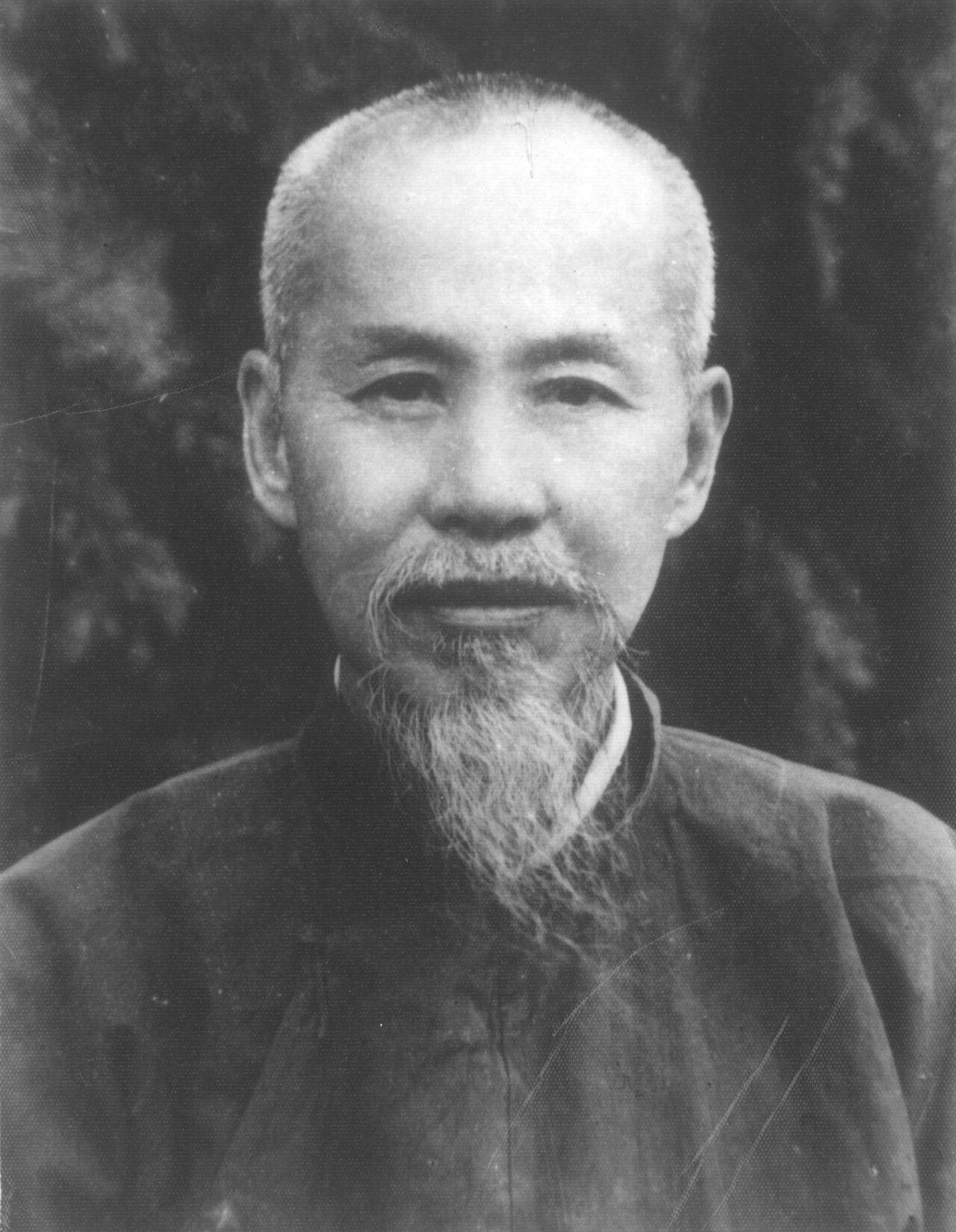

Born to poor parents in the Hubei countryside, Xiong Shili lost them while young, with little schooling. He took part in revolutionary activity in his twenties, then turned to study, entering the China Institute for Inner Learning in 1920 to study Yogācāra. Two years later he was invited to teach at Beijing University.
Often in poor health, he stayed in China after 1949, was attacked in the Cultural Revolution; he died in 1968, at 84, in Shanghai. Mou Zongsan, Tang Junyi and Xu Fuguan are often called his disciples, though none followed him closely.
Key ideas
- From Yogācāra to Confucianism
- Teaching Yogācāra at Beijing University, Xiong grew dissatisfied with it and developed a form blended with Confucian elements. His New Treatise of 1932 is sometimes counted the first work of modern Confucianism proper.
- Human nature is undefiled
- Against Yogācāra thinkers who made the root of evil innate, Xiong held that human nature is pure; habits may be good or bad but are adventitious, and our task is to strip away the defiled tendencies and recover that nature.
- The intuitive wing of Confucianism
- He and his followers favoured the Wang Yangming side of the Confucian tradition, for intuitive, experiential moral knowledge, and the conviction that firm moral values sustain a culture.
- Tradition
- Chinese
- Region
- Hubei and Beijing, China
- Schools
- Confucianism
- Branches
- Metaphysics
- Themes
- Human nature
Influences
Where these links come from
- Mou Zongsan studied with Xiong Shili. Source: David Elstein, Modern Confucianism, Stanford Encyclopedia of Philosophy
- Tang Junyi studied with Xiong Shili. Source: David Elstein, Modern Confucianism, Stanford Encyclopedia of Philosophy
Key works
- New Treatise on the Uniqueness of Consciousness, 1932
Sources
- David Elstein, Modern Confucianism, Stanford Encyclopedia of Philosophy