Philosopher
Cheng Hao
1032–1085
Also known as Ch'eng Hao, Cheng Mingdao, Mingdao
Co-founder, with his brother Cheng Yi, of the Neo-Confucian "learning of principle", who saw ultimate reality as life-giving activity and the humane person as one body with all things.
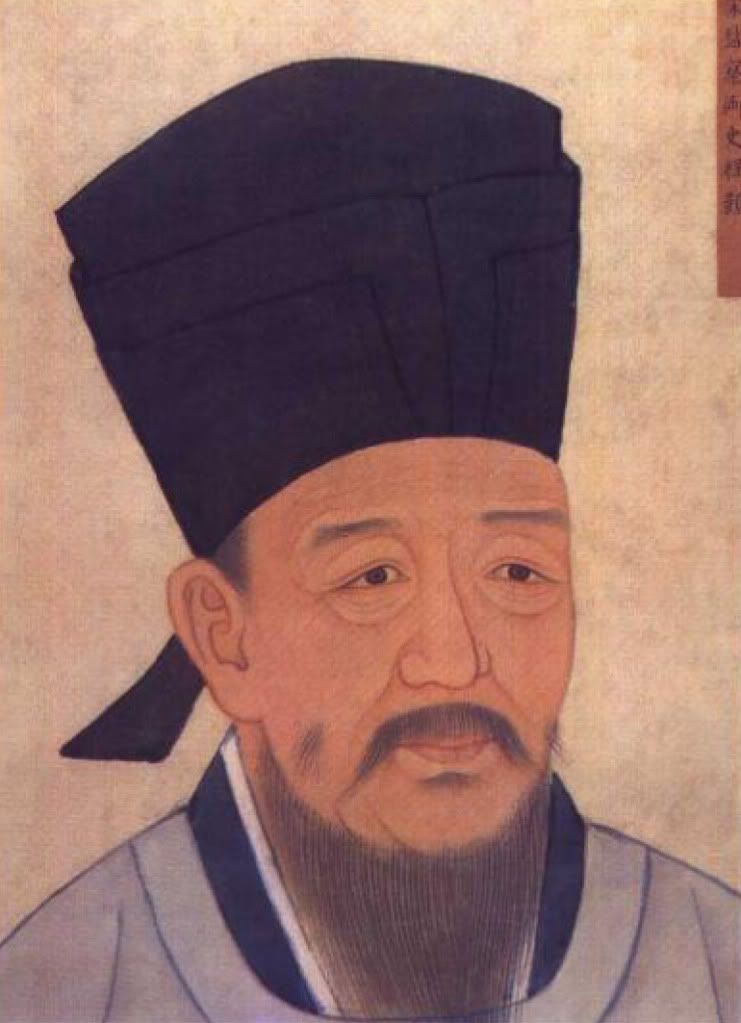

Cheng Hao and Cheng Yi, a year his junior, were known as “the two Chengs”; they studied for about a year as boys with Zhou Dunyi, whom their father had met. Cheng Hao passed the civil service examination in 1057 and served as a local official, taking part briefly in Wang Anshi’s reform movement before withdrawing from it. From the 1070s he spent most of his time in Luoyang studying and teaching the Confucian classics with his brother, and in conversation with Shao Yong, their neighbour, and Zhang Zai, their uncle.
His ideas come down to us mainly in his students’ records of his sayings, which Zhu Xi later edited; in many of them it is unclear which brother is speaking. Cheng Hao claimed that, though he had learned much from others, he grasped the idea of “heaven-principle” (tian li) himself. His view that the humane person forms one body with all things became central to the idealist school of Neo-Confucianism, the “learning of heart-mind”, which culminated in Wang Yangming.
Key ideas
- Heaven is principle
- Heaven, the way (dao), change, human nature and the heart-mind are all names for one reality, principle (li). With Cheng Hao, principle became for the first time in Confucianism the ultimate reality of the universe, though it is never prior to or outside things.
- Principle as life-giving activity
- Principle is not a thing or a common essence but an activity, the unceasing activity of giving life. We can see a moving thing but not its moving; the activity is intangible, yet nothing could come into being without it.
- One body with all things
- Doctors call numbness a lack of ren, humanity. A person of humanity is the opposite of numb, forming “one body with ten thousand things” and feeling the pain of other beings, animals included, as they feel their own.
- Clear water and muddy water
- Human nature is good, as water is clear at its source. Evil comes from the vital force (qi) people are endowed with and live among, as water is muddied by its course; moral cultivation does not make a new person but returns them to their original goodness.
- Tradition
- Chinese
- Region
- Northern Song China
- Schools
- Confucianism
- Period
- Song–Ming
Influences
Influenced by
Cheng Hao1032–1085
Influenced
Influenced by
Cheng Hao1032–1085
Influenced
Where these links come from
- Cheng Hao drew on Mencius. Source: Yong Huang, Cheng Hao (Cheng Mingdao), Internet Encyclopedia of Philosophy
- Cheng Hao studied with Zhou Dunyi. Source: Yong Huang, Cheng Hao (Cheng Mingdao), Internet Encyclopedia of Philosophy
- Zhu Xi drew on Cheng Hao. Source: Kirill Thompson, Zhu Xi, Stanford Encyclopedia of Philosophy
- Mou Zongsan drew on Cheng Hao. Source: Jason Clower, Mou Zongsan (Mou Tsung-san), Internet Encyclopedia of Philosophy
Key works
- Surviving Sayings of the Two Chengs (Yishu), 1168
- Read free at Wikisource (in Classical Chinese)
Terms on this page
- tian li
- Heavenly principle (天理): principle (li) understood as Heaven itself. The words had been used before, but Cheng Hao said that their meaning was something he had grasped for himself.
- dao
- The Way (道). In the Laozi it is the nameless, formless source of all things, which can only be called dark or profound; Confucians spoke of the gentleman’s way, and Neo-Confucians identified the Dao with principle.
- li
- Pattern or principle (理), the central concept of Neo-Confucianism, identified with human nature. With the Cheng brothers it became, for the first time, the ultimate reality of all that exists.
- ren
- Humaneness or benevolence (仁), the cardinal Confucian virtue. Cheng Hao treated it as the whole of human nature, by which a person forms one body with all things and feels their pain as their own.
- qi
- Vital force or material force (氣), the stuff of which all things are made. Neo-Confucians paired it with principle (li), and explained the differences between people by the qi each is endowed with.
Sources
- Yong Huang, Cheng Hao (Cheng Mingdao), Internet Encyclopedia of Philosophy