Philosopher
Slavoj Žižek
born 1949
Slovenian philosopher and cultural critic who reads German idealism through Lacan’s psychoanalysis to argue that ideology still governs a supposedly post-ideological world.
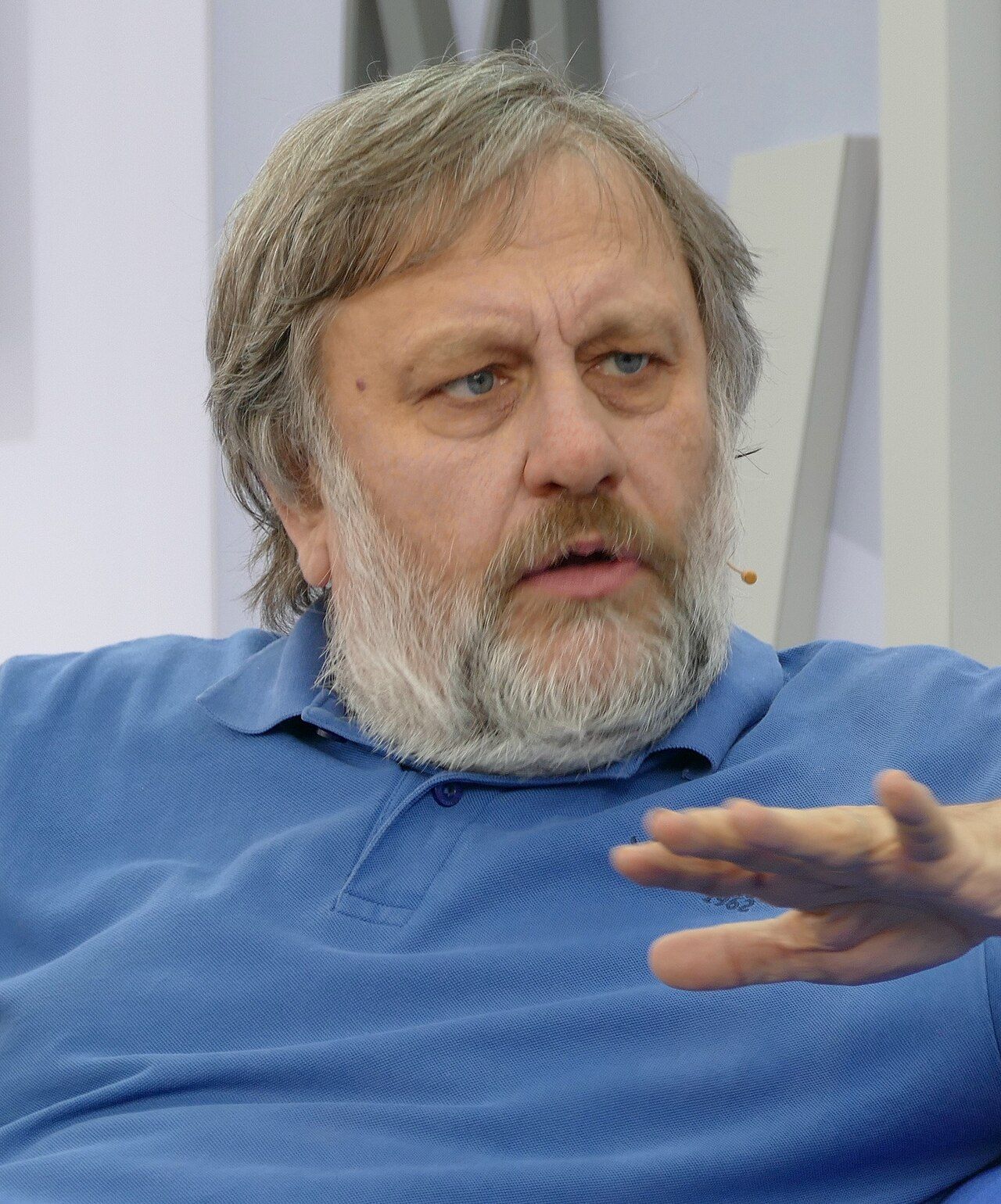
.jpg)
Slavoj Žižek was born in Ljubljana in 1949 and grew up amid the relative cultural freedom of Yugoslavia’s self-managing socialism, with ready access to Western films, popular culture and theory. He wrote a doctorate on German idealism at Ljubljana, then studied in Paris with Jacques-Alain Miller, Lacan’s son-in-law, and wrote a second thesis reading Hegel, Marx and Kripke through Lacan. Back in Slovenia in the late 1980s he wrote newspaper columns, helped found the Liberal Democratic Party, and in 1990 only just missed election to the country’s four-member presidency.
His first book in English, The Sublime Object of Ideology (1989), made his name. His writing is famous for its jokes, its reversals of common sense and its examples drawn from Hitchcock and Hollywood as readily as from Hegel, but behind the style lies a serious defence of German idealism, of the modern subject and of the possibility of radical politics. Since the late 1990s his work has become openly political, taking on globalisation, the war on terror and the claim that history has ended.
Key ideas
- Knowing it and doing it anyway
- Ideology today no longer depends on people being deceived. Modern subjects see through the official story perfectly well, yet keep acting as it requires, and that ironic distance is itself what keeps them attached to the system.
- Sublime objects of ideology
- A regime holds its people together through a few charged words, such as the Nation or Freedom, that seem to name something beyond ordinary reality. On inspection they refer to nothing definite; what they really do is let people identify with one another.
- Defending the Cartesian subject
- Against most contemporary theory, Žižek defends the modern subject that can reflect on itself and act freely, reading Lacan as an heir of Descartes and of the Enlightenment rather than their critic.
- Traversing the fantasy
- Seeing that a regime’s sublime objects are fetishes that hide people’s own political agency is the start of real change. It has to issue in an Act that alters institutions, not just in a new opinion.
- Tradition
- Western
- Region
- Slovenia
- Period
- Contemporary
- Themes
- How to govern
Influences
Influenced by
Slavoj Žižekborn 1949
Influenced by
Slavoj Žižekborn 1949
Where these links come from
- Slavoj Žižek drew on René Descartes. Source: Matthew Sharpe, Slavoj Žižek, Internet Encyclopedia of Philosophy
- Slavoj Žižek drew on and argued against Immanuel Kant. Source: Matthew Sharpe, Slavoj Žižek, Internet Encyclopedia of Philosophy
- Slavoj Žižek drew on G. W. F. Hegel. Source: Matthew Sharpe, Slavoj Žižek, Internet Encyclopedia of Philosophy
- Slavoj Žižek drew on Karl Marx. Source: Matthew Sharpe, Slavoj Žižek, Internet Encyclopedia of Philosophy
Key works
- The Sublime Object of Ideology, 1989
- The Puppet and the Dwarf, 2003
Sources
- Matthew Sharpe, Slavoj Žižek, Internet Encyclopedia of Philosophy