Philosopher
Zhang Junmai
1887–1969
Also known as Carsun Chang, Chang Chun-mai, Zhang Jiasen
Modern Confucian thinker and politician who, in the 1923 debate with China's scientists, defended the limits of science and the value of Confucian truth.
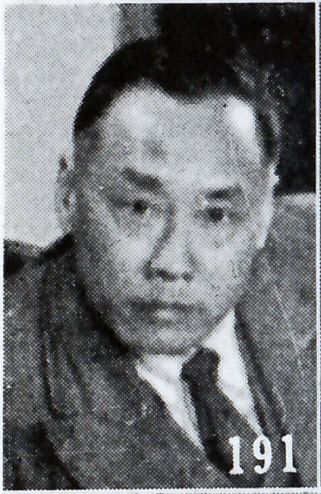

Zhang Junmai was born Zhang Jiasen in Jiangsu Province in 1887 to a merchant family, memorised the Confucian classics, and at eleven was sent to study Western history, science and English, while still reading Zhu Xi. He studied economics and politics at Waseda University in Tokyo from 1906, and later, after fleeing China, at the University of Berlin.
Deeply influenced by Bergson, Kant and Hegel as well as by Confucianism, he is remembered less for his philosophy than for his politics in the Republican era and for promoting Neo-Confucian studies in the West. He remains one of the least studied modern Confucians compared with Feng Youlan and Mou Zongsan.
Key ideas
- The limits of science
- In the 1923 ‘debate between metaphysicians and scientists’ Zhang defended Neo-Confucian views against progressives and scientists, insisting that scientific knowledge has limits and that Confucian truths still matter.
- Confucianism fit for modernity
- His study of Neo-Confucian thought and the 1958 Manifesto for a Reappraisal of Chinese Culture presented Confucianism as compatible with modernity to the English-speaking world.
- Philosophy and politics together
- His motto was not to forget philosophy for politics, or politics for philosophy; his ‘Third Force’ party tried to mediate between Nationalists and Communists.
- Tradition
- Chinese
- Region
- China, Japan, Germany
- Schools
- Confucianism
- Themes
- Knowledge and scepticism
Influences
Influenced by
Zhang Junmai1887–1969
Influenced by
Zhang Junmai1887–1969
Where these links come from
- Zhang Junmai drew on Zhu Xi. Source: Joseph Ciaudo, Zhang Junmai (Carsun Chang), Internet Encyclopedia of Philosophy
- Zhang Junmai drew on Immanuel Kant. Source: Joseph Ciaudo, Zhang Junmai (Carsun Chang), Internet Encyclopedia of Philosophy
- Zhang Junmai drew on G. W. F. Hegel. Source: Joseph Ciaudo, Zhang Junmai (Carsun Chang), Internet Encyclopedia of Philosophy
- Zhang Junmai drew on Henri Bergson. Source: Joseph Ciaudo, Zhang Junmai (Carsun Chang), Internet Encyclopedia of Philosophy
Key works
- The Development of Neo-Confucian Thought, 1957
- Manifesto for the Reappraisal of Chinese Culture, 1958
Sources
- Joseph Ciaudo, Zhang Junmai (Carsun Chang), Internet Encyclopedia of Philosophy