Philosopher
Hermann Cohen
1842–1918
Founder of the Marburg School of neo-Kantianism and the leading German-Jewish philosopher of his generation, whose Religion of Reason found reason's religion in the sources of Judaism.
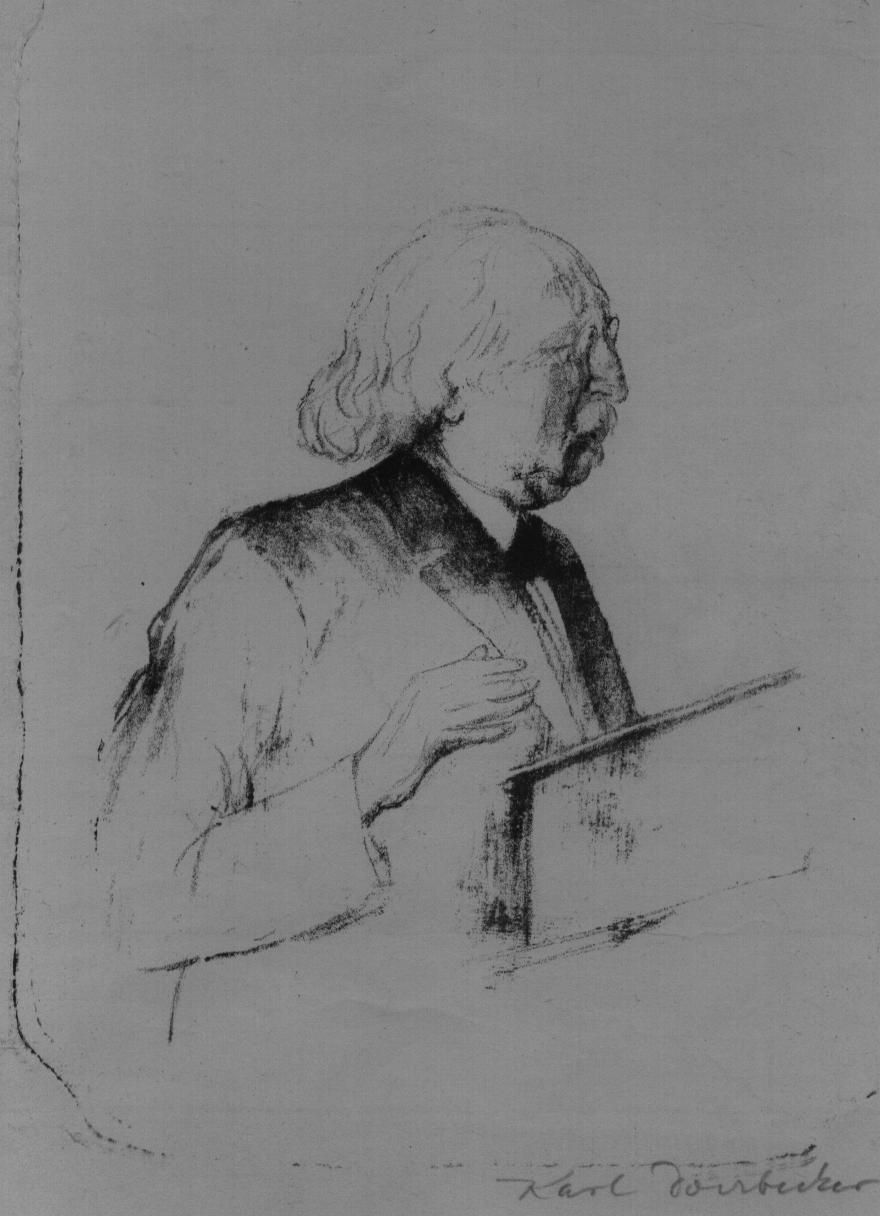
.jpg)
Hermann Cohen was born in 1842 in Coswig, Germany, into a devout family, took his doctorate at Halle, and after writing on Kant became a lecturer at Marburg, where he stayed for almost four decades. More than anyone, he founded the orthodox neo-Kantianism that dominated German academic philosophy from the 1870s to the First World War, writing on epistemology, philosophy of science, ethics, law, politics and aesthetics.
He was also his generation’s foremost German-Jewish public intellectual. After retiring in 1912 he taught at the Academy of Jewish Sciences in Berlin, writing chiefly on Jewish philosophy, and Franz Rosenzweig was among his students there. He died in 1918; his Religion of Reason appeared the following year.
Key ideas
- Philosophy is not psychology
- Cohen read Kant in a way that kept philosophy independent of empirical psychology without sliding back into uncritical metaphysics. This anti-psychologism defined the Marburg School and, beyond it, the setting from which phenomenology and logical positivism emerged.
- Religion of reason
- In his last work Cohen argued that the basic concepts of Judaism, as found in its historical texts, are the original sources of a religion of reason, and he explored the correlation between the individual and God.
- Tradition
- Jewish
- Region
- Marburg and Berlin
- Themes
- Faith and reason
Influences
Influenced by
Hermann Cohen1842–1918
Influenced
Influenced by
Hermann Cohen1842–1918
Influenced
Where these links come from
- Hermann Cohen drew on Maimonides. Source: Scott Edgar, Hermann Cohen, Stanford Encyclopedia of Philosophy
- Hermann Cohen drew on Immanuel Kant. Source: Scott Edgar, Hermann Cohen, Stanford Encyclopedia of Philosophy
- Franz Rosenzweig studied with and drew on Hermann Cohen. Source: Benjamin Pollock, Franz Rosenzweig, Stanford Encyclopedia of Philosophy
Key works
- Kant's Theory of Experience
- Logic of Pure Knowledge
- Religion of Reason out of the Sources of Judaism, 1919
Sources
- Scott Edgar, Hermann Cohen, Stanford Encyclopedia of Philosophy
- Benjamin Pollock, Franz Rosenzweig, Stanford Encyclopedia of Philosophy