Philosopher
W. E. B. Du Bois
1868–1963
Also known as William Edward Burghardt Du Bois, WEB Du Bois, Du Bois
Sociologist, historian and activist who, by making race and "the Negro problem" objects of philosophical reflection, all but founded the philosophy of race.
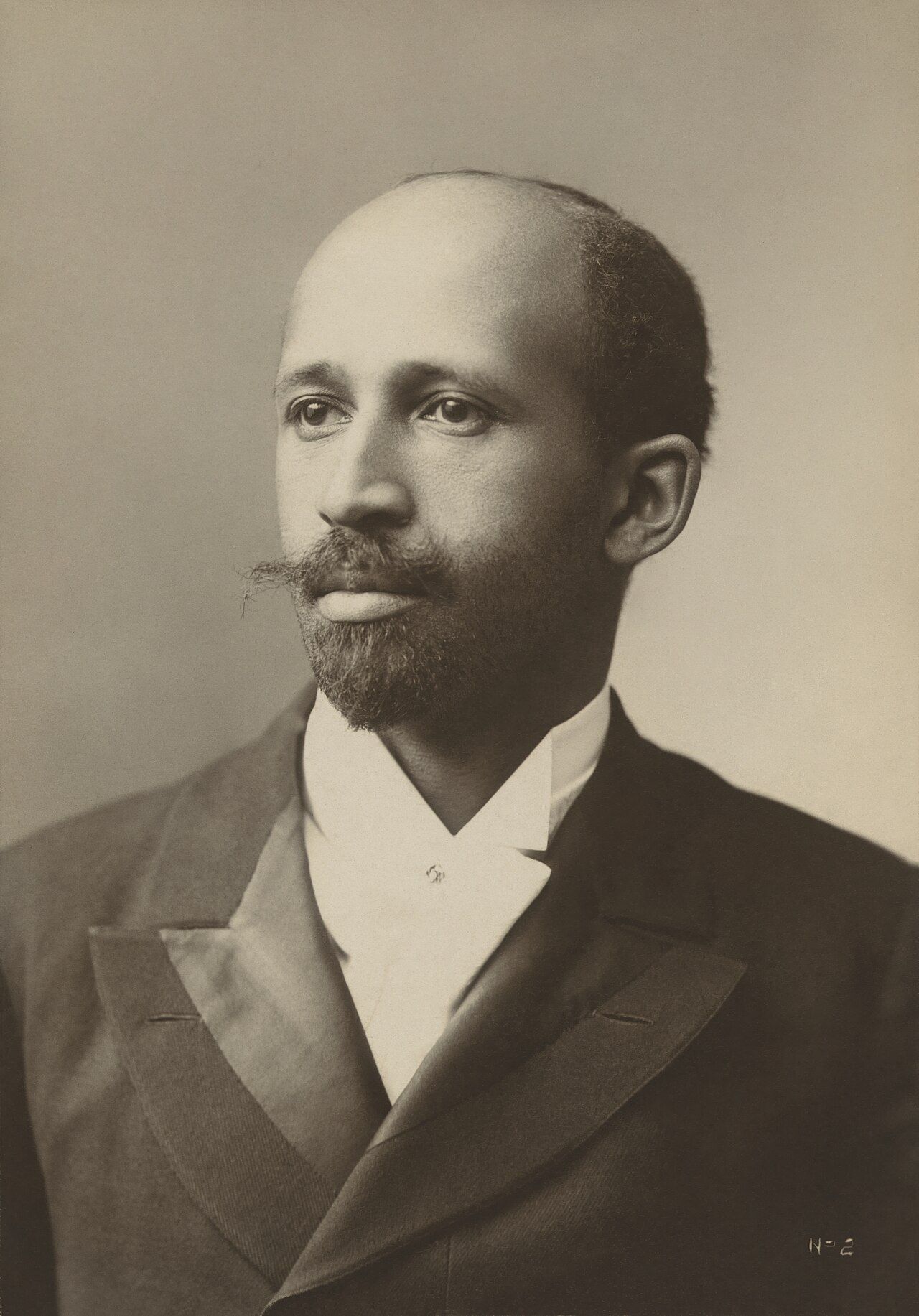
.jpg)
[A] sense of always looking at oneself through the eyes of others, of measuring one’s soul by the tape of a world that looks on in amused contempt and pity.
William Edward Burghardt Du Bois was born in Great Barrington, Massachusetts, in 1868. He studied at Fisk University and then at Harvard, where he took philosophy with William James and George Santayana, and in Berlin. In 1895 he became the first Black American to earn a Harvard doctorate. He taught at Atlanta University, carried out pioneering sociological studies of Black life, and in 1910 became director of research for the NAACP and editor of its magazine, The Crisis.
Activist, journalist, historian, sociologist, novelist and critic, he held that his life took its meaning from “the Negro problem”, later “the race problem”, which unites his work in all these fields. He organised Pan-African Congresses from 1919, was acquitted in 1951 of being an unregistered foreign agent, and at the invitation of Kwame Nkrumah moved to Ghana, becoming a citizen in 1963. He died in Accra on 27 August 1963, the day before the March on Washington.
Key ideas
- Double consciousness
- Black Americans live with a double consciousness, a “sense of always looking at oneself through the eyes of others”, measuring their own souls by the standards of a world that regards them with contempt and pity. The Negro problem is lived and felt, not only an object of study.
- Race made by history
- Du Bois defined race through history and society, not biology: the same historical and social forces both make races what they are and explain their distinctive spirit, and in later works Du Bois showed how the idea of race, and of whiteness, works as an instrument of domination.
- The talented tenth
- Against Jim Crow, the young Du Bois called for a politics that would raise the Black masses to the standards of modern life while expressing the shared spirit of the Black folk, led by an educated elite, the “talented tenth”.
- All art is propaganda
- Against Alain Locke, who held that genius must choose art over propaganda, Du Bois insisted “that all art is propaganda and ever must be”. Artists use beauty to convey truth and justice, and their freedom is bounded by them.
- Tradition
- African
- Region
- United States and Ghana
Influences
Influenced by
- Frederick Douglassc. 1817 – 1895
- Alexander Crummell1819–1898
- William James1842–1910teacher
- Anna Julia Cooperc. 1858 – 1964
- Alain Locke1885–1954criticised
W. E. B. Du Bois1868–1963
Influenced
Influenced by
- Frederick Douglassc. 1817 – 1895
- Alexander Crummell1819–1898
- William James1842–1910teacher
- Anna Julia Cooperc. 1858 – 1964
- Alain Locke1885–1954criticised
W. E. B. Du Bois1868–1963
Influenced
Where these links come from
- W. E. B. Du Bois drew on Frederick Douglass. Source: Ronald Sundstrom, Frederick Douglass, Stanford Encyclopedia of Philosophy
- W. E. B. Du Bois drew on Alexander Crummell. Source: Stephen Thompson, Alexander Crummell, Stanford Encyclopedia of Philosophy
- W. E. B. Du Bois studied with William James. Source: Robert Gooding-Williams, W.E.B. Du Bois, Stanford Encyclopedia of Philosophy
- W. E. B. Du Bois drew on Anna Julia Cooper. Source: Kathryn Sophia Belle, Anna Julia Cooper, Stanford Encyclopedia of Philosophy
- W. E. B. Du Bois argued against Alain Locke. Source: Robert Gooding-Williams, W.E.B. Du Bois, Stanford Encyclopedia of Philosophy
- Alain Locke argued against W. E. B. Du Bois. Source: Jacoby Adeshei Carter and Corey Barnes, Alain LeRoy Locke, Stanford Encyclopedia of Philosophy
Key works
- The Philadelphia Negro, 1899
- The Souls of Black Folk, 1903
- Darkwater: Voices from within the Veil, 1920
- Black Reconstruction, 1935
- Dusk of Dawn, 1940
Sources
- Stephen Thompson, Alexander Crummell, Stanford Encyclopedia of Philosophy
- Robert Gooding-Williams, W.E.B. Du Bois, Stanford Encyclopedia of Philosophy
- Ronald Sundstrom, Frederick Douglass, Stanford Encyclopedia of Philosophy
- Kathryn Sophia Belle, Anna Julia Cooper, Stanford Encyclopedia of Philosophy