Philosopher
Alain Locke
1885–1954
Also known as Alain LeRoy Locke, Arthur Locke
Philosopher of value, culture and race, called the "Father of the Harlem Renaissance", who developed a pluralist theory of values and an account of race as culture, not biology.
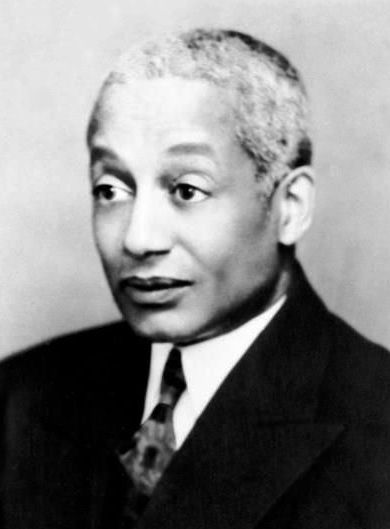

Alain Locke, born Arthur Locke in Philadelphia in 1885, suffered rheumatic fever at seventeen, which left him with lasting heart damage. His teachers at Harvard included Josiah Royce, Hugo Münsterberg and Ralph Barton Perry, and in 1907 he became the first African American Rhodes Scholar, studying philosophy, Greek and literature at Oxford, followed by a year in Berlin with Georg Simmel. He took his doctorate at Harvard in 1918, with a dissertation on the classification of values, and taught for most of his career at Howard University, from which he was dismissed in 1925 for campaigning for equal pay for Black and white faculty, returning in 1928.
His anthology The New Negro (1925), of poetry, essays, plays, music and portraiture, made him the leading critic and interpreter of the Harlem Renaissance. He is usually counted among the pragmatists, though his “critical pragmatism” and his theory of value also drew on Brentano, Meinong and Ehrenfels, and he developed a systematic philosophy of value before many leading pragmatists. He retired in 1953 and died in New York the following year.
Key ideas
- Values are felt
- A value is “an emotionally mediated form of experience”. Each kind of value, aesthetic, moral or religious, is recognised through its own feeling-quality. The great problem is to find objective standards for values without dogmatism, which in social life breeds intolerance and coercion.
- Pluralism
- Diversity of religions, cultures and values is a basic feature of the world. The common mistake is to treat one’s own values as absolutes, when each captures only an aspect of reality; seeing this is the basis for meeting other peoples without conflict.
- A positive relativism
- Relativism is not scepticism about other cultures’ worth but a way of comparing them fairly. Locke’s principles of cultural equivalence, reciprocity and convertibility look for functional similarities beneath surface differences, as common ground for understanding.
- Race as culture
- Race is a cultural and historical phenomenon, not a natural kind: a culture-type passed on by social inheritance, not by biology. Paradoxically, groups may still need to think and act as races while working to dismantle harmful racial categories.
- Art before propaganda
- Against Du Bois, Locke held that the artist’s first task is to express their own individuality, and through it something of universal human appeal, not to supply flattering images of Black life for the sake of social uplift.
- Tradition
- African
- Region
- Washington, D.C.
- Themes
- Art and beauty
Influences
Influenced by
Alain Locke1885–1954
Influenced
Influenced by
Alain Locke1885–1954
Influenced
Where these links come from
- Alain Locke drew on Frederick Douglass. Source: Ronald Sundstrom, Frederick Douglass, Stanford Encyclopedia of Philosophy
- Alain Locke argued against W. E. B. Du Bois. Source: Jacoby Adeshei Carter and Corey Barnes, Alain LeRoy Locke, Stanford Encyclopedia of Philosophy
- W. E. B. Du Bois argued against Alain Locke. Source: Robert Gooding-Williams, W.E.B. Du Bois, Stanford Encyclopedia of Philosophy
Key works
- The New Negro: An Interpretation, 1925
- Values and Imperatives, 1935
Sources
- Jacoby Adeshei Carter and Corey Barnes, Alain LeRoy Locke, Stanford Encyclopedia of Philosophy
- Ronald Sundstrom, Frederick Douglass, Stanford Encyclopedia of Philosophy