Philosopher
Frederick Douglass
c. 1817 – 1895
Abolitionist and political thinker who escaped slavery and argued, from natural law, that enslaved people's humanity entitled them to every right the American republic promised.
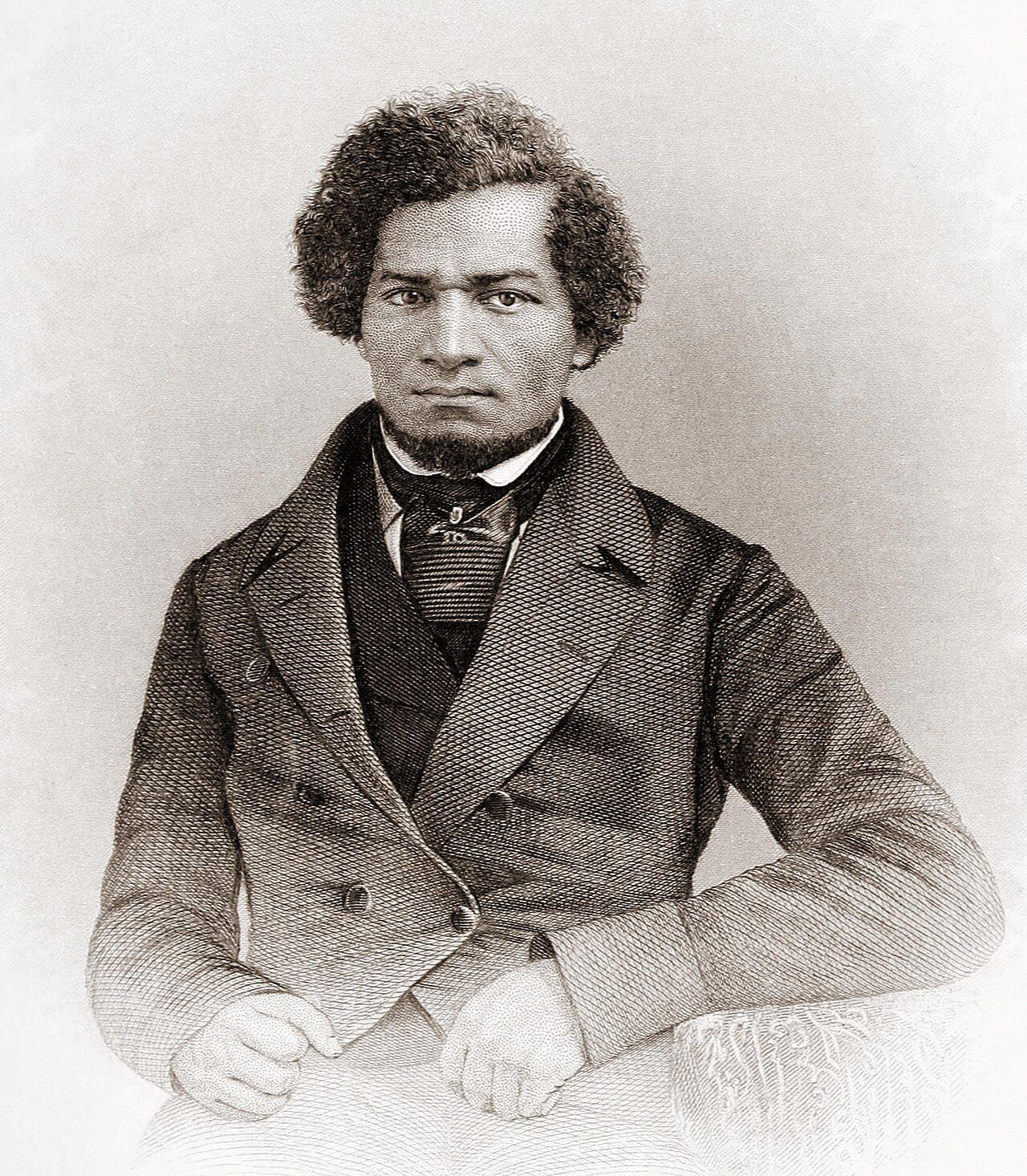

A man, without force, is without the essential dignity of humanity. Human nature is so constituted, that it cannot honor a helpless man, although it can pity him; and even this it cannot do long, if the signs of power do not arise.
Frederick Douglass was born into slavery around 1817; his mother was enslaved, and his father was rumoured to be the white man who held him in slavery. He escaped in 1838 and became one of the leading voices of the abolition movement, speaking at first for the American Anti-Slavery Society led by William Lloyd Garrison. His Narrative of 1845, written partly to answer claims that so eloquent a man could never have been enslaved, made him famous in the United States and Britain and raised the money to buy his freedom.
He broke with Garrison, founded his own newspaper, the North Star, and wrote two further autobiographies, besides a great body of speeches and editorials, among them “What to the Slave Is the Fourth of July?” (1852). After the Civil War he campaigned for Reconstruction and civil rights. His writings on humanity, liberty, dignity and democracy were taken up by W. E. B. Du Bois, Alain Locke and other African American philosophers who came after him, and are now read in Africana, American and political philosophy.
Key ideas
- Slavery as the theft of a person
- Slavery is the power by which one person claims to own another person, body and soul, treating them as a beast. Those who called Black people beasts betrayed their own guilty knowledge that they were human, since nobody makes special laws to stop beasts rebelling or learning.
- Natural rights for all
- Since Black Americans are plainly human, they have the natural rights that natural law, God’s law and the Declaration of Independence recognise. Douglass drew his idea of natural law from reason and revelation together, and from the Protestantism of the Second Great Awakening.
- An anti-slavery Constitution
- In 1851 Douglass broke with William Lloyd Garrison, who held that the Constitution protected slavery and that the free states should secede. Douglass came to read the founding documents as anti-slavery, so that abolition fulfilled the republic’s own principles instead of abandoning them.
- Dignity needs the power to resist
- His fight with the slave-breaker Covey was the turning point of his life as a slave. Self-respect brings a duty to defend it, and a person without force lacks “the essential dignity of humanity”; he came to reject pacifism and to support armed action to end slavery.
- Staying and belonging
- Douglass argued that Black Americans should stay in the United States and fight for equal citizenship, instead of emigrating, and he supported, in a complicated way, women’s suffrage alongside Black civil rights.
- Tradition
- African
- Region
- United States
- Branches
- Political philosophy
- Themes
- War and peace
Influences
Where these links come from
- W. E. B. Du Bois drew on Frederick Douglass. Source: Ronald Sundstrom, Frederick Douglass, Stanford Encyclopedia of Philosophy
- Alain Locke drew on Frederick Douglass. Source: Ronald Sundstrom, Frederick Douglass, Stanford Encyclopedia of Philosophy
Key works
- Narrative of the Life of Frederick Douglass, an American Slave, 1845
- What to the Slave Is the Fourth of July?, 1852
- My Bondage and My Freedom, 1855
- Life and Times of Frederick Douglass, 1881
Sources
- Ronald Sundstrom, Frederick Douglass, Stanford Encyclopedia of Philosophy