Philosopher
Ogyū Sorai
1666–1728
Also known as Ogyu Sorai
Edo Confucian whose Distinguishing Names tied correct definitions to good government, and who held that rites and institutions, not the mind's self-control, order people and states.
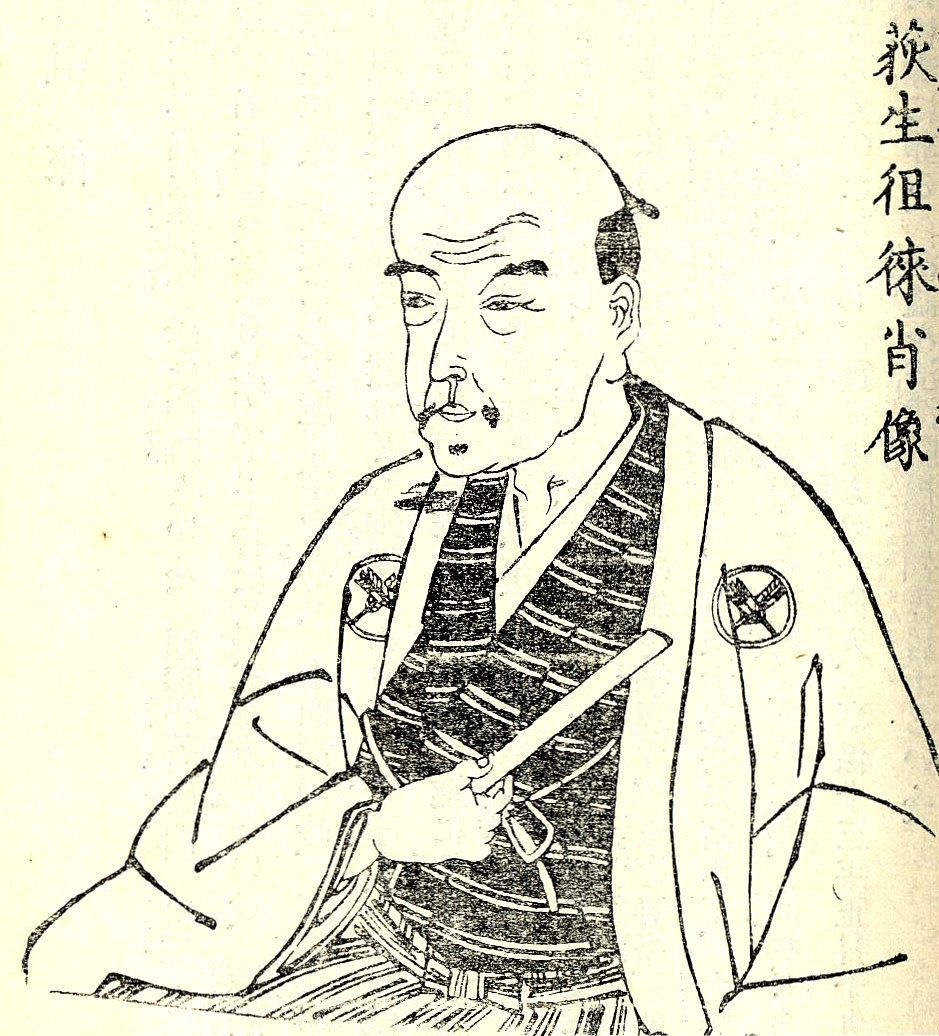

Ogyū Sorai was a heterodox Confucian of the Tokugawa period. His Distinguishing Names analyses philosophical terms in even greater depth than Itō Jinsai’s work, and he reshaped Jinsai’s view of human nature as each person’s inborn disposition. With Jinsai he criticised the Neo-Confucian notion of principle as a term partly borrowed from Daoism and Buddhism.
He held that Confucius was not fully a sage, and that more than book learning, one learns by practising the Way. His political philosophy, one of the most systematic of the period, was never fully accepted by the ruling elite, despite his apparent intention that it should be.
Key ideas
- Names and political order
- Abstract terms were made by the sages to teach the foundations of civilised life. By defining words rightly, Sorai believed, he laid the ground for a rightly governed social and political order.
- The mind cannot rule itself
- Orthodox self-cultivation assumes the mind can control itself, which would split it into a controlling and a controlled mind. Instead, the rites of the early kings should govern both the mind and society.
- The way of the sages
- The Way consists of rites and music, laws and administrative forms. Sorai preferred external means, rites, penal law and government, for securing the welfare of all, and valued the Six Classics above the Analects.
- Tradition
- Japanese
- Region
- Japan
- Schools
- Confucianism
- Period
- Edo
- Themes
- How to govern
Influences
Where these links come from
- Ogyū Sorai argued against Zhu Xi. Source: John Tucker, Japanese Confucian Philosophy, Stanford Encyclopedia of Philosophy
- Ogyū Sorai drew on Itō Jinsai. Source: John Tucker, Japanese Confucian Philosophy, Stanford Encyclopedia of Philosophy
Key works
- Distinguishing Names (Benmei)
Sources
- John Tucker, Japanese Confucian Philosophy, Stanford Encyclopedia of Philosophy