Philosopher
Itō Jinsai
1627–1705
Also known as Ito Jinsai
Kyoto Confucian scholar who rejected Zhu Xi's priority of principle for a monism of generative force, and read the Analects and Mencius word by word to purge Buddhist terms.
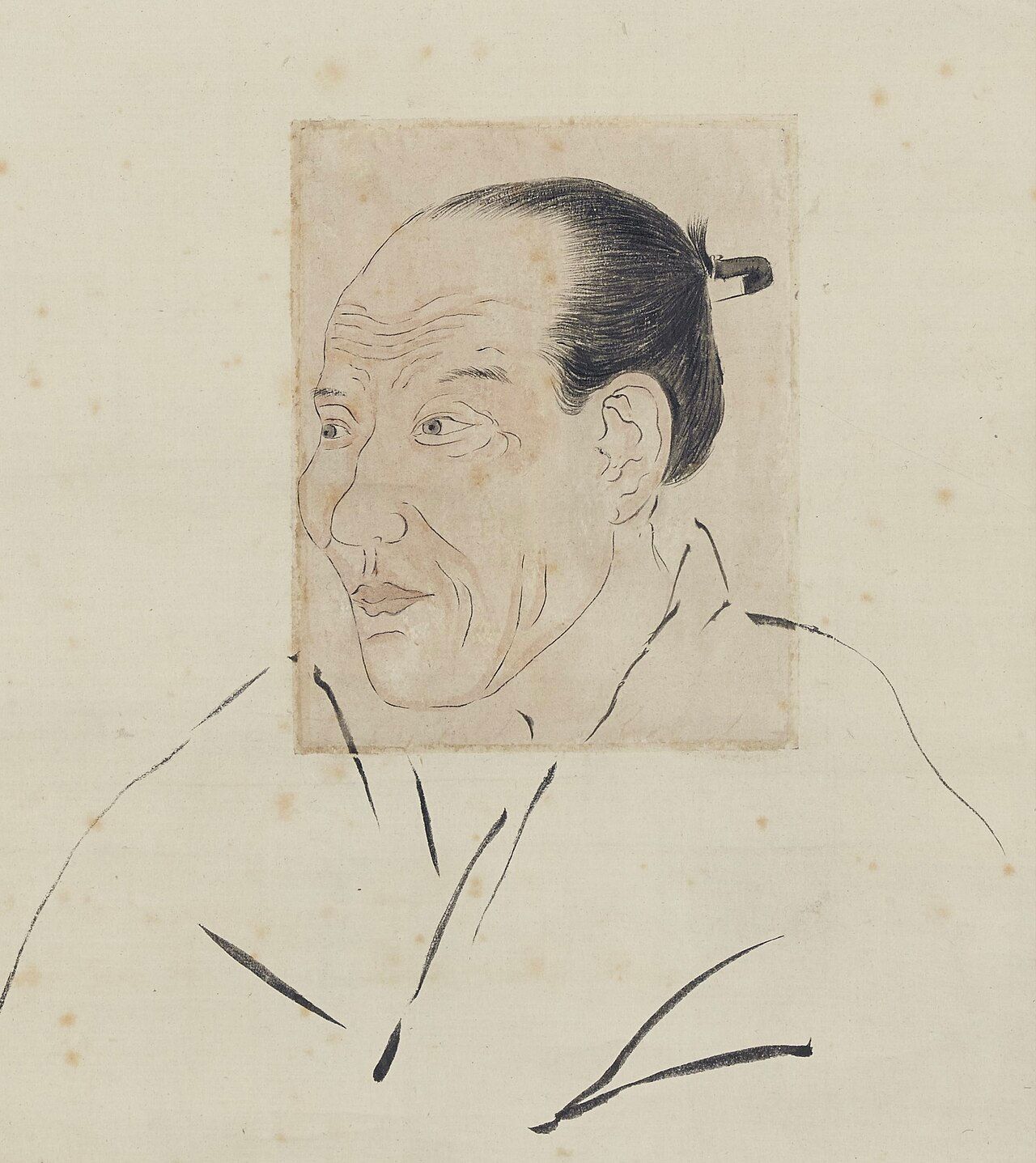

Itō Jinsai was a Kyoto scholar of townsman, probably merchant, background, who ran a private Confucian academy. He was not brought up or educated by Buddhists, yet developed one of the period’s most interesting Confucian critiques of Buddhism. His standard was the vocabulary of the Analects and Mencius.
He is often labelled an ‘ancient learning’ thinker who simply rejected Neo-Confucianism, but this misleads: his metaphysics of ki and ri, and his argument with Zhu Xi about their priority, arguably make him an exemplary Neo-Confucian, though not an orthodox one. He taught learning as emulation, using calligraphy as his model.
Key ideas
- A monism of generative force
- Nothing exists but generative force (ki). Principle (ri) is real, but it dwells within ki rather than standing prior to it, a firm rebalancing of the usual Neo-Confucian view.
- Human natures differ
- Human nature is the physical disposition each person is born with, and it varies from good to bad. Jinsai rejected the orthodox claim that human nature is principle and uniformly good.
- Living and dead words
- Ri, whose character pictures the veins in jade, is a ‘dead word’ for a lifeless order; the Way (michi) is a ‘living word’ for the vitality of human action. He traced the Buddhist and Daoist lineage of terms in order to remove them from Confucian writing.
- Tradition
- Japanese
- Region
- Kyoto, Japan
- Schools
- Confucianism
- Period
- Edo
- Themes
- Human nature
Influences
Influenced by
Itō Jinsai1627–1705
Influenced
Influenced by
Itō Jinsai1627–1705
Influenced
Where these links come from
- Itō Jinsai drew on Mencius. Source: John Tucker, Japanese Confucian Philosophy, Stanford Encyclopedia of Philosophy
- Itō Jinsai drew on Zhou Dunyi. Source: John Tucker, Japanese Confucian Philosophy, Stanford Encyclopedia of Philosophy
- Itō Jinsai argued against Zhu Xi. Source: John Tucker, Japanese Confucian Philosophy, Stanford Encyclopedia of Philosophy
- Ogyū Sorai drew on Itō Jinsai. Source: John Tucker, Japanese Confucian Philosophy, Stanford Encyclopedia of Philosophy
Key works
- The Meaning of Words in the Analects and Mencius (Gomō jigi)
Terms on this page
- ki
- Generative force, the Japanese reading of the Chinese qi: the stuff of reality in Neo-Confucian metaphysics, which Itō Jinsai made the only thing that exists, and which Kaibara Ekken urged people to nourish.
- ri
- Principle: the Japanese reading of the Neo-Confucian li. For Hayashi Razan there is a ri for every aspect of existence; Itō Jinsai held that it dwells within generative force rather than above it.
Sources
- John Tucker, Japanese Confucian Philosophy, Stanford Encyclopedia of Philosophy