Philosopher
E. E. Constance Jones
1848–1922
Also known as Emily Elizabeth Constance Jones, Constance Jones
Cambridge logician and ethicist, Mistress of Girton, whose 'new law of thought' anticipated Frege's distinction between sense and reference.
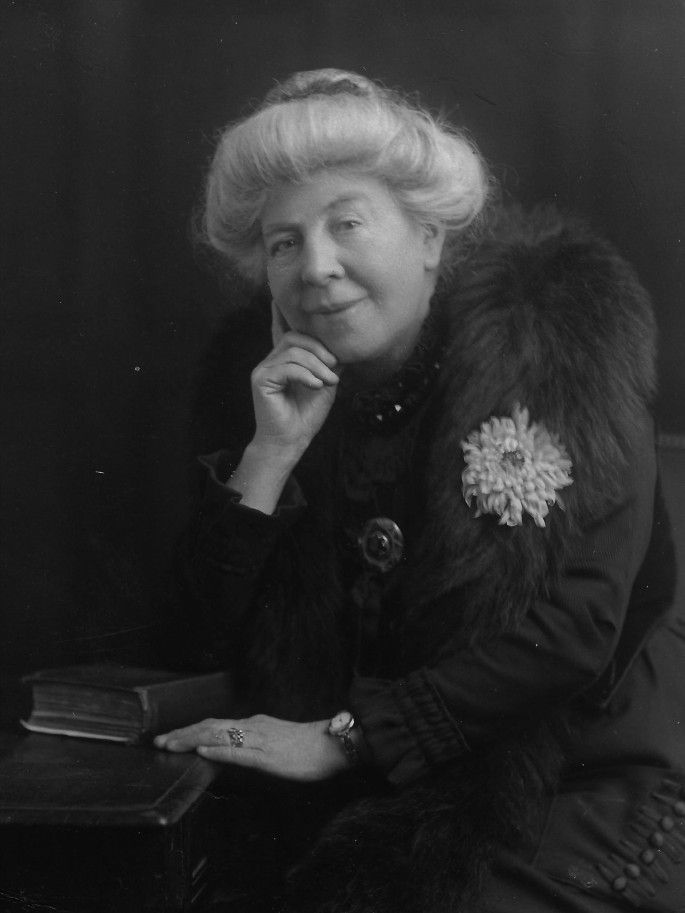

E. E. Constance Jones was born in Wales in 1848 and entered Girton College, Cambridge’s new women’s college, in 1875, where she read moral sciences, taught by Sidgwick, James Ward and John Neville Keynes, and took a first. She taught logic at Girton from 1884, and as its Mistress from 1903 to 1916 cleared the college’s large debt.
In 1896 she was the first woman to address the Moral Sciences Club at Cambridge, and in 1911 Russell gave a paper there, later printed under the title ‘Knowledge by Acquaintance and Knowledge by Description’, replying to a critical paper of hers. Widely respected in her time, she died in 1922 and is now almost forgotten.
Key ideas
- The law of significant assertion
- Jones applied the distinction between intension and extension to singular terms, anticipating Frege’s distinction between sense and reference and Russell’s early one between meaning and denotation.
- What a statement asserts
- An early fascination with what exactly is asserted when one makes a statement, and what form a statement should properly take, drove her work in logic.
- Resolving Sidgwick’s dualism
- In ethics she defended and explained the views of her teacher Henry Sidgwick, and broke new ground in trying to resolve his dualism of practical reason.
- Tradition
- Western
- Region
- Cambridge
- Period
- Late modern
- Themes
- Logic and argument
Influences
Where these links come from
- Bertrand Russell argued against E. E. Constance Jones. Source: Gary Ostertag, Emily Elizabeth Constance Jones, Stanford Encyclopedia of Philosophy
Key works
- Elements of Logic as a Science of Propositions, 1890
- A New Law of Thought and its Logical Bearings, 1911
Sources
- Gary Ostertag, Emily Elizabeth Constance Jones, Stanford Encyclopedia of Philosophy