Philosopher
Sarah Grimké
1792–1873
Also known as Sarah Moore Grimké
Abolitionist and women's rights theorist born into a slave-owning South Carolina family, whose Letters on the Equality of the Sexes argued from Scripture that women and men were made equal.
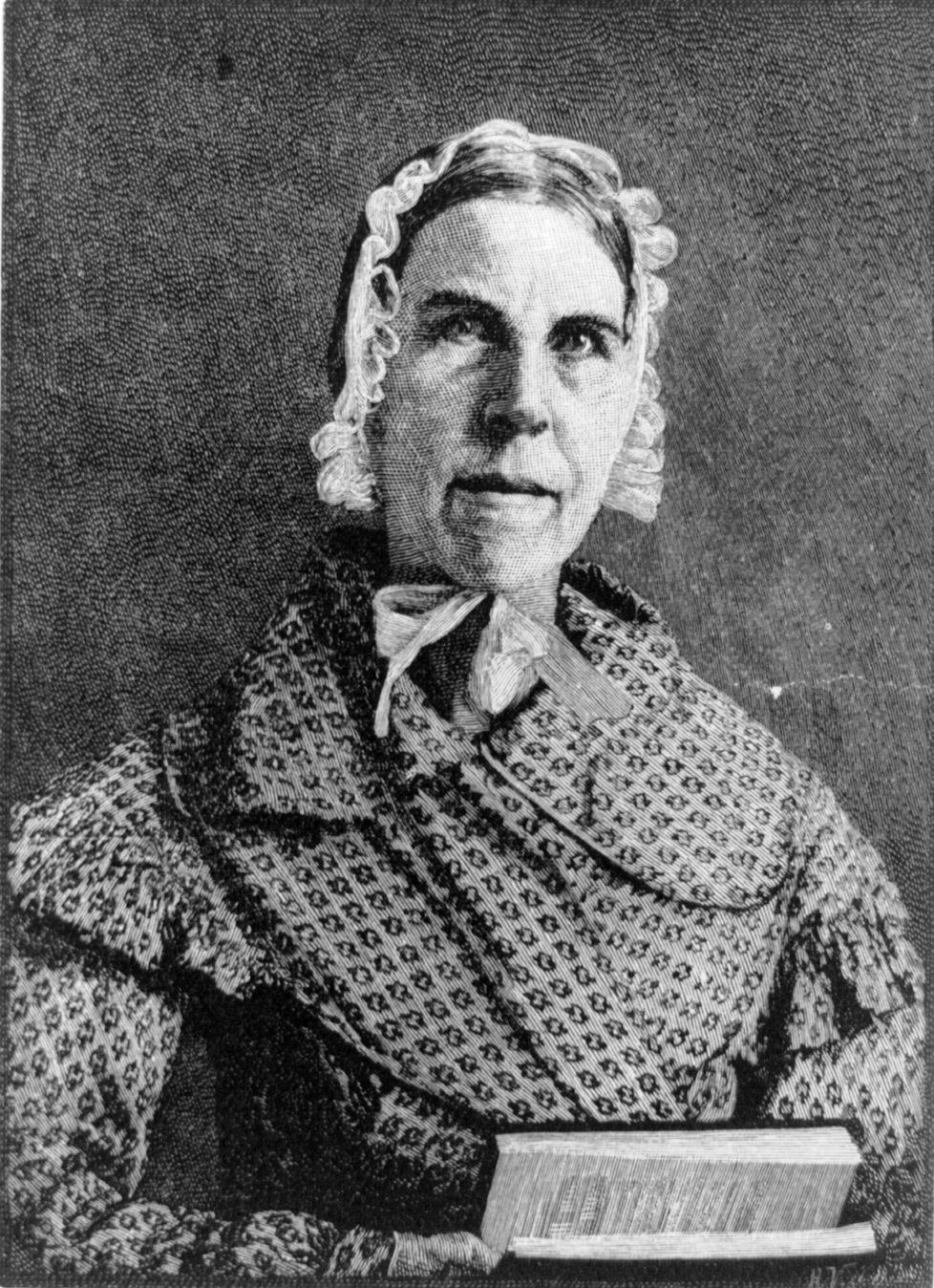

Sarah Grimké was born in 1792 in Charleston, South Carolina, the sixth child of a slave-holding plantation family; her father, a judge, refused to let her continue her studies. After a conversion through Quaker writings she moved to Philadelphia in 1821 and joined the Society of Friends, and later took part in the abolitionist movement with her younger sister Angelina, whose godmother she was.
The sisters shared a home and their work for most of their lives and developed their arguments jointly. Their exclusion from the leadership of the abolitionist movement pushed them to argue for women’s right to political action, and Sarah’s theory of women’s rights predated, and influenced, the Seneca Falls convention of 1848. At seventy-seven she went door to door selling copies of John Stuart Mill’s The Subjection of Women. She died in 1873.
Key ideas
- Equal from creation
- Both creation stories in Genesis make woman man’s equal, Sarah Grimké argued; and the line that a husband shall rule over his wife is a mistranslated prophecy, not a command, so the fall gives no warrant for inequality.
- Slavery and the subjection of women
- She and her sister were among the first to link the oppression of enslaved people with that of women: both were kept from education and then called inferior, and women had long been used as a means to men’s welfare.
- Marriage and consent
- Writing in the 1850s, she treated a wife’s inability to refuse her husband as a form of slavery, examined marital rape, and called for women’s education, financial independence and the right to choose whether and when to become mothers.
- Tradition
- Western
- Region
- Charleston and Philadelphia
- Period
- Late modern
- Themes
- Women and gender
Key works
- Letters on the Equality of the Sexes and the Condition of Women
Sources
- Judy Whipps, Sarah Grimké and Angelina Grimké Weld, Internet Encyclopedia of Philosophy