Philosopher
Motoori Norinaga
1730–1801
Also known as Norinaga
Leading scholar of Kokugaku (Native Studies), who read The Tale of Genji through mono no aware and drew from the Kojiki a Way of the kami he held to be Japan's original Way.
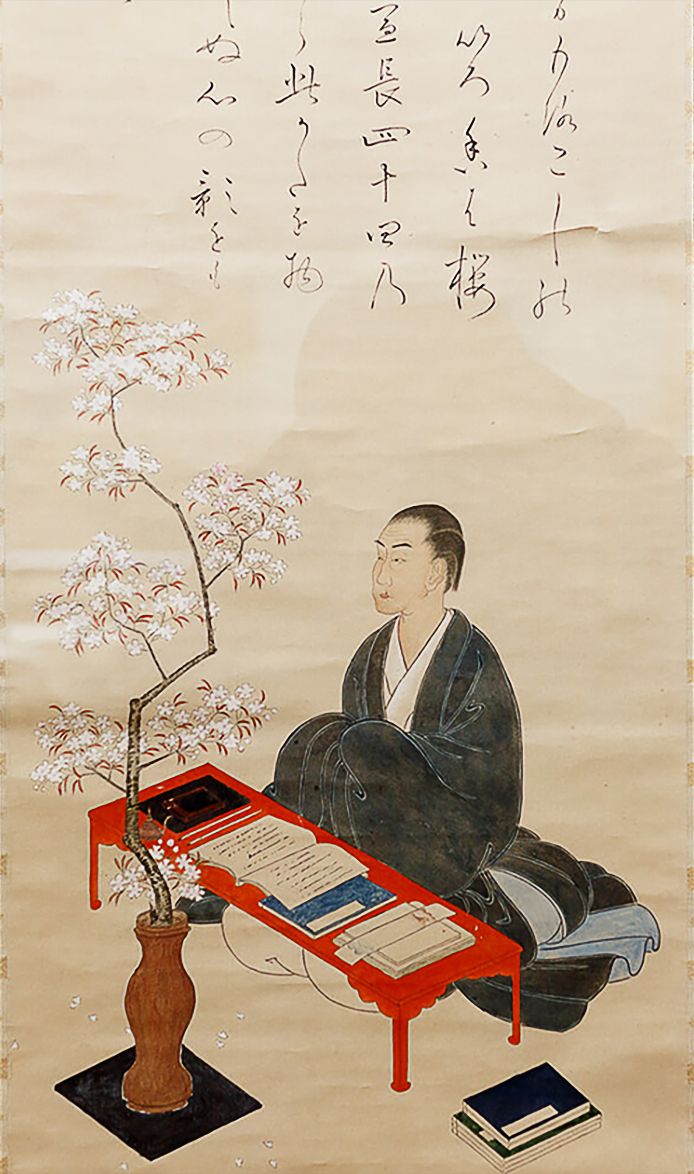

Motoori Norinaga made lasting contributions to every part of Native Studies, almost all of them from Matsusaka, near the Ise Shrines, where he spent nearly his whole life. He met Kamo no Mabuchi only once, in 1763, yet became the most renowned of his students. His literary criticism of The Tale of Genji remains influential, and by setting aside the moralising readings of earlier Buddhist critics it opened the way to a more modern criticism.
His greatest work was a full philological commentary on the Kojiki of 712, the hardest of Japan’s oldest classics to decipher and the last to be read, from which he built a new form of Shinto that he claimed was the original. Courtiers in Kyoto knew his scholarship and feudal lords sought his advice, and because of his focus on the kami, Kokugaku has sometimes been called a Shinto revival.
Key ideas
- The pathos of things (mono no aware)
- The Tale of Genji shows how feeling pervades life’s great events. Its reader should not ask whether the characters act rightly by Confucian or Buddhist standards, but enter into their emotions; the novel is neither a Confucian nor a Buddhist Way, but a tale of human life.
- The Way of the kami
- Treating the Kojiki as a true book, Norinaga argued that Japan’s native Way was made not by human beings, as the Chinese Ways were, but by the kami, who stand behind everything human beings do.
- What the kami are
- Kami are the gods of the old chronicles and of the shrines, but also birds and beasts, plants, seas and mountains, and anything out of the ordinary that inspires awe, even evil things, among them the line of divine emperors.
- Refinement in poetry
- Against his teacher Mabuchi, Norinaga praised the elegance of the later Shin Kokinshū poets, who stood back from their own circumstances far enough to capture the pathos of things in thirty-one syllables.
- Tradition
- Japanese
- Region
- Matsusaka, Japan
- Period
- Edo
- Themes
- Art and beauty
Influences
Where these links come from
- Motoori Norinaga drew on Kamo no Mabuchi. Source: Gideon Fujiwara and Peter Nosco, The Kokugaku (Native Japan Studies) School, Stanford Encyclopedia of Philosophy
- Hirata Atsutane drew on Motoori Norinaga. Source: Gideon Fujiwara and Peter Nosco, The Kokugaku (Native Japan Studies) School, Stanford Encyclopedia of Philosophy
Key works
- Kojiki-den
- Tama no ogushi
Terms on this page
- kami
- The powers revered in ancient Japanese religion and in Shintō, often too narrowly translated “gods”, which manifested a power to inspire awe.
- mono no aware
- The pathos of things: the feeling that things stir in us because they pass away. Motoori Norinaga made it the key to reading The Tale of Genji and Japanese poetry.
Sources
- Gideon Fujiwara and Peter Nosco, The Kokugaku (Native Japan Studies) School, Stanford Encyclopedia of Philosophy
- Thomas Kasulis and Raquel Bouso, Japanese Philosophy, Stanford Encyclopedia of Philosophy