Philosopher
Kamo no Mabuchi
1697–1769
Also known as Mabuchi
Edo-period scholar of Japan's oldest poetry, who held that the ancient Way followed the rhythms of nature and was corrupted by the artificial morals imported from China.
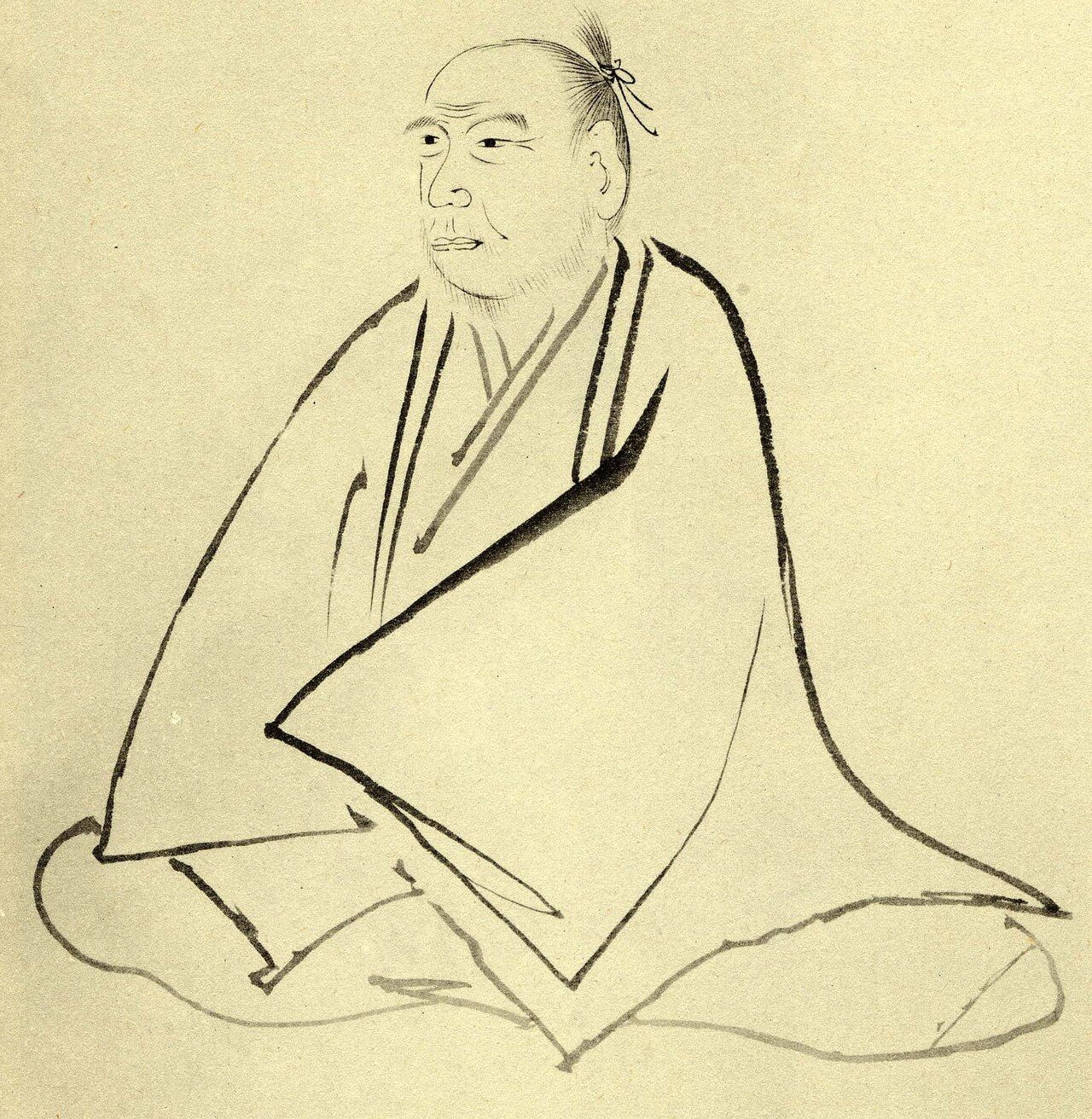

Kamo no Mabuchi grew up in Hamamatsu, on the road between Kyoto and Edo, and studied at the school of Kada no Azumamaro, where he met the Man’yōshū, Japan’s oldest poetry anthology, and the whole field of Kokugaku, or Native Studies. From 1746 to 1760 he served as the authority on Japanese learning to Tayasu Munetake, the shogun’s younger brother. Much of his work was a philological study of the Man’yōshū, through which he hoped to recover the words and spirit of Japan before they were altered by Chinese influence.
After his retirement he spoke more openly of his own age as a decline from ancient times, and became fiercely hostile to Chinese learning. His academy on the edge of Edo was the first successful private school of Kokugaku, with some three hundred students, the most famous of them Motoori Norinaga, whom he met only once.
Key ideas
- A natural Way before China
- In the age of the Man’yōshū, Japan was governed by the descendants of the kami according to a Way that followed the rhythms of heaven and earth. The theories later brought from China replaced these natural virtues with artificial morals, and disorder followed.
- Recite the old verses
- Reading the most ancient verses aloud carries one’s words and heart (kokoro) back to the ancient past, so that one acquires, without effort, the old virtues of honesty, directness and vigour that his corrupt age lacked.
- No word, no need
- The ancient Japanese language had no native words for the Confucian virtues, which showed, Mabuchi argued, that ancient Japan had no need of them: its order came from living in step with nature.
Influences
Where these links come from
- Motoori Norinaga drew on Kamo no Mabuchi. Source: Gideon Fujiwara and Peter Nosco, The Kokugaku (Native Japan Studies) School, Stanford Encyclopedia of Philosophy
Terms on this page
Sources
- Gideon Fujiwara and Peter Nosco, The Kokugaku (Native Japan Studies) School, Stanford Encyclopedia of Philosophy