Philosopher
Sakya Paṇḍita
1182–1251
Also known as Sakya Pandita, Sapaṇ, Kunga Gyeltsen, Sa skya Paṇḍita Kun dga' rgyal mtshan
Sakya scholar, one of Tibet's greatest philosophers, whose Treasure of Reasoning turned Tibetan epistemology to Dharmakīrti's Pramāṇavārttika and criticised his Tibetan predecessors.
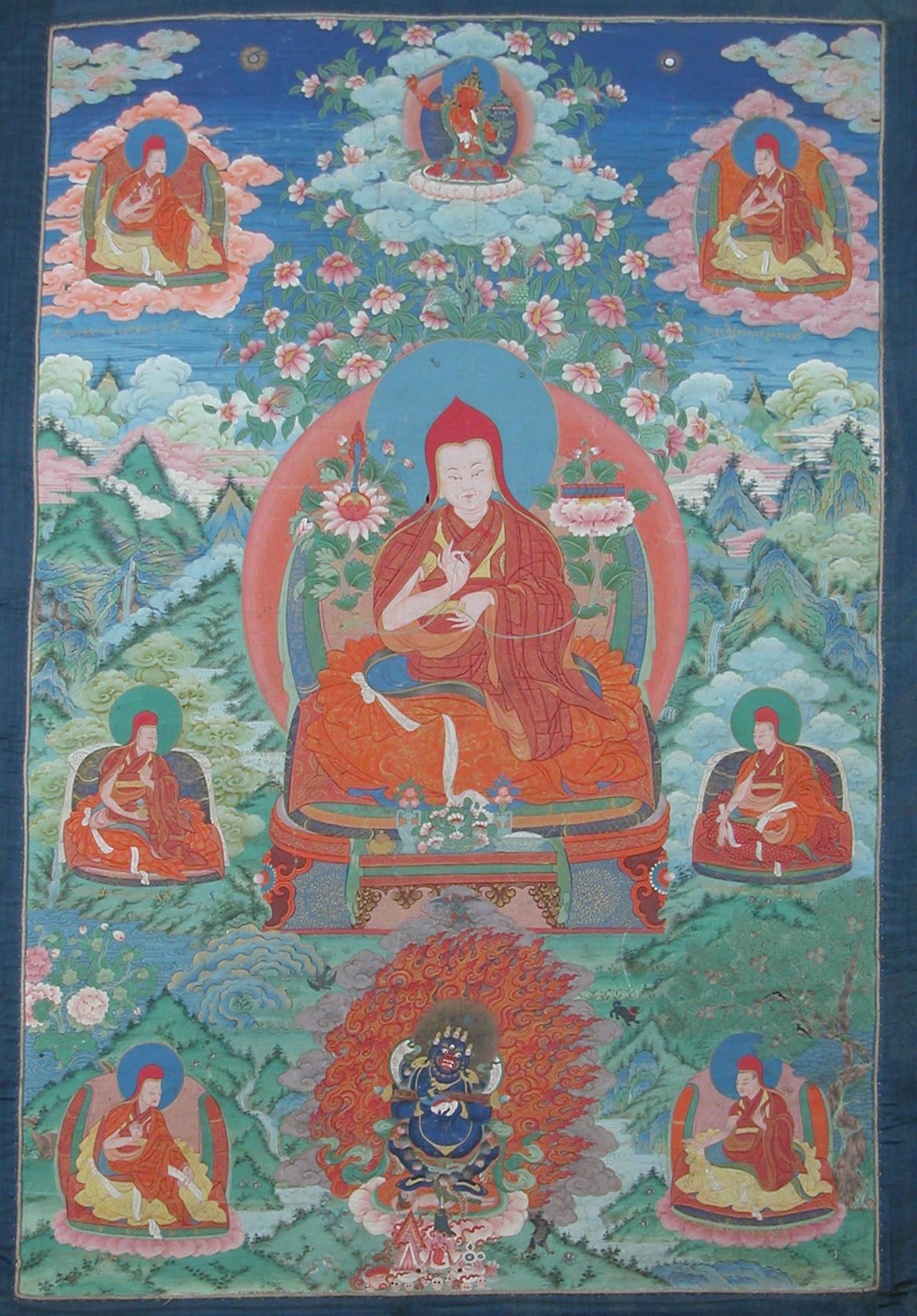

Sakya Paṇḍita, ‘the Paṇḍit from Sakya’, was fourth in the line of ‘Five Great Throneholders’ of Sakya monastery, seat of the noble Khön clan and of one of Tibet’s main schools of Buddhism. His learning was broad, but his greatest contributions were in epistemology, philosophy of language, the art of debate, and grammar, lexicography and poetics. He is counted among Tibet’s ‘great translators’ and began the sustained Tibetan study of Dharmakīrti’s Pramāṇavārttika.
Invited in 1244 by the Mongol prince Köden to negotiate Tibet’s surrender, he died in the Mongol capital; his nephew Phakpa later became administrator of Tibet under Mongol rule. His Treasure of Reasoning, written in 1219, opened the classical period of Tibetan epistemology.
Key ideas
- Strict nominalism
- Sakya Paṇḍita denied that cognitive and linguistic objects are real. Concepts cannot be both useful and impermanent without becoming private, mind-dependent objects; what needs explaining is why they seem to appear and work, which Buddhism traces to beginningless karmic conditioning.
- Against an ultimately real virtue
- Some contemporaries treated the whole mass of virtue in the universe as a self-established, eternal thing, identical with ultimate reality. Sakya Paṇḍita argued that this was an error threatening a basic teaching.
- A programme of learning
- His Gateway to Learning argues for the value of scholastic learning for Tibetans and sets out a course of study by which anyone diligent could learn to defend the Dharma, a rare medieval treatise on the aims and means of education.
Influences
Influenced by
- Dharmakīrtic. 600 – c. 660 CE
- Ngok Loden Sherab1059–1109criticised
- Chapa Chökyi Sengé1109–1169criticised
Sakya Paṇḍita1182–1251
Influenced by
- Dharmakīrtic. 600 – c. 660 CE
- Ngok Loden Sherab1059–1109criticised
- Chapa Chökyi Sengé1109–1169criticised
Sakya Paṇḍita1182–1251
Where these links come from
- Sakya Paṇḍita drew on Dharmakīrti. Source: Jonathan C. Gold, Sakya Paṇḍita, Stanford Encyclopedia of Philosophy
- Sakya Paṇḍita argued against Ngok Loden Sherab. Source: Pascale Hugon, Tibetan Epistemology and Philosophy of Language, Stanford Encyclopedia of Philosophy
- Sakya Paṇḍita argued against Chapa Chökyi Sengé. Source: Pascale Hugon, Tibetan Epistemology and Philosophy of Language, Stanford Encyclopedia of Philosophy
Key works
- Treasure of Reasoning (Tshad ma rigs gter), 1219
- A Clear Differentiation of the Three Vows
- Gateway to Learning
Sources
- Jonathan C. Gold, Sakya Paṇḍita, Stanford Encyclopedia of Philosophy
- Pascale Hugon, Tibetan Epistemology and Philosophy of Language, Stanford Encyclopedia of Philosophy