Philosopher
Ruth Barcan Marcus
1921–2012
Also known as Ruth Barcan
American logician who built the first formal systems of quantified modal logic, defended modal logic against Quine, and argued that proper names are meaningless tags.
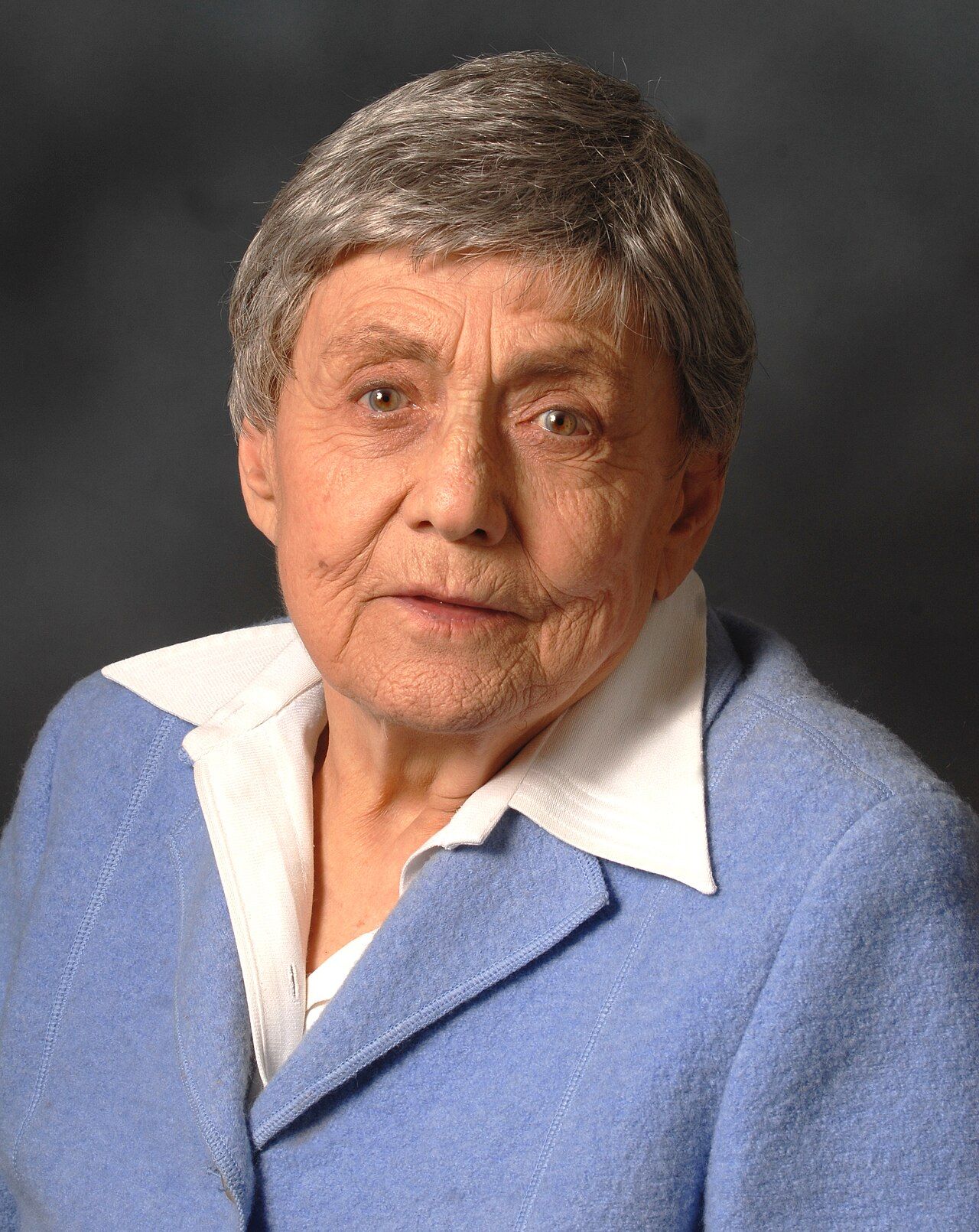

Ruth Barcan was born in New York in 1921 to secular Jewish parents of Eastern European descent. She chose New York University over a women’s college, went on to Yale’s graduate programme in 1942, and took her PhD in 1946, the year of her first paper. An anti-nepotism rule at Northwestern, where her husband taught, kept her from a regular post for some years; in 1964 she was hired to found the philosophy department at the University of Illinois in Chicago.
From the 1950s on she took a leading part in philosophy’s fiercest debates, above all against Quine over the legitimacy of modal logic. She also wrote on belief, rationality and deontic logic, and on Spinoza and Russell. She retired from Yale in 1992 and died in New Haven in 2012.
Key ideas
- Quantified modal logic
- Her first paper, in 1946, gave the first published formal systems of quantified modal logic, helping to found intensional logic and, later, modal metaphysics; the Barcan formula bears her name.
- Real moral dilemmas
- A moral code is not inconsistent just because it can make incompatible demands. Real dilemmas arise because we act in a world we only partly control, and our second-order duty is to arrange our lives to avoid them where we can.
- Tradition
- Western
- Region
- New York, Chicago and Yale
- Period
- Contemporary
- Themes
- Logic and argument
Influences
Where these links come from
- Ruth Barcan Marcus drew on Bertrand Russell. Source: Roberta Ballarin, Ruth Barcan Marcus, Stanford Encyclopedia of Philosophy
- Ruth Barcan Marcus argued against W. V. O. Quine. Source: Roberta Ballarin, Ruth Barcan Marcus, Stanford Encyclopedia of Philosophy
Key works
- Modalities and Intensional Languages, 1961
- Moral Dilemmas and Consistency, 1980
Sources
- Roberta Ballarin, Ruth Barcan Marcus, Stanford Encyclopedia of Philosophy