Philosopher
Marie de Gournay
1565–1645
Also known as Marie Le Jars de Gournay
Friend and editor of Montaigne, whose essays defended the equality of the sexes and women's right to education and public office.
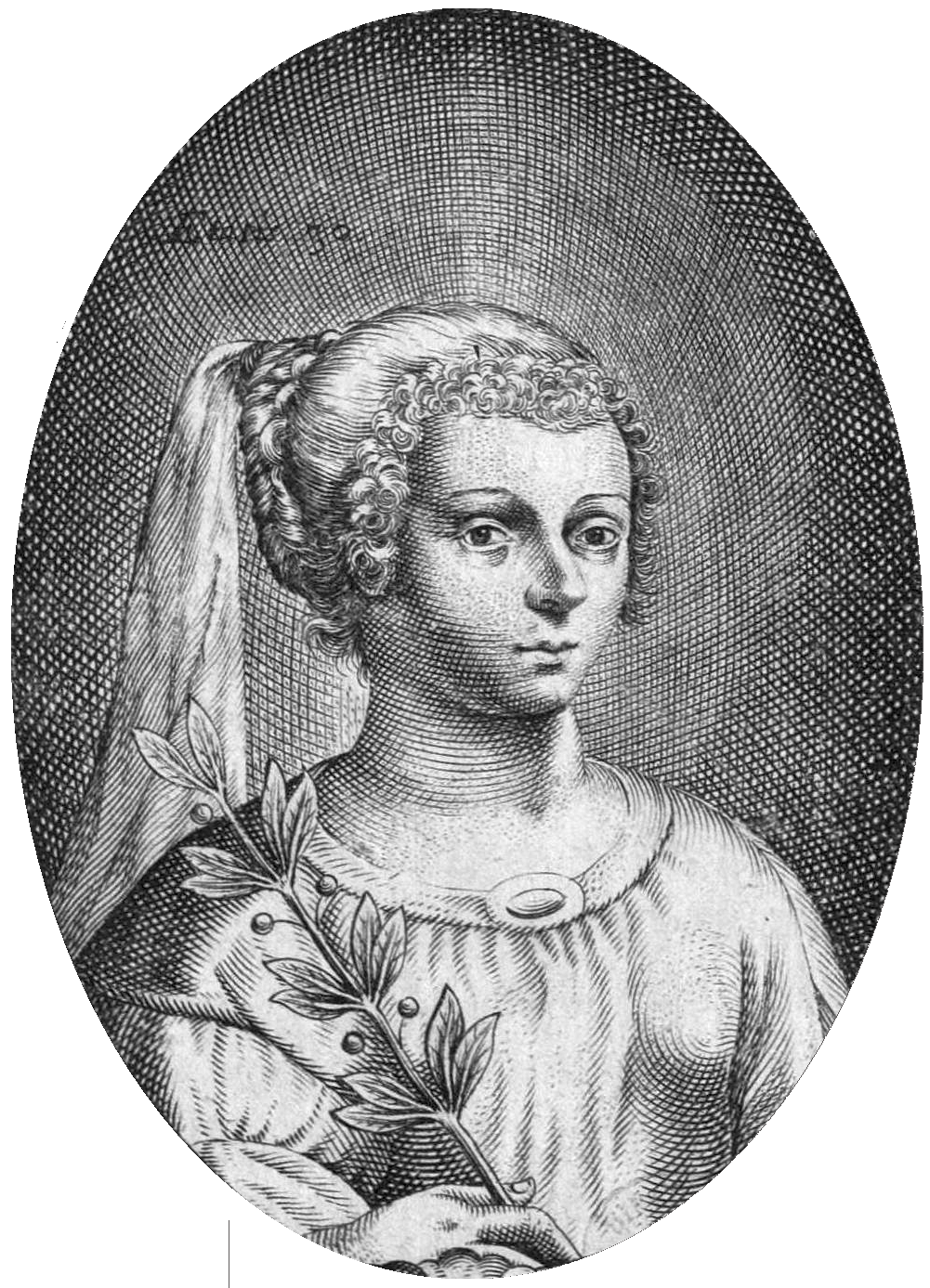

Marie Le Jars de Gournay, born in 1565 into a minor noble family, educated herself, learning Latin and some Greek and reading Plutarch and the Stoics. Discovering Montaigne’s Essays, she became his devoted disciple; they met in 1588, and he called her his “adopted daughter”. After his death his widow asked her to edit a posthumous edition of his works, which she published in 1595 with a long preface of her own, and she produced many later editions.
Unmarried and supporting herself by her pen in Parisian society, she drew both ridicule and fascination. She wrote on commission for the court, Louis XIII among her patrons, was granted a pension by Cardinal Richelieu in 1634, and helped to organise the young Académie française. She died in 1645.
Key ideas
- The equality of the sexes
- Drawing on classical, biblical and Church sources, Gournay argued that men and women are equal, and that women have an equal right to education and to public offices.
- In defence of metaphor
- Her literary essays argued that metaphor in poetry is valuable both as art and as a way of knowing, and the older poetry of the Pléiade against the newer neoclassical style.
- Virtue and slander at court
- Her moral writings examined how courtiers behave well and badly, slander above all, and her social criticism attacked corruption at court and among the clergy and aristocracy.
- Free will and humanist education
- She took the side of free will against Augustinians who emphasised predestination, and championed a humanist education in the classical languages, grammar, logic, philosophy and theology.
- Tradition
- Western
- Region
- Paris
- Period
- Early modern
- Themes
- Women and gender
Influences
Where these links come from
- Marie de Gournay drew on Michel de Montaigne. Source: John J. Conley, Marie Le Jars de Gournay, Internet Encyclopedia of Philosophy
Key works
- Equality Between Men and Women, 1622
- Read free at Wikisource (in French)
- Complaints of Ladies, 1626
- Read free at Wikisource (in French)
Sources
- John J. Conley, Marie Le Jars de Gournay, Internet Encyclopedia of Philosophy