Philosopher
Margaret Fuller
1810–1850
Also known as Sarah Margaret Fuller
American transcendentalist, critic and journalist whose Woman in the Nineteenth Century argued that every person combines masculine and feminine qualities.
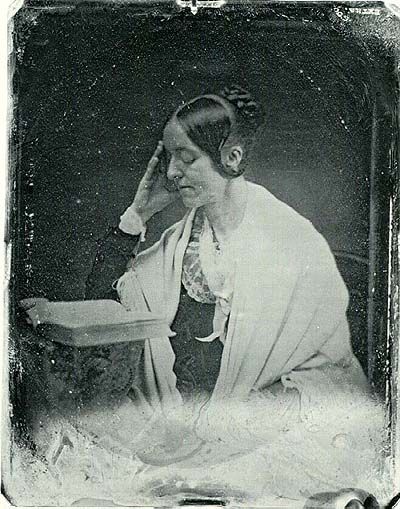

Margaret Fuller was born in Cambridgeport, Massachusetts, in 1810, and given by her father the demanding classical schooling normally kept for boys. A friend of Ralph Waldo Emerson, she joined the transcendentalists, edited their journal The Dial from 1840, and from 1839 to 1844 led her famous ‘Conversations’ for women in Boston.
In 1844 she became a book reviewer for Horace Greeley’s New York Tribune, and from 1846 its correspondent in Europe, where in Italy she met Giovanni Ossoli, whom she married, and wrote a history of the short-lived Roman Republic. Sailing home in 1850, she, her husband and their infant son died when their ship ran aground in a storm off Fire Island, New York.
Key ideas
- No wholly masculine man
- Manhood and Womanhood are ideals that individuals should strive towards, and each holds masculine and feminine qualities alike: no man is entirely masculine, and no woman entirely feminine.
- Let them be sea-captains
- Women would realise their potential, rousing their latent powers, if a much wider range of occupations were open to them.
- Self-culture
- Cultivating one’s own self was central to Fuller’s thought and life. With Emerson she turned this into a quest for spiritual self-transcendence, while insisting it belonged to women as much as men.
- Tradition
- Western
- Region
- Massachusetts, New York and Italy
- Period
- Late modern
- Themes
- Women and gender
Key works
- Woman in the Nineteenth Century, 1845
- The Great Lawsuit, 1843
Sources
- Daniel Howe and Sonia Di Loreto, Margaret Fuller, Stanford Encyclopedia of Philosophy