Philosopher
Harriet Taylor Mill
1807–1858
Also known as Harriet Hardy, Harriet Taylor
English philosopher who worked so closely with John Stuart Mill that their contributions are hard to separate, and whose Enfranchisement of Women demanded full equality for women.
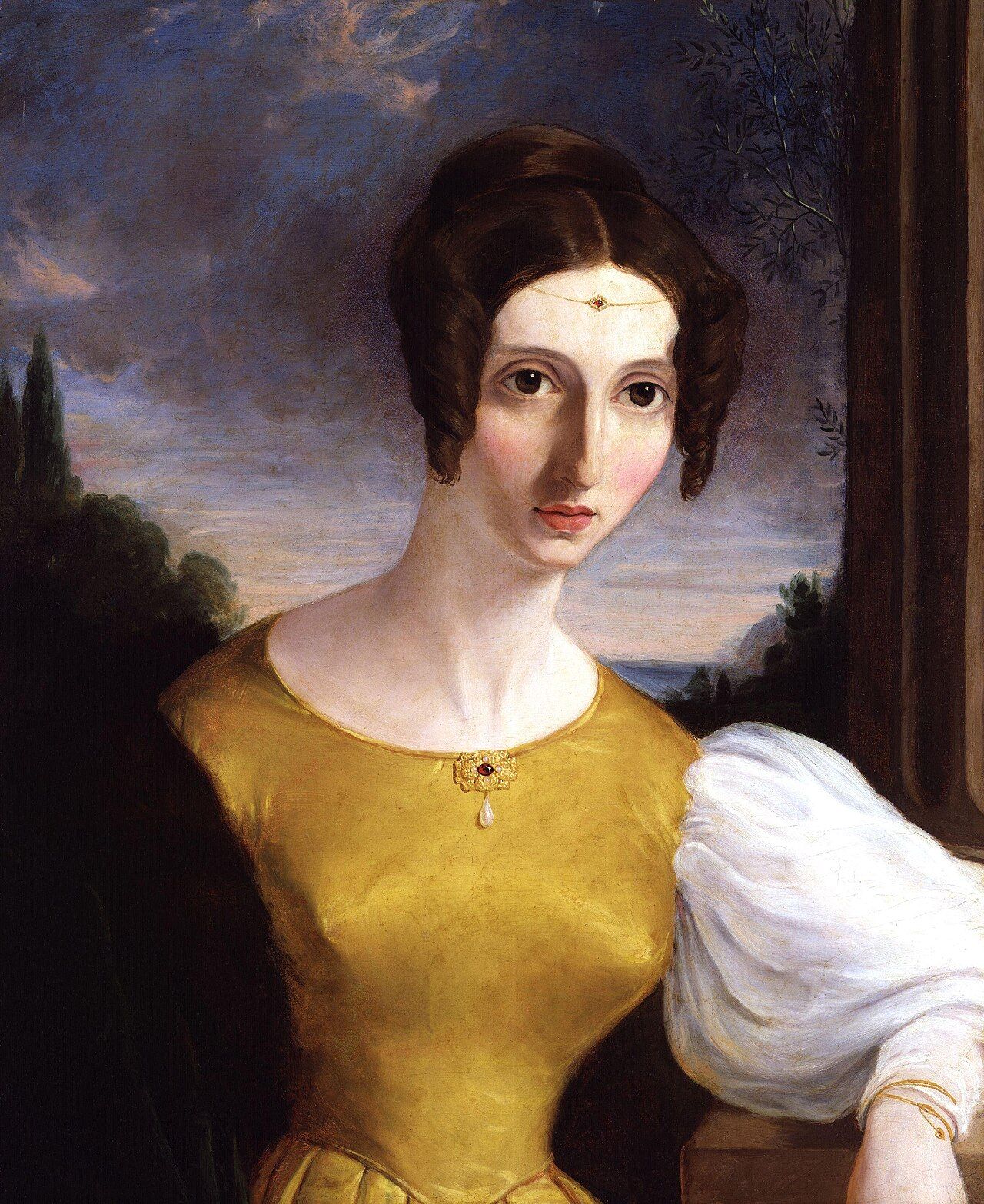

Harriet Hardy was born in London in 1807 and at eighteen married John Taylor, a pharmaceuticals wholesaler, with whom she had three children. Widowed in 1849, she married John Stuart Mill in 1851. She died of respiratory failure in Avignon in 1858.
Mill praised her wisdom extravagantly, while others who knew her were scathing; the evidence about what she wrote is contradictory, and her letters were destroyed. ‘The Enfranchisement of Women’, published in the Westminster Review in 1851, is the strongest candidate for a significant work written mainly or entirely by her.
Key ideas
- Equality in every right
- ‘The Enfranchisement of Women’ argues not just for the vote but for women’s equality with men in all political, civil and social rights, and takes a more radical view of gender roles than Mill’s later Subjection of Women.
- How exclusion harms everyone
- Denied political rights, women’s interests are confined to the family, and their influence on their husbands weakens men’s public spirit; denied equal education, wives hold back rather than encourage their husbands’ moral growth.
- Tradition
- Western
- Region
- London
- Schools
- Utilitarianism
- Period
- Late modern
- Themes
- Women and gender
Influences
Where these links come from
- John Stuart Mill drew on Harriet Taylor Mill. Source: Dale E. Miller, Harriet Taylor Mill, Stanford Encyclopedia of Philosophy
Key works
- The Enfranchisement of Women, 1851
Sources
- Dale E. Miller, Harriet Taylor Mill, Stanford Encyclopedia of Philosophy