Philosopher
Gorampa
1429–1489
Also known as Gorampa Sonam Senge, Go rams pa bSod nams Seng ge
Sakya Madhyamaka philosopher and fierce critic of Tsongkhapa, whose banned works were rediscovered in the twentieth century and are now widely studied.
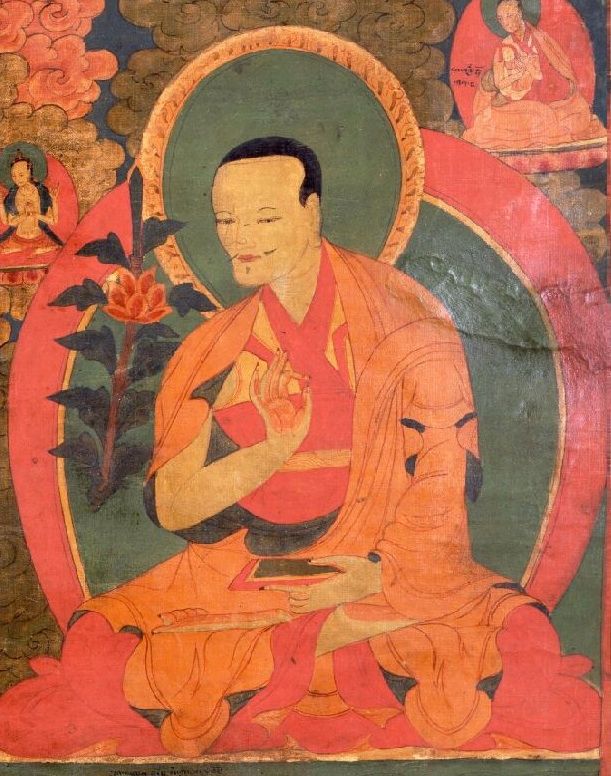

Gorampa was born in eastern Tibet in 1429 and went to central Tibet at nineteen to study, briefly with the scholar Rongtön at Nalendra monastery and then with many other teachers, mastering tantric practice as well as philosophy. He went on to found the monastery of Thubten Namgyal Ling in 1473.
His attacks on Tsongkhapa were so controversial that Gelug leaders suppressed his works soon after he wrote them. They stayed hidden until the early twentieth century, when the thirteenth Dalai Lama allowed them to be collected and reprinted. Today they are studied in Kagyu and Nyingma as well as Sakya colleges, and have shaped the nonsectarian movement in Tibetan Buddhism.
Key ideas
- Two truths by the way we engage
- The difference between the two truths lies in how a subject apprehends an object. Conventional truth comes to us through concepts, logic and reasoning; ultimate truth lies outside conceptual thought, and is realised once all concepts have been eliminated.
- Free from conceptual constructs
- Gorampa often cited Āryadeva’s fourfold denial, no existence, no non-existence, neither both nor neither, to express the Madhyamaka view as freedom from all conceptual constructs, through which an ordinary person becomes an awakened Buddha.
- A difference of method
- Svātantrika and Prāsaṅgika differ in method rather than in their final view, and different methods can lead to the same freedom from conceptual proliferation.
- Tradition
- Tibetan
- Region
- Eastern and central Tibet
- Schools
- Madhyamaka
- Period
- Post-classical
- Themes
- Knowledge and scepticism
Influences
Key works
- Distinguishing the View (lta ba'i shan 'byed)
Sources
- Constance Kassor, Gorampa, Stanford Encyclopedia of Philosophy