Philosopher
Dolpopa
1292–1361
Also known as Dolpopa Sherab Gyaltsen, Dol po pa Shes rab rgyal mtshan
Tibetan master of Jonang whose 'Great Middle Way' taught a single absolute, a pure transcendental knowledge, and was the burning question that Tsongkhapa answered.
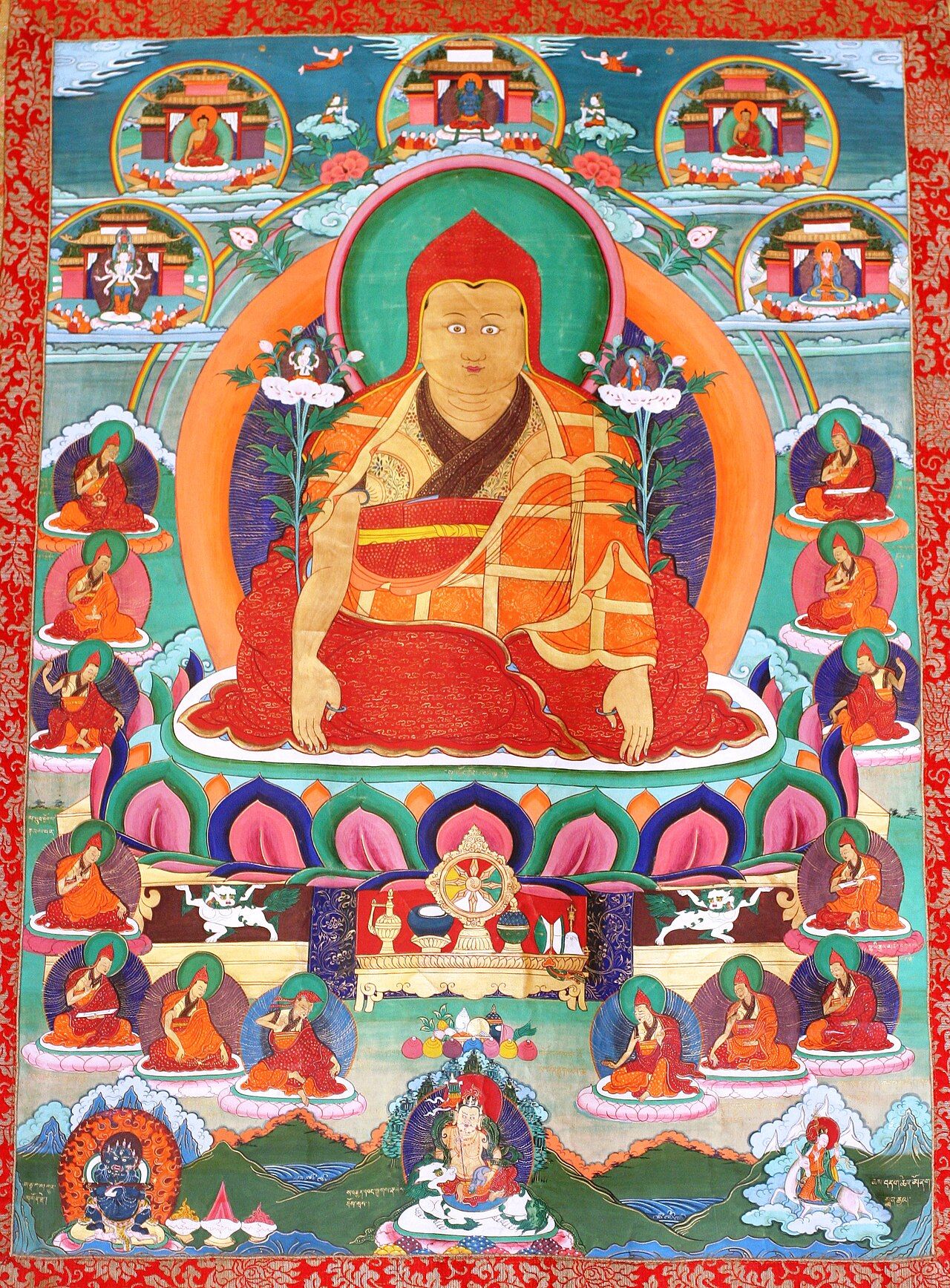

Dolpopa was a renowned master who lived at Jonang, where Tsongkhapa later received instruction in the Kālacakra tantra. When Tsongkhapa reached central Tibet, Dolpopa’s Great Middle Way was the most pressing philosophical issue of the day.
Tsongkhapa’s mature writings explicitly reject Dolpopa’s view, and Gorampa’s polemic Distinguishing the View sets out his own position against both Tsongkhapa and Dolpopa.
Key ideas
- The Great Middle Way
- Dolpopa held that Nāgārjuna and Asaṅga, writing in the golden age, shared one philosophy, the Great Middle Way, which the Buddha himself had clearly taught.
- A Buddha says what he means
- His hermeneutics rested on the principle that a Buddha always states clearly what he means.
- Pure transcendental knowledge
- He distinguished a pure, transcendental knowledge from the defiled foundation consciousness, and took the former to be a single absolute that has every quality of a Buddha.
- Tradition
- Tibetan
- Region
- Jonang, Tibet
- Period
- Classical
- Themes
- What is ultimately real
Influences
Where these links come from
- Tsongkhapa argued against Dolpopa. Source: Gareth Sparham and Chandra Chiara Ehm, Tsongkhapa, Stanford Encyclopedia of Philosophy
- Gorampa argued against Dolpopa. Source: Constance Kassor, Gorampa, Stanford Encyclopedia of Philosophy
Sources
- Gareth Sparham and Chandra Chiara Ehm, Tsongkhapa, Stanford Encyclopedia of Philosophy
- Constance Kassor, Gorampa, Stanford Encyclopedia of Philosophy