Philosopher
Confucius
c. 551 – c. 479 BCE
Also known as Kongzi, Kong Qiu, Kong Fuzi
Teacher and would-be adviser to rulers, whose sayings about virtue, ritual and good government became the foundation of Confucianism.
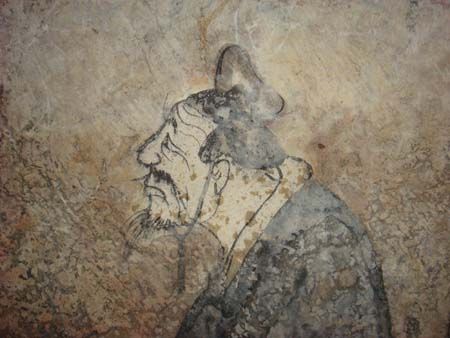

What you do not want done to yourself, do not do to others.
Confucius taught that social harmony depends on the moral cultivation of individuals, especially of those who govern. He emphasised benevolence (ren), the proper performance of ritual (li), and respect within family relationships. His teachings survive mainly in the Analects, a collection of his sayings compiled by later followers.
The dates given for his life are the traditional ones.
Key ideas
- Ren (benevolence)
- The most all-embracing virtue, which the Analects presents as care for others and acting for what is good from their standpoint. Confucius called it “overcoming oneself and returning to ritual propriety”.
- Ritual with reverence
- Confucius insisted on performing the Zhou rites correctly, but valued them for the attitude behind them. Performed with reverence, ritual and music restrain desires and shape moral character.
- The way of the gentleman (junzi)
- An ideal of character distilled from the sages of the past, and open to anyone willing to “work at the roots” by cultivating virtues such as benevolence, righteousness and ritual propriety.
- Filial piety (xiao)
- Serving one’s parents properly in life and honouring them after death is “the root of a person”. Confucius linked it to loyalty in public life, so that good order in the family supports good order in the state.
- Tradition
- Chinese
- Region
- State of Lu
- Schools
- Confucianism
- Period
- Classical Chinese
Influences
Confuciusc. 551 – c. 479 BCE
Influenced
Before 500 CE
- Mozifl. 440–420 BCEcritic
- Menciusc. 372 – c. 289 BCE
- Xunzic. 310 – after 238 BCE
- Yang Xiong53 BCE – 18 CE
- Wang Chong27 – c. 100 CEcritic
- Wang Fu82–167 CE
- Wang Bi226–249 CE
500 CE – 1400
Confuciusc. 551 – c. 479 BCE
Influenced
Before 500 CE
- Mozifl. 440–420 BCEcritic
- Menciusc. 372 – c. 289 BCE
- Xunzic. 310 – after 238 BCE
- Yang Xiong53 BCE – 18 CE
- Wang Chong27 – c. 100 CEcritic
- Wang Fu82–167 CE
- Wang Bi226–249 CE
500 CE – 1400
Where these links come from
- Mozi argued against Confucius. Source: Bryan Van Norden, Mencius, Stanford Encyclopedia of Philosophy
- Mencius drew on Confucius. Source: Bryan Van Norden, Mencius, Stanford Encyclopedia of Philosophy
- Xunzi drew on Confucius. Source: Paul R. Goldin, Xunzi, Stanford Encyclopedia of Philosophy
- Yang Xiong drew on Confucius. Source: Andrew Colvin, Yang Xiong, Internet Encyclopedia of Philosophy
- Wang Chong argued against Confucius. Source: Alexus McLeod, Wang Chong (Wang Ch’ung), Internet Encyclopedia of Philosophy
- Wang Fu drew on Confucius. Source: Alexus McLeod, Philosophy in Han Dynasty China, Stanford Encyclopedia of Philosophy
- Wang Bi drew on Confucius. Source: Ronnie Littlejohn, Wang Bi (Wang Pi), Internet Encyclopedia of Philosophy
- Zongmi argued against Confucius. Source: Bryan Van Norden and Nicholaos Jones, Huayan Buddhism, Stanford Encyclopedia of Philosophy
- Zhu Xi drew on Confucius. Source: Kirill Thompson, Zhu Xi, Stanford Encyclopedia of Philosophy
Key works
- Analects (Lunyu)
- Read free at Standard Ebooks (translated by James Legge)
Terms on this page
- ren
- Humaneness or benevolence (仁), the cardinal Confucian virtue. Cheng Hao treated it as the whole of human nature, by which a person forms one body with all things and feels their pain as their own.
- li
- Ritual propriety (禮): the forms of ritual and etiquette, from ceremonies to everyday courtesy, which the Analects counts among the gentleman’s central virtues.
- junzi
- The gentleman or exemplary person (君子): the moral ideal of the Analects, whose way is marked by benevolence, rightness, ritual propriety, wisdom and trustworthiness.
- xiao
- Filial piety (孝): respect and devotion to one’s parents. The Analects says that someone who behaves with filial piety will rarely disorder society.
Sources
- Mark Csikszentmihalyi, Confucius, Stanford Encyclopedia of Philosophy