Philosopher
Yeshayahu Leibowitz
1903–1994
Israeli scientist and public intellectual whose radical theocentrism joined strict Orthodox practice to a stripped-down faith, and led him to oppose the occupation after 1967.
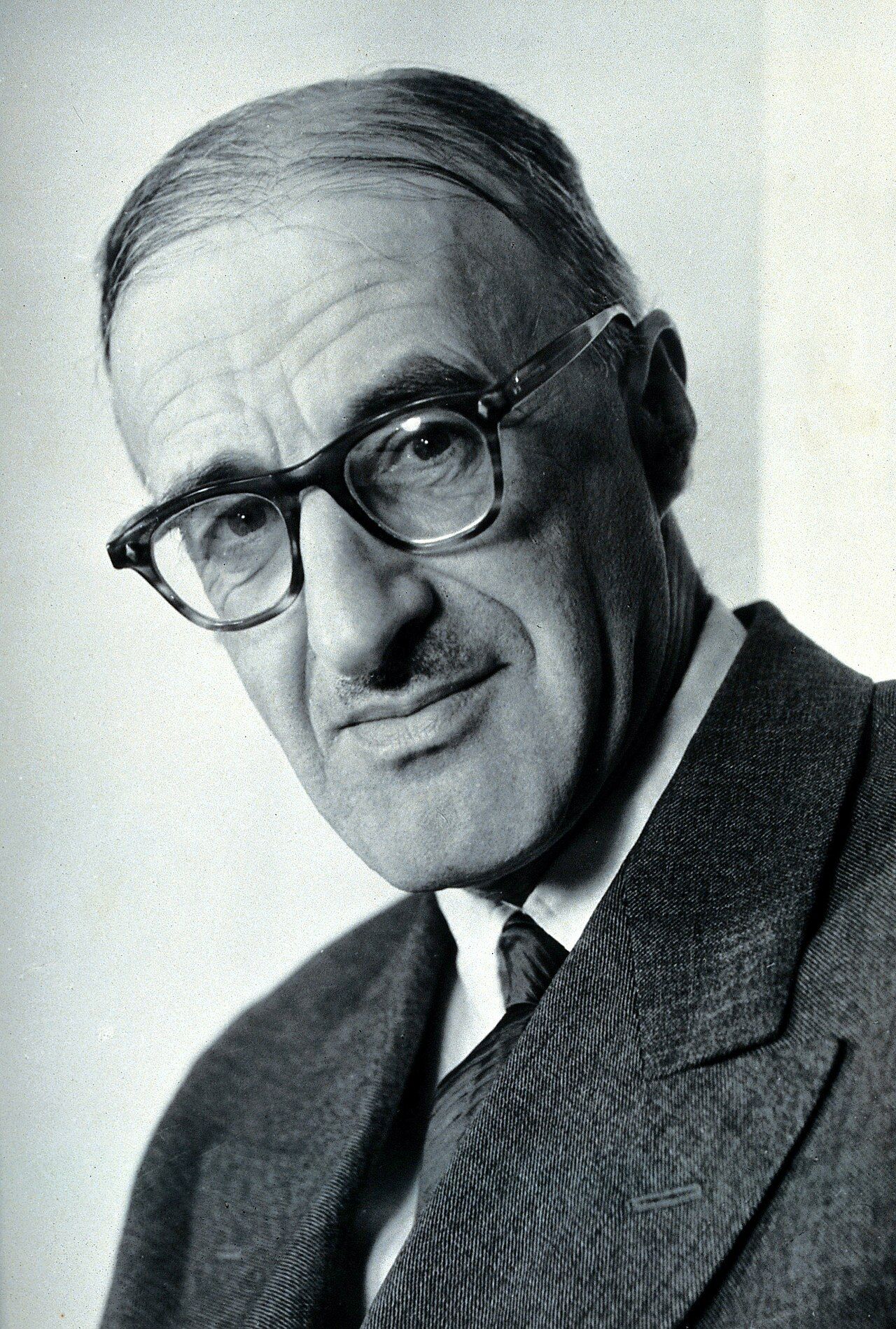

Yeshayahu Leibowitz was born in 1903 into an observant family in Riga. His family fled Russia for Berlin in 1919, where he studied chemistry and philosophy. In 1935 he moved to Palestine to teach biochemistry at the Hebrew University, later heading biological and organic chemistry and teaching neurophysiology, and edited several volumes of the Encyclopaedia Hebraica.
Isaiah Berlin, who had known him since childhood in Riga, called him “the conscience of Israel”. He was known above all for his political interventions, which stirred controversy until the year before his death in 1994. His study groups on Maimonides, his philosophical hero, and his radio talks on the weekly Torah reading were published in print.
Key ideas
- Radical transcendence
- Following Maimonides’ negative theology, Leibowitz held that God is utterly unlike anything we can encounter, so that nothing meaningful can be said to describe God; human concepts only work within human experience.
- Faith is practice
- Faith is constituted by keeping the commandments, and that commitment rests on nothing beyond the practice itself; belief in God has no content apart from it.
- Against religion in the state
- His theocentrism made him an unsparing critic of Israel’s rabbinic establishment and religious parties, and of Israeli policy in the territories occupied since 1967, urging soldiers to refuse to serve there.
Influences
Where these links come from
- Yeshayahu Leibowitz drew on Maimonides. Source: Daniel Rynhold, Yeshayahu Leibowitz, Stanford Encyclopedia of Philosophy
Key works
- Judaism, Human Values, and the Jewish State, 1992
Sources
- Daniel Rynhold, Yeshayahu Leibowitz, Stanford Encyclopedia of Philosophy