Philosopher
Wonhyo
617–686 CE
Also known as Wŏnhyo
Silla monk, often called the most prominent philosopher of Korean Buddhism, who taught that all beings arise from and return to the One Mind, and sought to reconcile rival Buddhist doctrines.
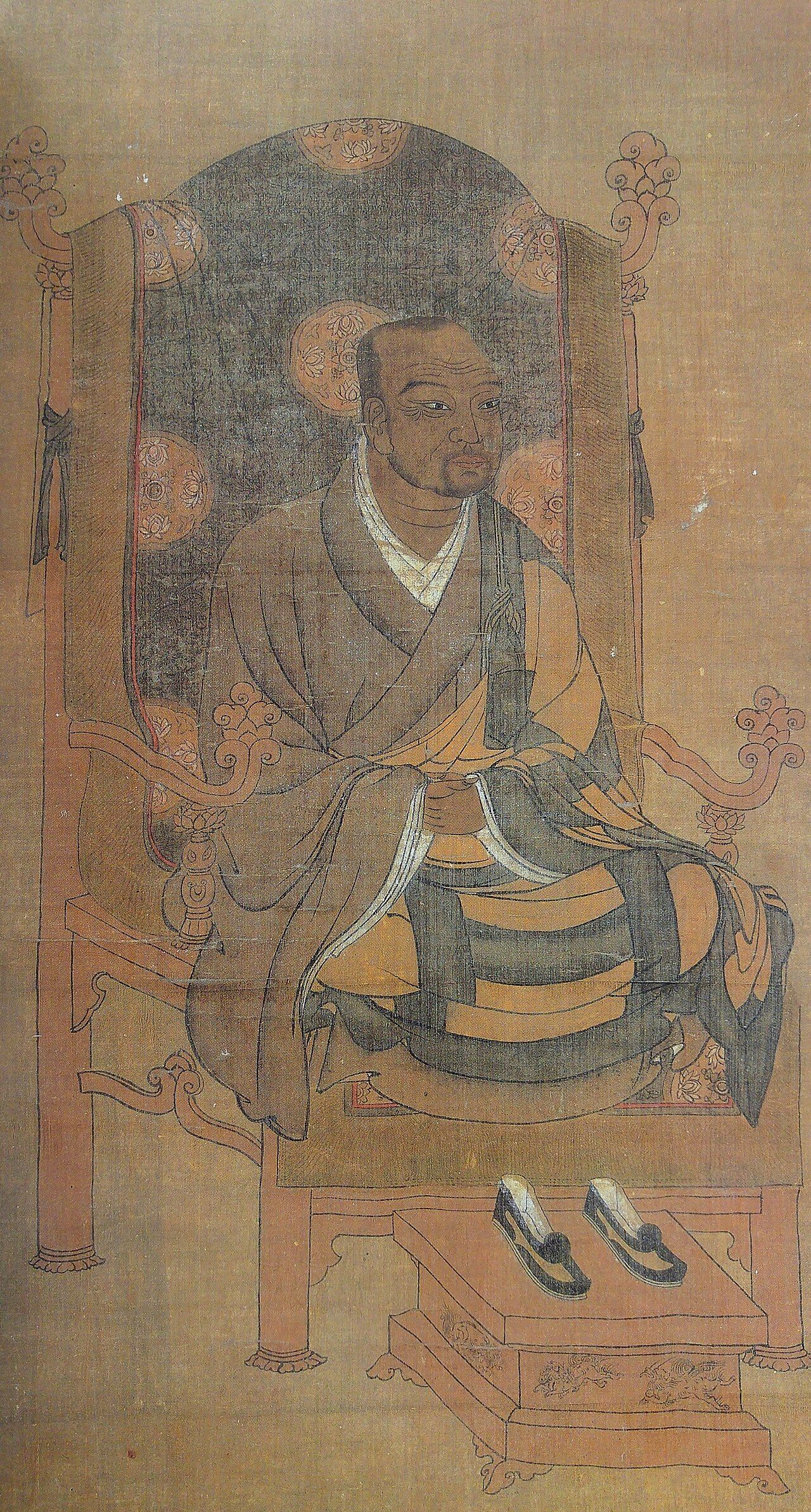

Wonhyo lived in the Silla kingdom and is often counted the greatest philosopher of Korean Buddhism. He worked through Madhyamaka, Sanlun and Yogācāra texts and scriptures such as the Lotus and Flower Garland sutras, and is credited with about seventy works, some twenty of which survive. He had planned to go to China to learn from Xuanzang but stayed in Silla instead, read Xuanzang’s Yogācāra on his own and answered it critically, exposing faults in its logical arguments. His command of Buddhist logic led some to call him a reincarnation of Dignāga.
His commentaries on the Awakening of Faith in the Mahāyāna were read in China, and influenced later thinkers there, among them Fazang. So that ordinary people could find their way back to the One Mind, he wandered from town to town reciting the name of Amitābha Buddha, a practice open to those who could not read. Later Koreans called him the “State preceptor of hwajaeng”. Under Japanese rule his idea of reconciliation was taken as the mark of a uniquely unified Korean Buddhism, a reading later criticised as nationalist; today it is offered as a resource for resolving conflict.
Key ideas
- The One Mind (ilsim)
- Drawing on the Awakening of Faith in the Mahāyāna, Wonhyo held that all beings come from the One Mind and return to it. It has two aspects, suchness and arising-and-ceasing; pure in itself and beyond words, it can be called a blend of defiled and undefiled only as a provisional description.
- Every being can awaken
- Against doubts raised by Xuanzang’s Yogācāra, Wonhyo held that every being is able to become enlightened, with perhaps rare exceptions, because the One Mind contains a pure Buddha-nature. To be enlightened is to return to the One Mind.
- Two schools, one mind
- Madhyamaka’s stress on emptiness fits the One Mind’s aspect of suchness, and Yogācāra’s account of the storehouse consciousness fits its aspect of arising and ceasing. Both schools, Wonhyo argued, describe true aspects of the same mind.
- Reconciling disputes (hwajaeng)
- Doctrinal disputes come from language, which cannot capture the whole truth, and each school, like the blind men feeling an elephant, grasps only part of the Buddha’s teaching. Wonhyo weighed each doctrine without attachment, neither affirming nor denying it.
- Tradition
- Korean
- Region
- Silla, Korea
- Period
- Three Kingdoms and Silla
- Themes
- What is ultimately real
Influences
Where these links come from
- Wonhyo argued against Xuanzang. Source: Lucy Hyekyung Jee, Korean Buddhism, Stanford Encyclopedia of Philosophy
- Fazang drew on Wonhyo. Source: Lucy Hyekyung Jee, Korean Buddhism, Stanford Encyclopedia of Philosophy
- Uicheon drew on Wonhyo. Source: Lucy Hyekyung Jee, Korean Buddhism, Stanford Encyclopedia of Philosophy
Terms on this page
- hwajaeng
- Reconciling disputes (和諍): Wonhyo’s way of harmonising rival Buddhist doctrines, holding that disputes arise from language and that each school grasps part of the Buddha’s teaching.
- ilsim
- The One Mind (一心): in Wonhyo, after the Awakening of Faith, the source from which all beings arise and to which they return, with an aspect of suchness and an aspect of arising and ceasing.
Sources
- Lucy Hyekyung Jee, Korean Buddhism, Stanford Encyclopedia of Philosophy