Philosopher
Richard Rorty
1931–2007
American pragmatist whose Philosophy and the Mirror of Nature attacked the idea of knowledge as a mental mirror of reality, and who defended a liberalism resting on solidarity rather than foundations.
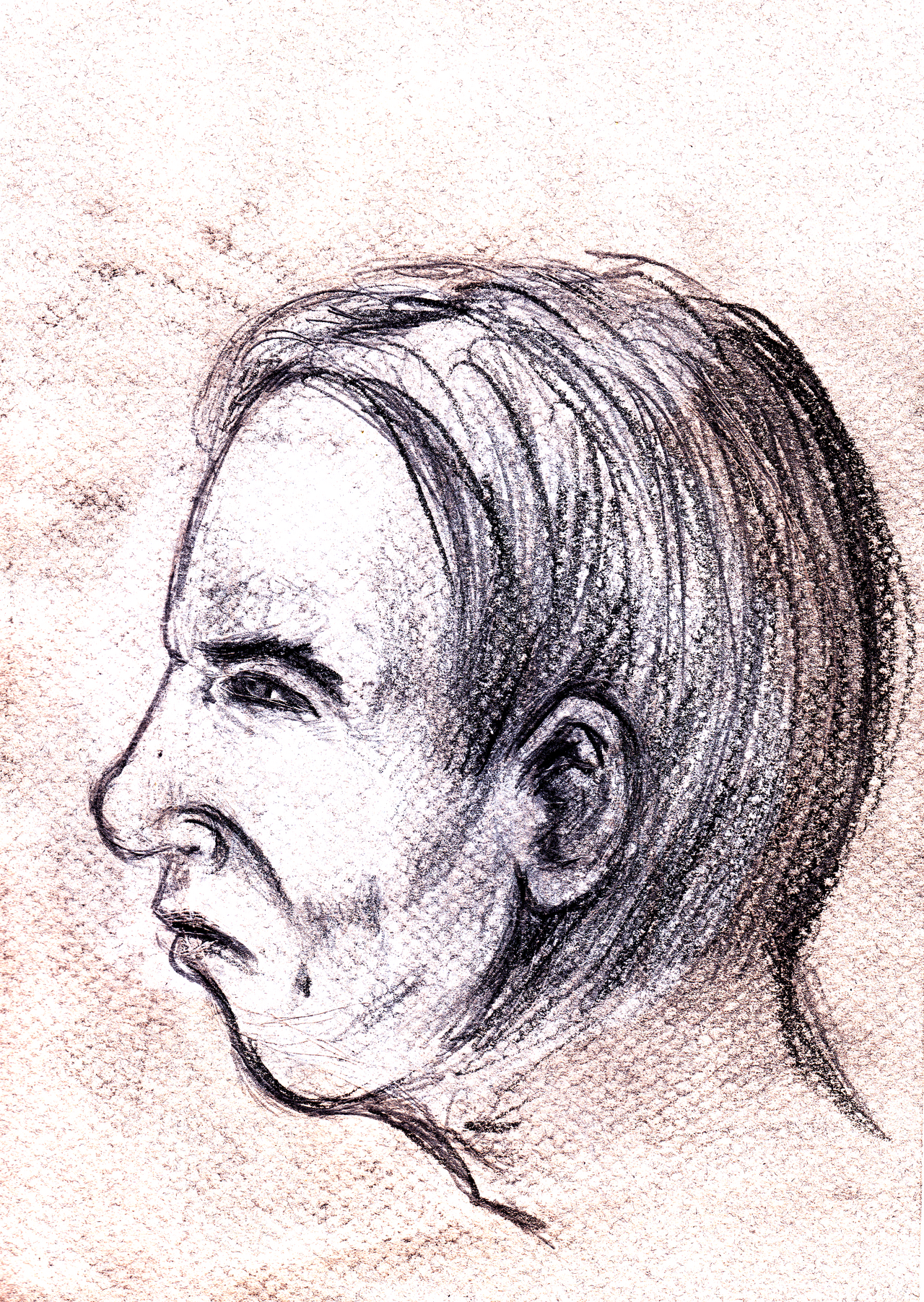

Richard Rorty was born in New York City in 1931 and grew up in a circle of anti-Stalinist reformers for whom patriotism, redistribution and Deweyan pragmatism went naturally together. In 1946 he went to the University of Chicago, where Rudolf Carnap and Charles Hartshorne were among his teachers, and took his doctorate at Yale. After posts at Wellesley and Princeton he moved to the University of Virginia in 1982 and to Stanford’s department of comparative literature in 1998. He died in 2007.
Philosophy and the Mirror of Nature (1979) made him famous and controversial. Drawing on Dewey, Hegel and Darwin, and later on Davidson, he argued that philosophy should stop seeking foundations for knowledge and see itself as one voice in the culture’s conversation. His later books, especially Contingency, Irony, and Solidarity (1989), turned that view towards politics and literature, and made him one of the most discussed philosophers of his day.
Key ideas
- Against the mirror of nature
- Modern philosophy since Descartes pictured the mind as a mirror and knowledge as accurate representation of a world outside it. Rorty argues that the picture should be given up, and with it the traditional problems of epistemology.
- Knowledge as conversation
- Justification is a matter of what our fellow inquirers will accept, not of matching reality. Distinctions between found and made, or objective and subjective, apply only within particular contexts, so this view is neither relativism nor idealism.
- The liberal ironist
- One can be both a liberal, who thinks cruelty the worst thing we do, and an ironist, who knows her deepest beliefs have no foundation beyond a contingent history. Liberal institutions are a lucky historical result, not the embodiment of timeless reason.
- Solidarity by imagination
- Moral progress comes less from argument than from imagining how others suffer, which gradually widens the circle of people we feel one with. Social change should come through piecemeal reform, not sweeping theories.
- Tradition
- Western
- Region
- United States
- Schools
- Pragmatism
- Period
- Contemporary
- Themes
- Knowledge and scepticism
Influences
Influenced by
- René Descartes1596–1650criticised
- G. W. F. Hegel1770–1831
- John Dewey1859–1952
- Martin Heidegger1889–1976
- Rudolf Carnap1891–1970teacher
Richard Rorty1931–2007
Influenced
Influenced by
- René Descartes1596–1650criticised
- G. W. F. Hegel1770–1831
- John Dewey1859–1952
- Martin Heidegger1889–1976
- Rudolf Carnap1891–1970teacher
Richard Rorty1931–2007
Influenced
Where these links come from
- Richard Rorty argued against René Descartes. Source: Bjørn Ramberg and Susan Dieleman, Richard Rorty, Stanford Encyclopedia of Philosophy
- Richard Rorty drew on G. W. F. Hegel. Source: Bjørn Ramberg and Susan Dieleman, Richard Rorty, Stanford Encyclopedia of Philosophy
- Richard Rorty drew on John Dewey. Source: Bjørn Ramberg and Susan Dieleman, Richard Rorty, Stanford Encyclopedia of Philosophy
- Richard Rorty drew on Martin Heidegger. Source: Mark Wrathall, Martin Heidegger, Stanford Encyclopedia of Philosophy
- Richard Rorty studied with Rudolf Carnap. Source: Bjørn Ramberg and Susan Dieleman, Richard Rorty, Stanford Encyclopedia of Philosophy
- Bernard Williams argued against Richard Rorty. Source: Sophie-Grace Chappell and Nicholas Smyth, Bernard Williams, Stanford Encyclopedia of Philosophy
Key works
- Philosophy and the Mirror of Nature, 1979
- Consequences of Pragmatism, 1982
- Contingency, Irony, and Solidarity, 1989
- Achieving Our Country, 1998
Sources
- Bjørn Ramberg and Susan Dieleman, Richard Rorty, Stanford Encyclopedia of Philosophy
- Mark Wrathall, Martin Heidegger, Stanford Encyclopedia of Philosophy