Philosopher
Paulo Freire
1921–1997
Brazilian educator and philosopher whose Pedagogy of the Oppressed attacked "banking" education and taught literacy as a path to critical awareness and freedom.
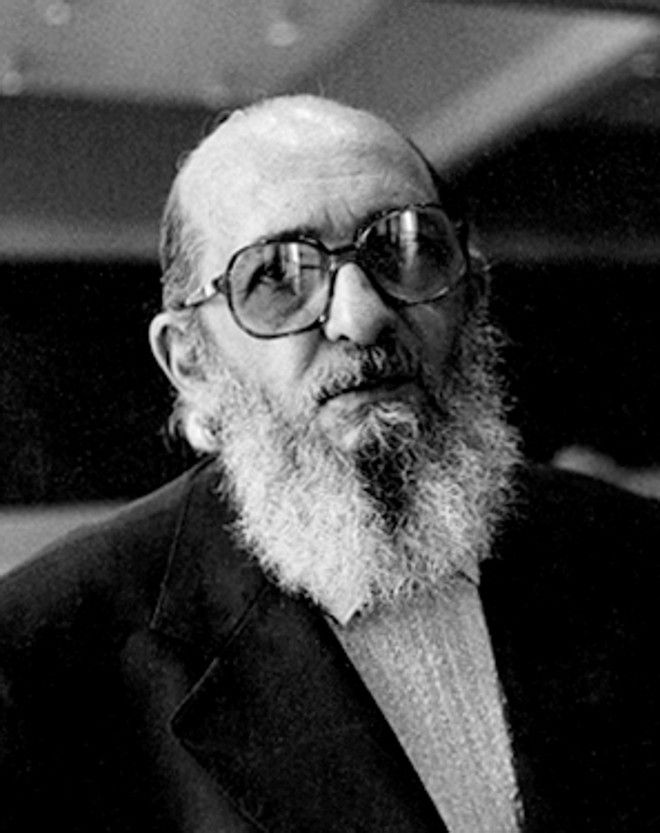

Paulo Freire was born in Recife, in north-eastern Brazil, in 1921. His father died when he was thirteen, during the Depression, and he knew hunger as a child. From 1947 he worked with poor and illiterate workers and peasants in the north-east, and by the early 1960s was leading a national campaign to teach millions of adults to read through thousands of “culture circles”. The military coup of 1964 ended the project, and Freire spent the next sixteen years in exile, first in Bolivia and Chile, then at Harvard and in Geneva with the World Council of Churches.
Pedagogy of the Oppressed, written from his work in Brazil and Chile, appeared first in Spanish in 1968 and could not be published in Portuguese until 1975. Returning to Brazil in 1980, he helped found the Workers’ Party, taught in São Paulo and Campinas, and served as the city of São Paulo’s secretary of education. He died in 1997, one of the most influential philosophers of education of the century.
Key ideas
- Against banking education
- The “banking” model treats students as empty containers into which a teacher deposits knowledge. Freire saw this as a form of violence that, like colonisation, treats people as things, and replaced it with problem-posing dialogue between teacher and students.
- Conscientização
- Conscientização means helping people become aware of the social, political and economic forces that shape their lives, and of their own power to act against what oppresses them.
- Internalised oppression
- Formal freedom is not enough: people formed by oppression carry its dynamics within themselves, and both oppressor and oppressed are made less human by their relationship.
- The vocation to be more human
- Every person’s vocation is to become more fully human, and the oppressed can change their situation only if their means are consistent with that goal.
- Tradition
- Western
- Region
- Brazil and Chile
- Period
- Contemporary
- Themes
- Education
Influences
Influenced by
Paulo Freire1921–1997
Influenced by
Paulo Freire1921–1997
Where these links come from
- Paulo Freire drew on G. W. F. Hegel. Source: Kim Díaz, Paulo Freire, Internet Encyclopedia of Philosophy
- Paulo Freire drew on Karl Marx. Source: Kim Díaz, Paulo Freire, Internet Encyclopedia of Philosophy
- Paulo Freire drew on John Dewey. Source: Kim Díaz, Paulo Freire, Internet Encyclopedia of Philosophy
- Paulo Freire drew on Frantz Fanon. Source: Kim Díaz, Paulo Freire, Internet Encyclopedia of Philosophy
Key works
- Education as the Practice of Freedom (Educação como Prática da Liberdade), 1967
- Pedagogy of the Oppressed, 1968
Terms on this page
- conscientização
- Paulo Freire’s word for the process of becoming aware of the social, political and economic forces that shape one’s life, and of one’s own power to act against oppression.
Sources
- Kim Díaz, Paulo Freire, Internet Encyclopedia of Philosophy