Philosopher
Olympe de Gouges
1748–1793
Also known as Marie Gouze
Playwright and pamphleteer of the French Revolution whose Rights of Woman exposed how the Declaration of the Rights of Man left women out, and who was guillotined for her writings.
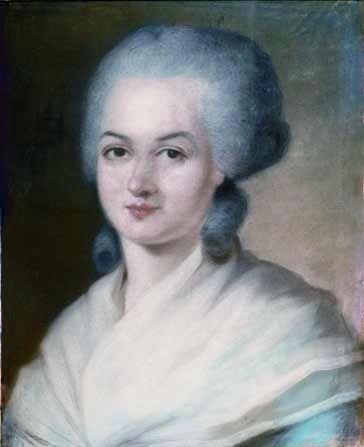

Olympe de Gouges was born Marie Gouze in Montauban in 1748 to a butcher and a maidservant, and grew up speaking Occitan. After a brief, unhappy marriage left her a widow, she took a new name, moved to Paris backed by a rich patron, and devoted herself to claiming the public voice denied to women. She wrote some forty plays, two novels and nearly seventy political pamphlets; her play on slavery was the first in France to show the inhumanity of slavery from the enslaved person’s point of view.
She admired Rousseau, whom she called her “spiritual father”, and shared his faith in education’s power to transform society, while rejecting the confinement he prescribed for girls. Among the first to demand the abolition of slavery and women’s rights, she also opposed the execution of Louis XVI. In 1793 she became the only woman executed during the Revolution for her political writings.
Key ideas
- The rights of woman
- Her Rights of Woman takes each of the seventeen articles of the 1789 Declaration in turn and shows how each leaves out the female citizen, revealing that a document claiming universal rights was nothing of the kind.
- Scaffold and rostrum
- If a woman can be sent to the scaffold, she must equally be allowed to speak from the rostrum: the state cannot hold women answerable as citizens while denying them a political voice.
- A new marriage contract
- She closed The Rights of Woman with a critique of the marriage contract, modelled on Rousseau’s Social Contract, and elsewhere argued for divorce and for the rights of unmarried mothers and illegitimate children.
- Tradition
- Western
- Region
- Montauban and Paris
- Period
- Early modern
- Themes
- Women and gender
Influences
Where these links come from
- Olympe de Gouges drew on and argued against Jean-Jacques Rousseau. Source: Joan Woolfrey, Olympe de Gouges, Internet Encyclopedia of Philosophy
Key works
- The Rights of Woman (Les Droits de la femme), 1791
- Read free at Project Gutenberg (in French)
- Black Slavery, or the Happy Shipwreck (L'Esclavage des nègres, ou l'Heureux naufrage), 1789
- Read free at Wikisource (in French)
Sources
- Joan Woolfrey, Olympe de Gouges, Internet Encyclopedia of Philosophy