Philosopher
Martin Buber
1878–1965
Austrian-born Jewish philosopher of dialogue, best known for I and Thou, who retold Hasidic tales, translated the Bible and argued for a shared Jewish-Arab state in Palestine.
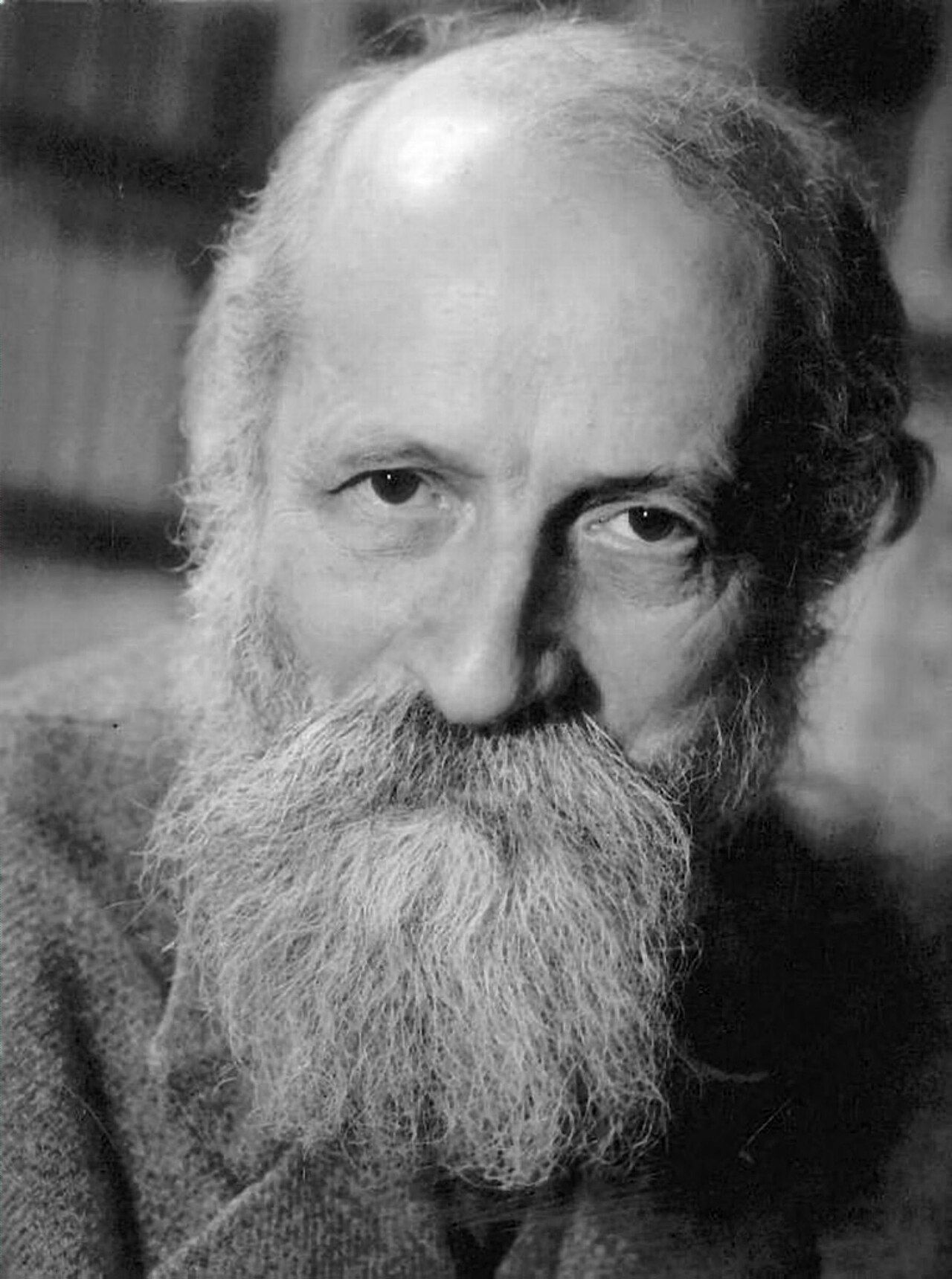

Martin Buber was born in Vienna in 1878 and brought up largely by his grandparents in Lemberg (now Lviv), before studying art history, literature, philosophy and psychology in Vienna, Leipzig, Zurich and Berlin. Before his name became bound up with dialogue he was a critic, editor, translator and folklorist, and a writer inspired by Nietzsche; he first won fame with retellings of Hasidic stories made with his wife, Paula Winkler.
He resisted being labelled either philosopher or theologian. Besides I and Thou, an instant classic, he translated the Hebrew Bible into German, at first with Franz Rosenzweig, gathered mystical testimonies from around the world, and pioneered Jewish-Christian dialogue. From 1938 until his death in 1965 he lived and taught in Jerusalem, holding the Hebrew University’s chair in social philosophy.
Key ideas
- I-Thou and I-It
- In every situation we face a choice: to treat whatever we meet as an ‘it’, which diminishes us as well, or to meet it openly as a ‘Thou’, which raises us too. These two basic words shape all our relations.
- Spheres of relation
- Dialogue is possible not only with other people but with animals, a tree, and the divine Thou. With nature the relation is not yet fully dialogic, since it is not mutual; between people it is mutual without merging them into one.
- A binational state
- Buber’s dialogical thinking ran through his politics as well: within Zionism and in Israel’s early years he argued steadily for cooperation between Jews and Arabs and for a binational Israel-Palestine.
- Tradition
- Jewish
- Region
- Vienna, Germany and Jerusalem
Influences
Where these links come from
- Martin Buber drew on Friedrich Nietzsche. Source: Michael Zank and Zachary Braiterman, Martin Buber, Stanford Encyclopedia of Philosophy
Key works
- I and Thou (Ich und Du), 1923
- The Legend of the Baal Shem (Die Legende des Baalschem), 1908
Sources
- Michael Zank and Zachary Braiterman, Martin Buber, Stanford Encyclopedia of Philosophy