Philosopher
Marquise de Lambert
1647–1733
Also known as Anne-Thérèse de Lambert, Anne-Thérèse Marguenat de Courcelles
Paris salon host whose essays defended the dignity of women, criticised the inequalities of her society, and were praised by Fontenelle, Montesquieu and Voltaire.
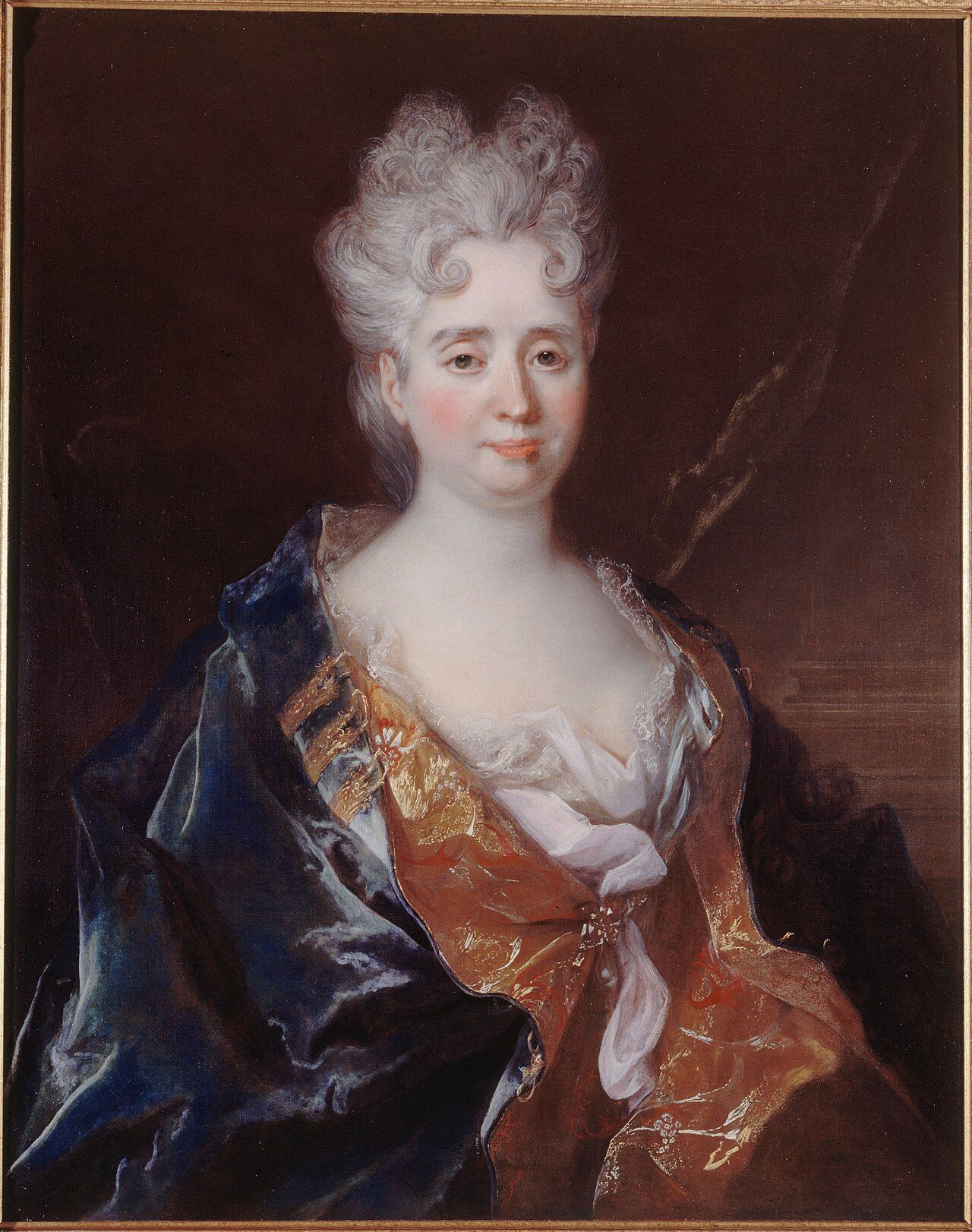
_-_P2516_-_Mus%C3%A9e_Carnavalet.jpg)
Born in Paris in 1647 as Anne-Thérèse Marguenat de Courcelles, she grew up in a family enriched by trade. Her stepfather, a poet, introduced her to the neo-Epicurean philosophy he favoured and guided her study of the classics. From 1710 she held a salon that soon became the most intellectually distinguished in Paris.
Throughout her writing she shows a Cartesian conception of philosophical analysis. Most of her works were published after her death in 1733, and the thinkers of the French Enlightenment, Fontenelle, Montesquieu and Voltaire among them, praised her philosophical acumen.
Key ideas
- Virtues of men and women
- Her instructions to her son and daughter analyse the virtues each should cultivate in aristocratic life: men pursue glory, women humility.
- The dignity of women
- In the ‘quarrel of women’ she defended women’s dignity against misogynist stereotypes.
- Tradition
- Western
- Region
- Paris
- Period
- Early modern
- Themes
- Women and gender
Influences
Where these links come from
- Marquise de Lambert drew on René Descartes. Source: John J. Conley, Anne-Thérèse de Lambert, Internet Encyclopedia of Philosophy
Key works
- Advice to her Son
- Read free at Wikisource (in French, in her collected works)
- Advice to her Daughter
- Read free at Wikisource (in French, in her collected works)
Sources
- John J. Conley, Anne-Thérèse de Lambert, Internet Encyclopedia of Philosophy