Philosopher
Madeleine de Scudéry
1607–1701
French novelist and salon host whose philosophical dialogues analysed the virtues of aristocratic society and defended women's right to a public and political voice.
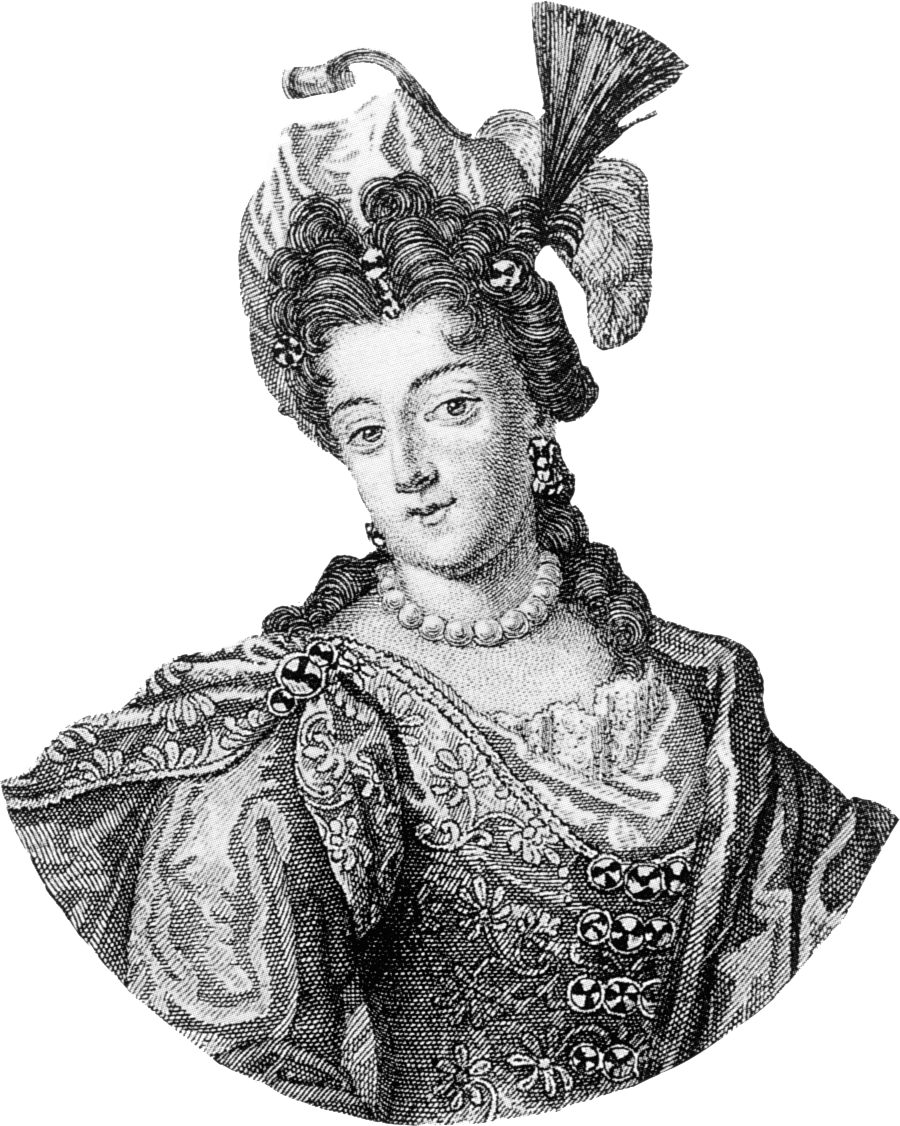

Madeleine de Scudéry was born in Le Havre in 1607 into a minor Norman noble family, was orphaned at six and educated by an uncle who was a churchman. Her brother Georges, a playwright, introduced her to the Paris salons, including the famous ‘blue room’ of the Hôtel de Rambouillet, and she later held her own Saturday salon.
Long dismissed as a pedantic précieuse whose novels were unreadable, she has been re-read in recent decades as a philosopher who renewed the dialogue form and offered original views on ethics, moral psychology, knowledge, religion, art and gender. She died in 1701.
Key ideas
- The ambiguity of virtue
- Scudéry’s dialogues trace the many grades of a single virtue, showing how the same disposition can be a virtue or a vice depending on context, and how women possess the virtues in their own ways.
- Magnanimity, politeness, discretion
- Her virtue theory centres on magnanimity, politeness and discretion, each of which presupposes culture, wealth and rank; true magnanimity rests on a rational estimate of one’s own worth.
- Sappho and the rights of women
- Through the figure of the poet Sappho she indicted the social repression of women, criticised marriage itself, and defended women’s right to take part in public life and to exercise political authority.
- Tradition
- Western
- Region
- Le Havre and Paris
- Period
- Early modern
- Themes
- Women and gender
Key works
- Artamène, or the Great Cyrus (Artamène ou le Grand Cyrus)
- Read free at Wikisource (in French)
- Illustrious Women, or Heroic Harangues
Sources
- John Conley, Madeleine de Scudéry, Stanford Encyclopedia of Philosophy