Philosopher
Madame de Sévigné
1626–1696
Also known as Marie de Rabutin-Chantal, Marquise de Sévigné
France's foremost letter-writer of the seventeenth century, whose correspondence rejected mechanistic nature and chronicled the philosophical debates of the Cartesian age.
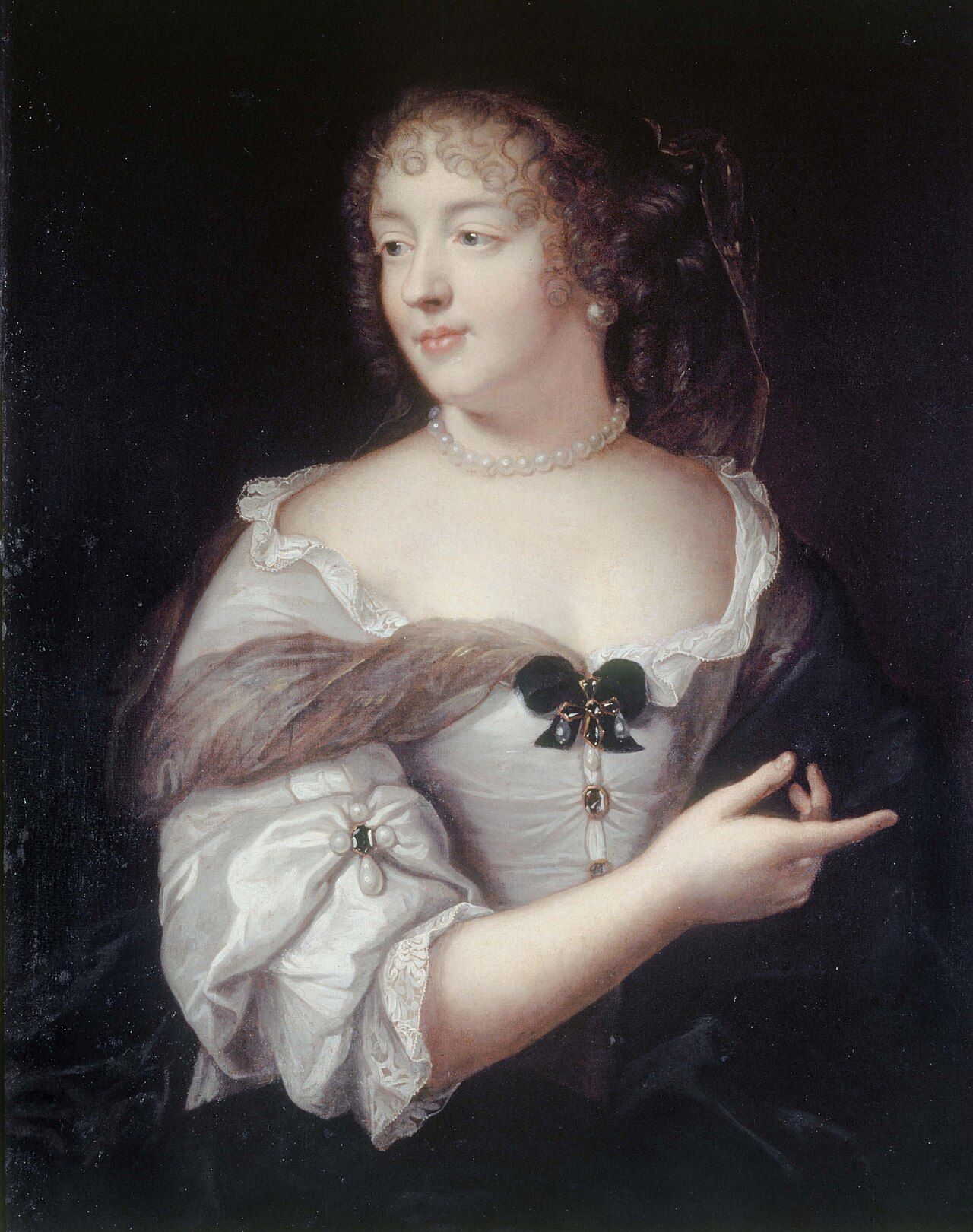

Marie de Rabutin-Chantal was born in 1626 into an old Burgundian aristocratic family; her grandmother was Jeanne de Chantal, founder of the Visitation order. Orphaned young, she was brought up by her uncle, the abbé de Livry, who gave her a solid classical education.
She received no formal training in philosophy and wrote no treatises, but her extensive letters take distinctive positions on the controversies of her day and comment on the authors she read, reflecting a salon culture in which Cartesianism was everyday conversation. She died in 1696.
Key ideas
- A realist philosophy of nature
- Rejecting the mechanistic account of nature, she held a realist view sensitive to the aesthetic order of the cosmos.
- The omnipresent will of God
- Sympathetic to Jansenism, she stressed God’s will and the presence of divine causation everywhere.
- Harmony, proportion, balance
- Her philosophy of art, typical of neoclassicism, valued harmony, proportion and balance, and her moral psychology explored the loving structure of desire and the difficulty of accepting death.
- Tradition
- Western
- Region
- France
- Period
- Early modern
- Themes
- Art and beauty
Influences
Where these links come from
- Madame de Sévigné argued against René Descartes. Source: John J. Conley, Marie de Rabutin-Chantal, Marquise de Sévigné, Internet Encyclopedia of Philosophy
Key works
- Letters (Lettres)
- Read free at Project Gutenberg (selection, edited by Sarah Josepha Hale)
Sources
- John J. Conley, Marie de Rabutin-Chantal, Marquise de Sévigné, Internet Encyclopedia of Philosophy