Philosopher
Jane Addams
1860–1935
Also known as Laura Jane Addams
American pragmatist and social philosopher who founded Chicago's Hull House, built an ethics on 'sympathetic knowledge', and won the Nobel Peace Prize for her work against war.
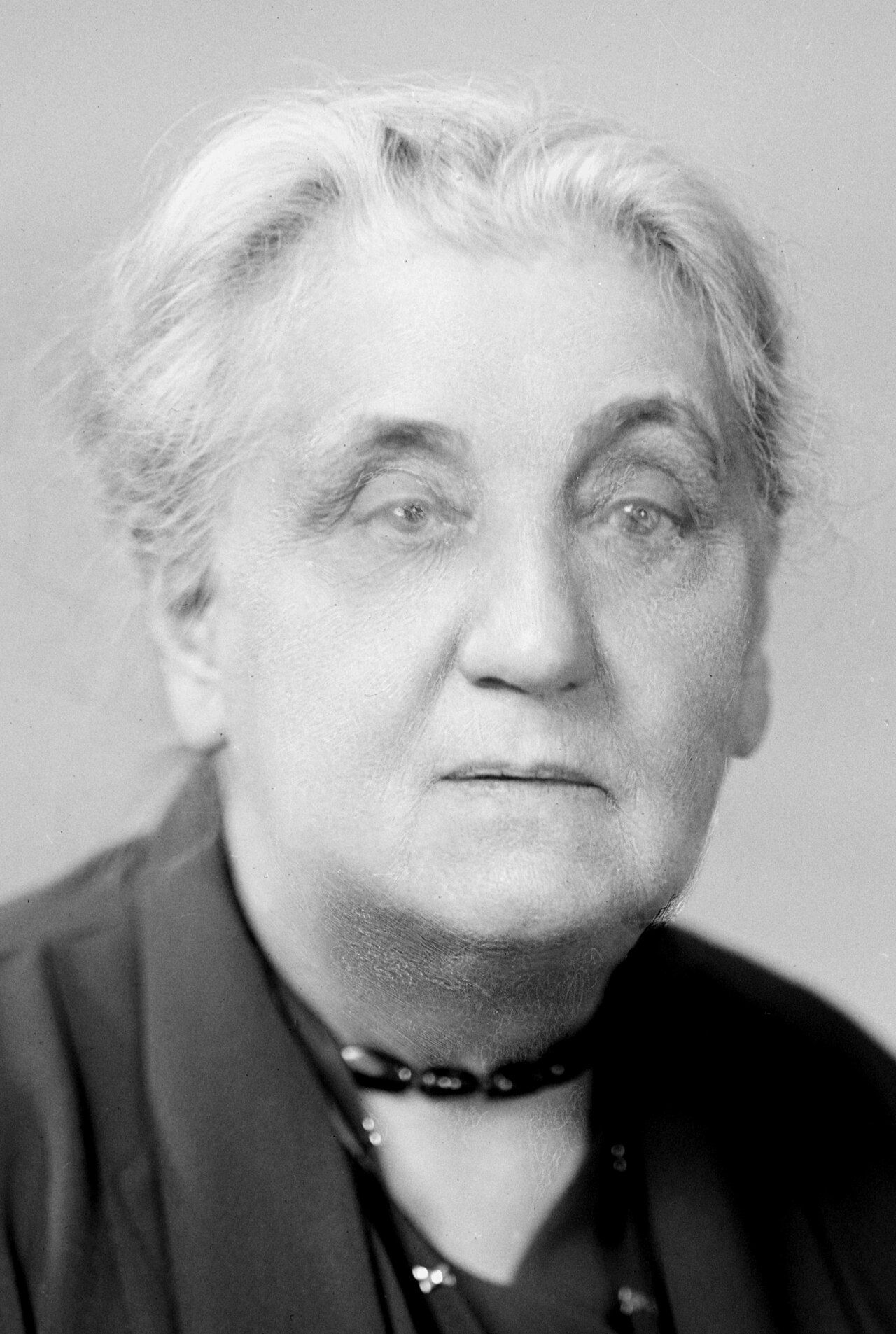
.jpg)
Laura Jane Addams, born in 1860 in Cedarville, Illinois, went on to Rockford Seminary, an all-women’s college where she flourished as a thinker and leader. On 18 September 1889 she opened Hull House in a desperately poor immigrant neighbourhood of Chicago, and led the settlement for nearly half a century, living as a neighbour among the people it served.
Her contemporaries tended to treat her as someone who applied the theories of Dewey, James and Mead; scholarship since the 1990s has shown that her dozen books and five hundred articles make her a philosopher in her own right. She was among the founders of the NAACP, the ACLU and the Women’s International League for Peace and Freedom. She died of cancer in 1935.
Key ideas
- Sympathetic knowledge
- Getting to know other people better strengthens our common bonds and makes caring action more likely. For Addams this mix of knowing and ethics was the only way to approach any human problem, and it anticipates feminist standpoint epistemology.
- Theory joined to action
- Addams pushed pragmatism to its conclusion by joining theory and action: her settlement work was a great experiment in knowledge, and her writing turned to topics philosophers rarely touch, from rubbish collection to immigrant folk tales.
- A more radical pragmatism
- Living among the poor gave her pragmatism a sharper awareness of class and gender than Dewey’s or James’s, and led her to democratic theory, peace and the ethics of migration.
- Tradition
- Western
- Region
- Chicago
- Schools
- Pragmatism
- Period
- Contemporary
- Themes
- War and peace
Key works
- Democracy and Social Ethics
- Newer Ideals of Peace
- Twenty Years at Hull-House
Sources
- Maurice Hamington, Jane Addams, Stanford Encyclopedia of Philosophy