Philosopher
Hayashi Razan
1583–1657
Early Tokugawa Neo-Confucian, among the first in Japan to restate Zhu Xi's philosophy of principle and generative force, who prized words as the key to the sages' minds.
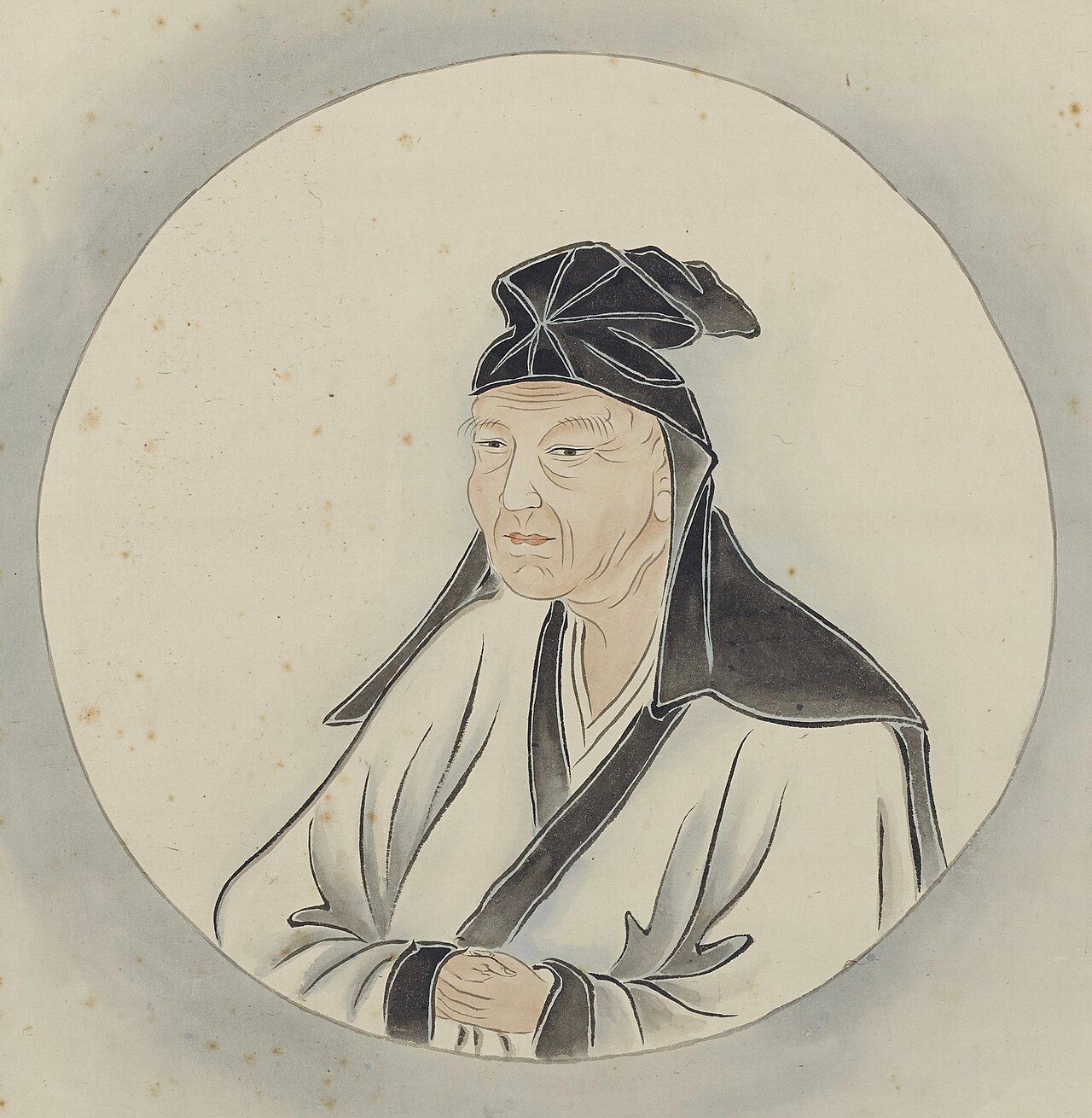

Hayashi Razan was one of the leading figures who, early in the Tokugawa period, restated in Japan the metaphysics that Zhu Xi had synthesised in Song China, with some variations of his own. He is counted among the orthodox Zhu Xi school, alongside Fujiwara Seika and later Yamazaki Ansai.
He spent much of his last years writing a long colloquial explanation of Chen Beixi’s Meanings of Neo-Confucian Terms, a sign of how much weight he gave to language. With Ansai and their followers he taught the orthodox Neo-Confucian political philosophy of Tokugawa Japan.
Key ideas
- Words reveal the sages’ minds
- The minds of the sages are shown in their words, and their words are kept in writing; without understanding those words we cannot grasp their minds. Razan even saw immersion in the sages’ words as a route to a kind of enlightenment.
- Principle and generative force
- There is a principle (ri) for every aspect of existence, making each thing what it is, and there can be no ri without generative force (ki) or ki without ri; affirming ki also answered the Buddhist claim that all things are empty. At times, like Zhu Xi, Razan gave ri priority.
- Stillness as readiness
- Confucian ‘stillness’ is not Buddhist or Daoist quiet: the mind is active, made for engagement with the world, and stillness means being poised to act.
- Tradition
- Japanese
- Region
- Japan
- Schools
- Confucianism
- Period
- Edo
- Themes
- Knowledge and scepticism
Influences
Where these links come from
- Hayashi Razan drew on Zhu Xi. Source: John Tucker, Japanese Confucian Philosophy, Stanford Encyclopedia of Philosophy
Terms on this page
- ri
- Principle: the Japanese reading of the Neo-Confucian li. For Hayashi Razan there is a ri for every aspect of existence; Itō Jinsai held that it dwells within generative force rather than above it.
- ki
- Generative force, the Japanese reading of the Chinese qi: the stuff of reality in Neo-Confucian metaphysics, which Itō Jinsai made the only thing that exists, and which Kaibara Ekken urged people to nourish.
Sources
- John Tucker, Japanese Confucian Philosophy, Stanford Encyclopedia of Philosophy