Philosopher
Elisabeth of Bohemia
1618–1680
Also known as Princess Elisabeth of Bohemia, Elisabeth of the Palatinate, Elisabeth, Princess Palatine
Exiled princess whose letters to Descartes asked how an immaterial mind could move a body, and pressed him on the passions, virtue, happiness and how to rule.
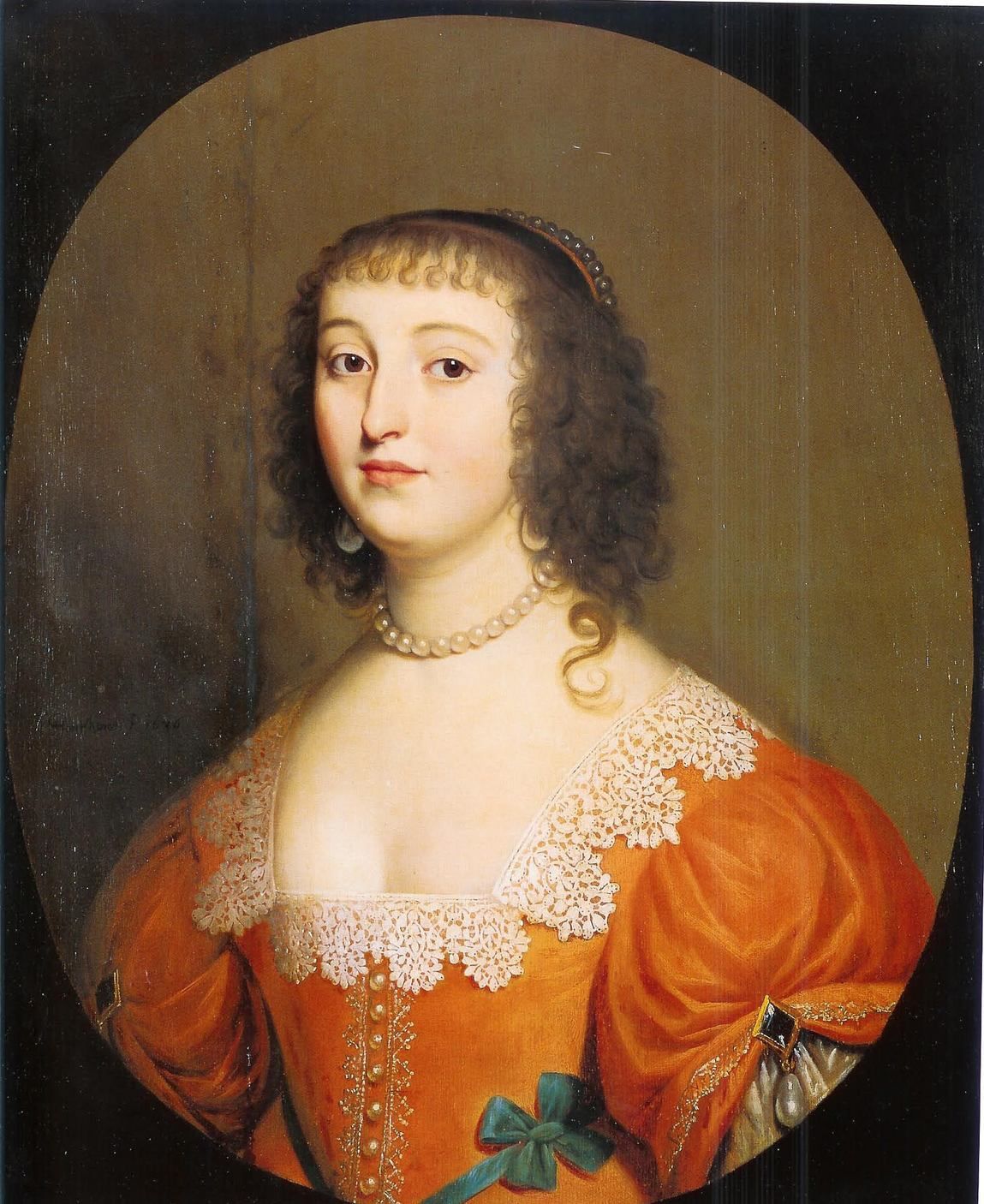

Elisabeth’s father was Frederick V, Elector Palatine, and her mother Elizabeth Stuart, sister of Charles I; she was their eldest daughter. Frederick’s brief reign as King of Bohemia helped set off the Thirty Years War, and the family lived in exile in The Hague, where Elisabeth was tutored in languages, mathematics, philosophy and the sciences; her siblings nicknamed her “the Greek”. She took part in her family’s political affairs, including talks over the Treaty of Westphalia. In 1667 she became abbess of the Lutheran convent at Herford, where she gave refuge to Labadists and Quakers.
Her philosophical writings that survive are almost all letters to Descartes, from 1643 until his death in 1650. Descartes dedicated his Principles of Philosophy to her and wrote The Passions of the Soul at her request. She refused to let her side of the correspondence be published, and it appeared only long after her death, from copies found in a packet of letters near Arnhem. A gifted mathematician, she also helped to spread Cartesian natural philosophy in Germany, and corresponded with scientists, Quakers and, briefly, Malebranche.
Key ideas
- How can a mind move a body?
- If the mind is an unextended, immaterial substance, how can it cause the body to move, when causing motion seems to require contact and extension? Elisabeth asked Descartes either to explain this kind of causation or to say more about the mind’s nature, and his answers did not satisfy her.
- Argues against René Descartes’s Mind and body
- Thought depends on the body
- We can direct our own thoughts, so thinking is not simply a bodily process. Yet illness and the condition of the body plainly affect our capacity to reason, which suggests that the mind may not be a substance wholly independent of the body.
- Virtue and luck
- Descartes made virtue a matter of firm resolve to do what we judge best. Elisabeth objected that good intentions can still go wrong, that luck affects even our capacity to reason, and that we cannot be content without knowing the consequences of our actions, which would take an “infinite science”.
- The ruler’s problem
- Rulers must make decisions that affect many people, on incomplete information and under the press of their own passions. Machiavelli, writing about the state hardest to govern, helps in achieving stability, she argued, but says little about governing a state that is already stable.
- Tradition
- Western
- Region
- The Hague and Herford
- Period
- Early modern
- Themes
- The good life
Influences
Influenced by
Elisabeth of Bohemia1618–1680
Influenced by
Elisabeth of Bohemia1618–1680
Where these links come from
- Elisabeth of Bohemia drew on Niccolò Machiavelli. Source: Lisa Shapiro, Elisabeth, Princess of Bohemia, Stanford Encyclopedia of Philosophy
- Elisabeth of Bohemia drew on and argued against René Descartes. Source: Lisa Shapiro, Elisabeth, Princess of Bohemia, Stanford Encyclopedia of Philosophy
Key works
- Correspondence with Descartes, 1643
Sources
- Lisa Shapiro, Elisabeth, Princess of Bohemia, Stanford Encyclopedia of Philosophy