Philosopher
Anne Dacier
1647–1720
Also known as Anne Le Fèvre Dacier, Madame Dacier
French classicist whose translations of Homer made her famous, and who, defending the ancients against the moderns, developed a philosophy of taste, imitation and metaphor.
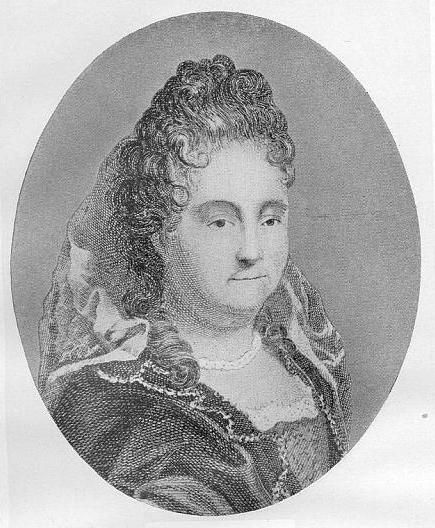

Anne Le Fèvre was born in Preuilly-sur-Claise in 1647 and raised in Saumur, where her father, a professor of classical languages, taught her Latin and Greek. After an early marriage broke down, she moved to Paris under the patronage of Pierre-Daniel Huet, translated classical authors for the series made for the education of the dauphin, and became France’s leading classicist.
Her prose translations of the Iliad (1699) and Odyssey (1708) remain monuments of neoclassical French. She developed her philosophy of art in defending Homer during a new round of the quarrel between the ancients and the moderns. She died in 1720.
Key ideas
- Taste as a measure of civilisation
- Taste shows how civilised a culture is, morally as well as artistically. Exalting ancient Athens, Dacier read history as a decline from the Hebrew and Greek ancestors of modern society.
- The value of metaphor
- Against rationalists who dismissed figurative and analogical language as obscurantism, she defended metaphor as a way of conveying spiritual truths, pointing to its rich use in the Bible.
- Tradition
- Western
- Region
- Saumur and Paris
- Period
- Early modern
- Themes
- Education
Influences
Where these links come from
- Anne Dacier drew on Aristotle. Source: John J. Conley, Anne Le Fèvre Dacier, Internet Encyclopedia of Philosophy
Key works
- The Iliad (translation), 1699
- The Odyssey (translation), 1708
Sources
- John J. Conley, Anne Le Fèvre Dacier, Internet Encyclopedia of Philosophy