Philosopher
Alasdair MacIntyre
1929–2025
Scottish-born moral philosopher whose After Virtue diagnosed modern moral talk as a "culture of emotivism" and called for a renewal of Aristotle’s ethics of the virtues within communities.
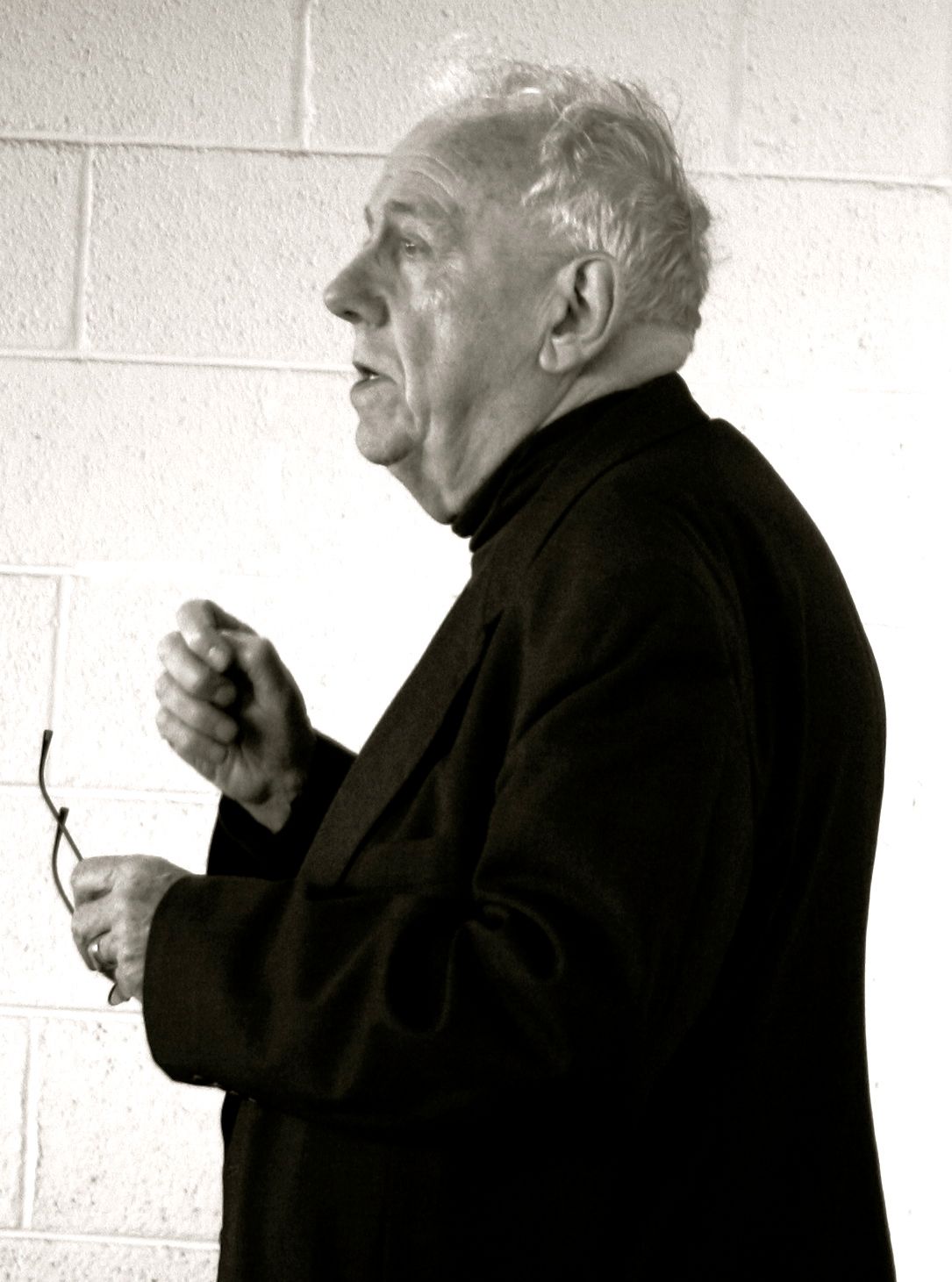

Alasdair MacIntyre was born in Glasgow in 1929 to two doctors, grew up in and around London and learned Scots Gaelic from an aunt. After studying classics at Queen Mary College, London, and philosophy at Manchester, he began as a Marxist trying to build a Marxist ethics that could condemn Stalinism. That project led him instead to reject Marxism along with every other form of modern liberal individualism. He moved to the United States around 1970 and taught at several universities, and was later a professor at Notre Dame. He died in May 2025, aged 96.
After Virtue (1981) argued that modern moral philosophy had failed and that Aristotle’s ethics, renewed in small communities, offered a way out. Two books on the rationality of traditions followed, and Dependent Rational Animals (1999) turned to human vulnerability and dependence. He described himself as a Thomist from 1984, though he denied belonging to the schools of virtue ethics or communitarianism with which he is usually linked.
Key ideas
- A culture of emotivism
- Modern moral language survives as fragments of older traditions. People still speak as if they appealed to objective principles, but in practice the words are used to manipulate attitudes, and the objective rhetoric hides choices that are arbitrary.
- Practices and internal goods
- A virtue is defined in part through practices, complex cooperative activities such as chess, medicine or architecture, which have goods that can only be gained by pursuing excellence within them, unlike external goods such as money or fame.
- Rationality of traditions
- There is no neutral standpoint from which to judge rival moral views. Rationality is carried by traditions of enquiry, which justify themselves by their history and remain open to correction.
- Dependent rational animals
- Humans are animals who begin and often end life vulnerable and dependent. They become independent practical reasoners only through the care and education that a community provides.
- Tradition
- Western
- Region
- Britain and the United States
- Period
- Contemporary
- Themes
- The good life
Influences
Influenced by
Alasdair MacIntyre1929–2025
Influenced by
Alasdair MacIntyre1929–2025
Where these links come from
- Alasdair MacIntyre drew on Aristotle. Source: Christopher Stephen Lutz, MacIntyre, Internet Encyclopedia of Philosophy
- Alasdair MacIntyre drew on Thomas Aquinas. Source: Christopher Stephen Lutz, MacIntyre, Internet Encyclopedia of Philosophy
- Alasdair MacIntyre drew on and argued against Karl Marx. Source: Christopher Stephen Lutz, MacIntyre, Internet Encyclopedia of Philosophy
Key works
- After Virtue, 1981
- Whose Justice? Which Rationality?, 1988
- Three Rival Versions of Moral Enquiry, 1990
- Dependent Rational Animals, 1999
Sources
- Christopher Stephen Lutz, MacIntyre, Internet Encyclopedia of Philosophy
- Kenneth Hallenius, In memoriam: Alasdair MacIntyre, University of Notre Dame