Philosopher
Aimé Césaire
1913–2008
Also known as Aime Cesaire
Martinican poet and politician, a founder of Négritude, for whom it was not a metaphysics but a way of living history and reclaiming a heritage.
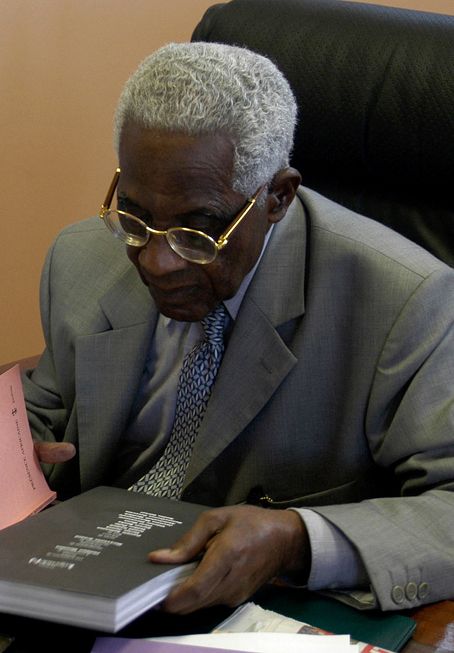

Aimé Césaire grew up in Martinique and left after secondary school for Paris, where in the late 1920s he met Senghor and Damas and joined them in forming Négritude. In 1939 he finished a version of his Notebook of a Return to the Native Land.
Elected communist mayor of Fort-de-France and a member of the French National Assembly in 1946, he left the Communist Party ten years later with his open letter to its leader, Maurice Thorez. He died in 2008.
Key ideas
- Négritude as living history
- Négritude, Césaire insisted, is not a philosophy or a metaphysics but a way of living history within history: reclaiming the heritage of a community marked by deportation, uprooting and the fragments of murdered cultures, in order to regain the initiative.
- Organisations of their own
- Resigning from the French Communist Party in 1956, he argued that Black peoples’ situation could not be reduced to any other problem, so they needed organisations made by and for themselves.
- Against fraternalism
- Stalinist ‘fraternalism’, with its advanced peoples helping those ‘behind’, was in his view no different from colonialist paternalism.
- Tradition
- African
- Region
- Martinique and Paris
- Themes
- How to govern
Key works
- Notebook of a Return to the Native Land (Cahier d'un retour au pays natal), 1939
- Letter to Maurice Thorez (Lettre à Maurice Thorez), 1956
Sources
- Souleymane Bachir Diagne, Négritude, Stanford Encyclopedia of Philosophy