Philosopher
Zhong Hui
225–264 CE
Also known as Chung Hui
Third-century interpreter of the Laozi and Yijing and an early figure of xuanxue, who held that natural capacity and nature coincide, and died after a failed rebellion.
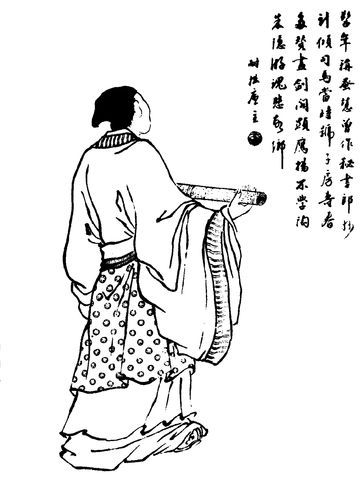

Zhong Hui grew up under the new Wei dynasty that replaced the Han, studying the Analects, the Book of Poetry, the Book of Documents and the Yijing before entering the imperial academy at fourteen. He and Wang Bi were singled out as among the brightest of their generation.
He was also a major political figure, and his ambition led to his early death after a failed attempt to overthrow the regime. Almost all his writings are lost, which may explain why he has been neglected.
Key ideas
- Capacity and nature coincide
- Where others said that capacity and nature are the same, different, or diverge, Zhong Hui argued that they coincide: what we are given is potential, which must be nurtured and completed through learning and effort.
- Endowment matters
- Native endowment is not enough on its own, but one needs some material to begin with, so achievement cannot be said to have nothing to do with what one is born with.
- Learning of the dark Way
- Zhong Hui helped shape xuanxue, which, rather than opposing Confucianism, read the whole classical heritage, Confucius and Laozi alike, as expressing the truth of the Dao.
- Tradition
- Chinese
- Region
- Wei, China
- Schools
- Neo-Daoism
- Themes
- Human nature
Influences
Where these links come from
- Zhong Hui drew on Laozi. Source: Alan Kam-Leung Chan, Zhong Hui (Chung Hui), Internet Encyclopedia of Philosophy
Terms on this page
- Xuanxue
- “Learning in the Profound” (玄學), the Chinese name for the movement called Neo-Daoism in English, which centred on the Classic of Changes, the Laozi and the Zhuangzi.
Sources
- Alan Kam-Leung Chan, Zhong Hui (Chung Hui), Internet Encyclopedia of Philosophy