Philosopher
Ueda Shizuteru
1926–2019
Also known as Shizuteru Ueda
Kyoto School philosopher, Zen master and Eckhart scholar, who described human beings as living in a twofold world: the everyday world of language, set within an empty expanse of absolute nothingness.
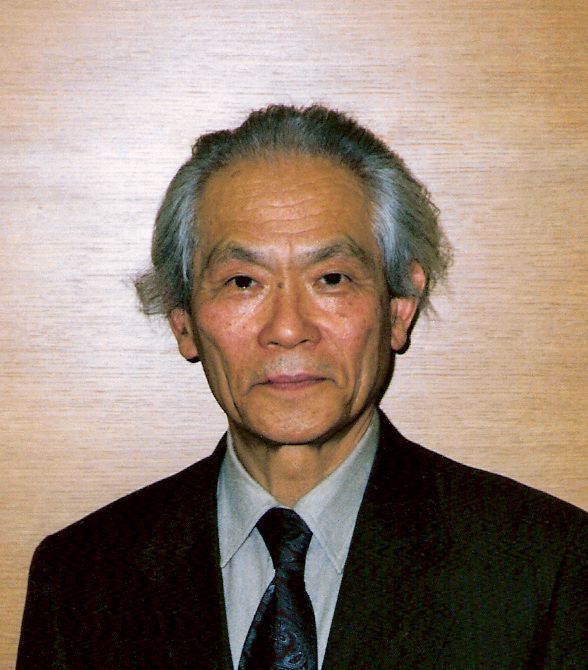

Ueda Shizuteru studied under Nishitani Keiji and became a leading interpreter of Meister Eckhart and a Zen practitioner and teacher in his own right. From the 1980s he did much to renew interest in Nishida. Like Nishitani he thought from within Zen, approaching absolute nothingness through ideas of place, lived experience and existence.
Carrying on the Kyoto School’s conversation with Western thought, he drew on Husserl, Heidegger and phenomenology for his account of “being in the twofold world”, and he worked out a theory of language as well.
Key ideas
- Being in a twofold world
- The self lives first in the historical world of everyday life, a horizon shaped by language. That horizon in turn rests in an “empty-expanse” (kokū), a place of absolute nothingness that enfolds the everyday world and grounds the individual’s radical freedom.
- A self that is not a self
- The ego has to be negated completely before the true self can come to be. Dying to itself, it stands as a “non-ego”, at once in the world and beyond it, which is how Ueda understood Nishitani’s “self that is not a self”.
- At the limits of language
- What lies beyond language is not a mystical realm to dwell in, but is met at the limits of language, where it both tears through and mends our horizons of meaning. Remaining open to that silence frees us to speak and act with more freedom and responsibility.
- Eckhart and Zen
- Ueda found the return, through self-negation, to a wellspring of existence that is “empty and free” in Meister Eckhart, and in a still purer form in Zen, from which he took the word kokū for emptiness.
- Tradition
- Japanese
- Region
- Kyoto, Japan
- Schools
- Kyoto School
- Period
- Modern Japanese
- Themes
- The self
Influences
Influenced by
- Meister Eckhartc. 1260 – c. 1328
- Edmund Husserl1859–1938
- Nishida Kitarō1870–1945
- Martin Heidegger1889–1976
- Nishitani Keiji1900–1990teacher
Ueda Shizuteru1926–2019
Influenced by
- Meister Eckhartc. 1260 – c. 1328
- Edmund Husserl1859–1938
- Nishida Kitarō1870–1945
- Martin Heidegger1889–1976
- Nishitani Keiji1900–1990teacher
Ueda Shizuteru1926–2019
Where these links come from
- Ueda Shizuteru drew on Meister Eckhart. Source: Bret W. Davis, The Kyoto School, Stanford Encyclopedia of Philosophy
- Ueda Shizuteru drew on Edmund Husserl. Source: Bret W. Davis, The Kyoto School, Stanford Encyclopedia of Philosophy
- Ueda Shizuteru drew on Nishida Kitarō. Source: Bret W. Davis, The Kyoto School, Stanford Encyclopedia of Philosophy
- Ueda Shizuteru drew on Martin Heidegger. Source: Bret W. Davis, The Kyoto School, Stanford Encyclopedia of Philosophy
- Ueda Shizuteru studied with and drew on Nishitani Keiji. Source: Bret W. Davis, The Kyoto School, Stanford Encyclopedia of Philosophy
Terms on this page
- kokū
- Empty-expanse: Ueda Shizuteru’s word, borrowed from Zen, for the place of absolute nothingness in which the everyday world of language rests.
Sources
- Bret W. Davis, The Kyoto School, Stanford Encyclopedia of Philosophy
- Thomas Kasulis and Raquel Bouso, Japanese Philosophy, Stanford Encyclopedia of Philosophy