Philosopher
Shinran
1173–1263
Disciple of Hōnen whose radical Pure Land thought held that the nembutsu is the Buddha's call, and true entrusting Amida's own mind given to beings.
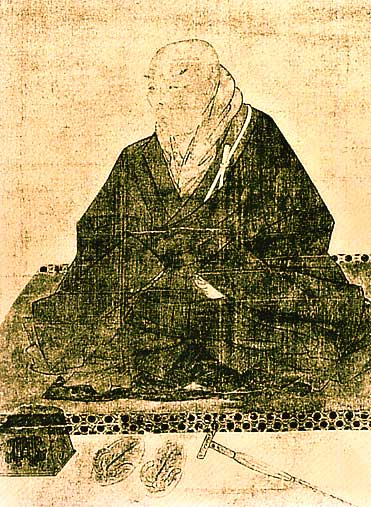

Shinran was one of the disciples of Hōnen who carried his radical teaching further, each in his own way, and it is among them that the more philosophical strands of Pure Land thought are found. He gave Amida Buddha priority over the historical Śākyamuni, holding that the wisdom-compassion that made Śākyamuni a Buddha is the life of Amida.
Late in life he took up the word jinen, ‘naturalness’, for the spontaneous working of reality that brings beings of blind passion to enlightenment. Shin Buddhism, in his tradition, was later described as Japan’s most popular and flourishing Buddhist school, and the Kyoto School philosopher Nishitani Keiji drew on his treatment of time.
Key ideas
- The nembutsu as the Buddha’s call
- The nembutsu is not beings calling on the Buddha but the Buddha calling to beings to awaken them. The true entrusting (shinjin) that beings have is Amida’s own mind, given to them by Amida.
- Other Power
- The working of Other Power is the falling away of one’s own calculation: the attempt to gain religious or worldly advantage by one’s own abilities.
- Against an ethics of rules
- Trying to know what is right and apply rational principles undermines true moral action; what remains is the spontaneous ‘working of non-working’ (jinen), reality acting of itself.
- Tradition
- Japanese
- Region
- Japan
- Period
- Medieval Japanese
- Themes
- Faith and reason
Influences
Where these links come from
- Shinran studied with and drew on Hōnen. Source: Dennis Hirota, Japanese Pure Land Philosophy, Stanford Encyclopedia of Philosophy
- Nishitani Keiji drew on Shinran. Source: Dennis Hirota, Japanese Pure Land Philosophy, Stanford Encyclopedia of Philosophy
Terms on this page
Sources
- Dennis Hirota, Japanese Pure Land Philosophy, Stanford Encyclopedia of Philosophy
- Thomas Kasulis and Raquel Bouso, Japanese Philosophy, Stanford Encyclopedia of Philosophy