Philosopher
Matsuo Taseko
1811–1894
Also known as Taseko
Peasant woman, poet and disciple of the Hirata school of Native Studies, whose waka voiced loyalty to the emperor and who took part in the politics of the Meiji Restoration.
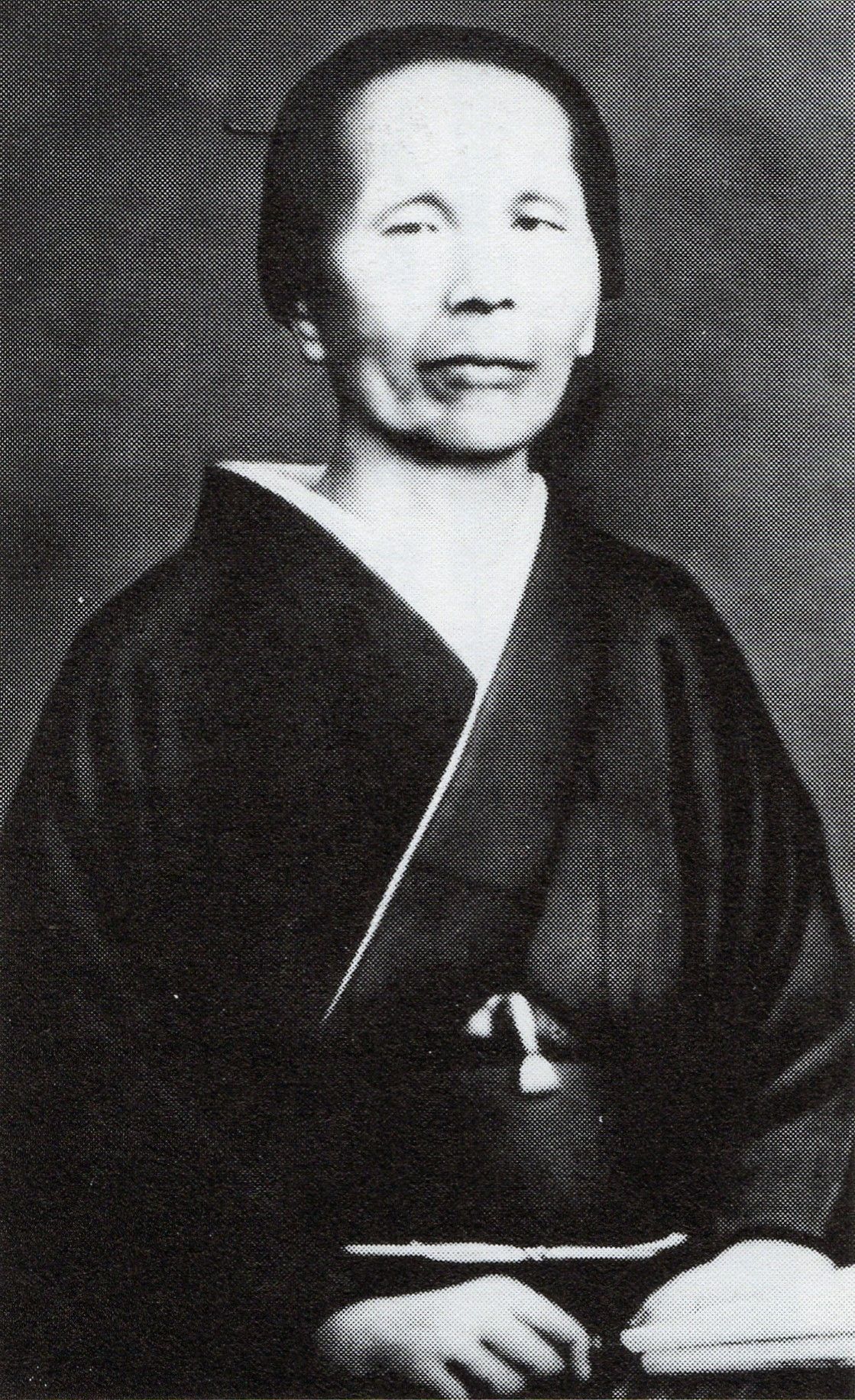

Matsuo Taseko came from a farming family in the Ina Valley of Shinano province, where she raised silkworms; she knew the Japanese classics well and wrote waka. She was one of only twenty-nine women to register as disciples of the Hirata school of Native Studies, whose share of women was much smaller than in the schools of Mabuchi and Norinaga.
After Commodore Perry’s ships forced Japan’s ports open, she travelled to Edo, and later spent six months in Kyoto in 1862 and 1863, meeting loyalist scholars and helping to deliver Atsutane’s Lectures on Ancient History to a court noble. Returning to Kyoto in 1868, she used her connections to help samurai prove themselves loyal subjects of the emperor, and joined the household of the Meiji leader Iwakura Tomomi.
Key ideas
- Poetry as political voice
- Her waka poems declare her devotion to the emperor and to the Restoration, honouring those who served the emperor even to death and calling on readers to stir up true Japanese hearts.
- Against foreign trade
- Some of her poems mourn the export of Japanese silk, preferring to give up easy profit than to sell to “barbarians”.
- A woman held back
- Her poems admire the men who gave themselves to the loyalist cause, and lament that she had the ardent heart of a man but the “useless body” of a woman, which kept her from serving as they did.
- Tradition
- Japanese
- Region
- Ina Valley, Shinano, and Kyoto, Japan
- Branches
- Political philosophy
- Period
- Edo
Influences
Where these links come from
- Matsuo Taseko drew on Hirata Atsutane. Source: Gideon Fujiwara and Peter Nosco, The Kokugaku (Native Japan Studies) School, Stanford Encyclopedia of Philosophy
Terms on this page
- waka
- Traditional Japanese verse of thirty-one syllables. The Kokugaku scholars studied the oldest waka, in the Man’yōshū, to recover Japan’s ancient language and spirit.
Sources
- Gideon Fujiwara and Peter Nosco, The Kokugaku (Native Japan Studies) School, Stanford Encyclopedia of Philosophy