Philosopher
Lu Xiangshan
1139–1193
Also known as Lu Jiuyuan
Southern Song Confucian, friend and critic of Zhu Xi, who held that principle is complete within the heart-mind, and with Wang Yangming gave his name to the 'learning of the heart-mind'.
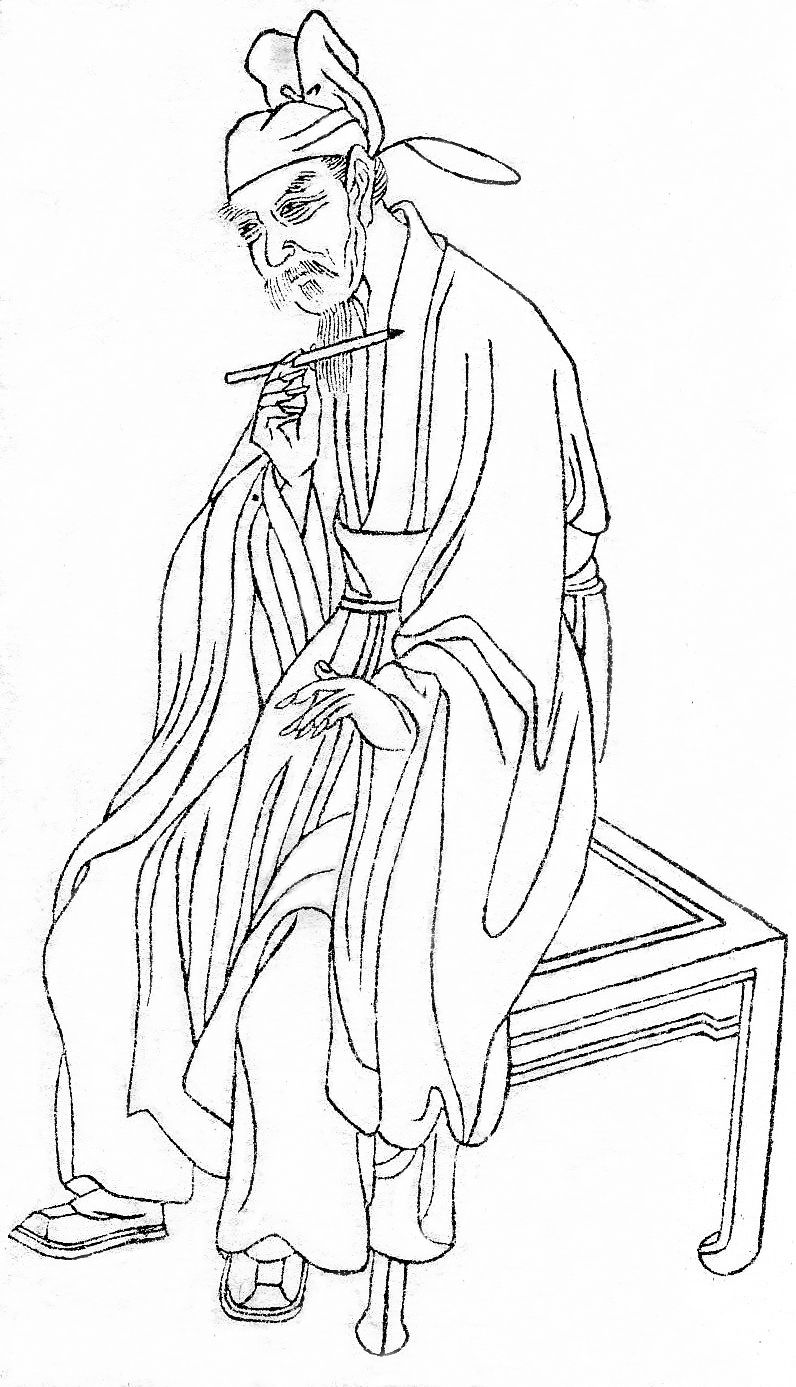

Lu Xiangshan was a friend of Zhu Xi and the author of the most influential critique of Zhu’s ‘learning of the Way’. Their disagreement turned on the role of the heart-mind in moral knowledge: where Zhu looked to the investigation of principle in things, Lu found principle complete within the person.
Centuries later Wang Yangming took his own enlightenment as confirming Lu’s view and developed it in far greater detail. Later historians grouped the two as the school of the ‘learning of the heart-mind’ (xinxue), set against the ‘learning of principle’ of Cheng Yi and Zhu Xi.
Key ideas
- Everything is complete in us
- Asked how one could ever investigate all the countless things under heaven, Lu answered that they are already complete within us; one need only grasp their principle.
- Heart-mind constitutes principle
- Lu treated the heart-mind as part of what principle (li) is, which put Confucian ethical norms within reach of ordinary people. Zhu Xi complained that this left no standard independent of subjective whim.
- Insight over book learning
- Since people are born with sound moral capacities, Lu held that we can rely on deeply felt moral insights from daily life, which are often better than fragmentary, abstract study of books.
- Tradition
- Chinese
- Region
- China
- Schools
- Confucianism
- Period
- Song–Ming
- Themes
- Knowledge and scepticism
Influences
Where these links come from
- Lu Xiangshan argued against Zhu Xi. Source: John H. Berthrong, Neo-Confucian Philosophy, Internet Encyclopedia of Philosophy
- Wang Yangming drew on Lu Xiangshan. Source: John H. Berthrong, Neo-Confucian Philosophy, Internet Encyclopedia of Philosophy
Terms on this page
- xinxue
- ‘Learning of the heart-mind’: the strand of Neo-Confucianism linked with Lu Xiangshan and Wang Yangming, which finds principle within the heart-mind, set against the ‘learning of principle’ of Cheng Yi and Zhu Xi.
Sources
- John H. Berthrong, Neo-Confucian Philosophy, Internet Encyclopedia of Philosophy
- Justin Tiwald, Song-Ming Confucianism, Stanford Encyclopedia of Philosophy