Philosopher
Li Tongxuan
635–730 CE
Reclusive lay commentator on the Avatamsaka Sutra whose teaching of the one true dharma-realm, read through the Book of Changes, shaped Chinul in Korea and later Chan masters.
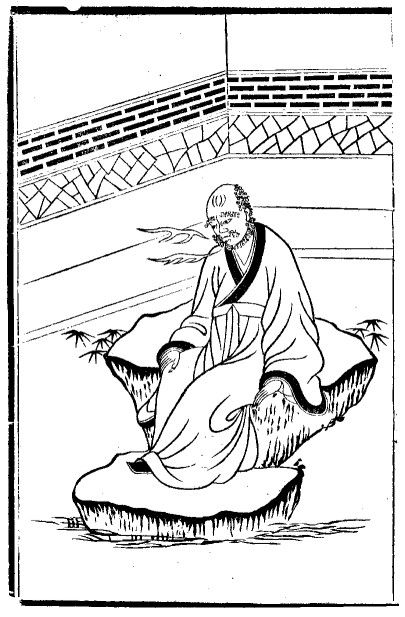

Li Tongxuan was a contemporary of Fazang who remained little known in his lifetime, and so is not counted among the Huayan patriarchs. He lived as a reclusive lay scholar, austerely, eating only seven rice cakes of dates and cypress a day; his knowledge of the Book of Changes may reflect descent from the Tang royal family.
He wrote a commentary on the Avatamsaka Sutra, a summary of it, and a summary of the sutra taken chapter by chapter. His influence came later, through the Korean monk Chinul, the Japanese monk Myōe and the Linji Chan masters Juefan Huihong and Dahui Zonggao.
Key ideas
- The one true dharma-realm
- Every place and every thing is already true as it stands. No real gap divides between sacred and secular, awakening and ignorance, the Buddha and ordinary beings.
- Sudden Buddhahood
- Because nothing separates beings from the Buddha, Li’s teaching supports a sudden rather than a gradual path: beings attain Buddhahood all at once.
- Reading Buddhism through the Yijing
- Li drew on yin-yang, the Five Phases and correlative reasoning, and often on the Book of Changes, to find meaning for liberation in small details of the sutra, such as directions, numbers and the names of bodhisattvas.
- Tradition
- Chinese
- Region
- China
Influences
Where these links come from
- Jinul drew on Li Tongxuan. Source: Bryan Van Norden and Nicholaos Jones, Huayan Buddhism, Stanford Encyclopedia of Philosophy
Key works
- New Treatise on the Avatamsaka Sutra (Xin huayan jing lun)
- Read free at Wikisource (in Classical Chinese)
Sources
- Bryan Van Norden and Nicholaos Jones, Huayan Buddhism, Stanford Encyclopedia of Philosophy