Philosopher
Jerry Fodor
1935–2017
American philosopher of mind who argued that thinking is computation over sentence-like mental representations, a "language of thought", and that parts of the mind are modular.
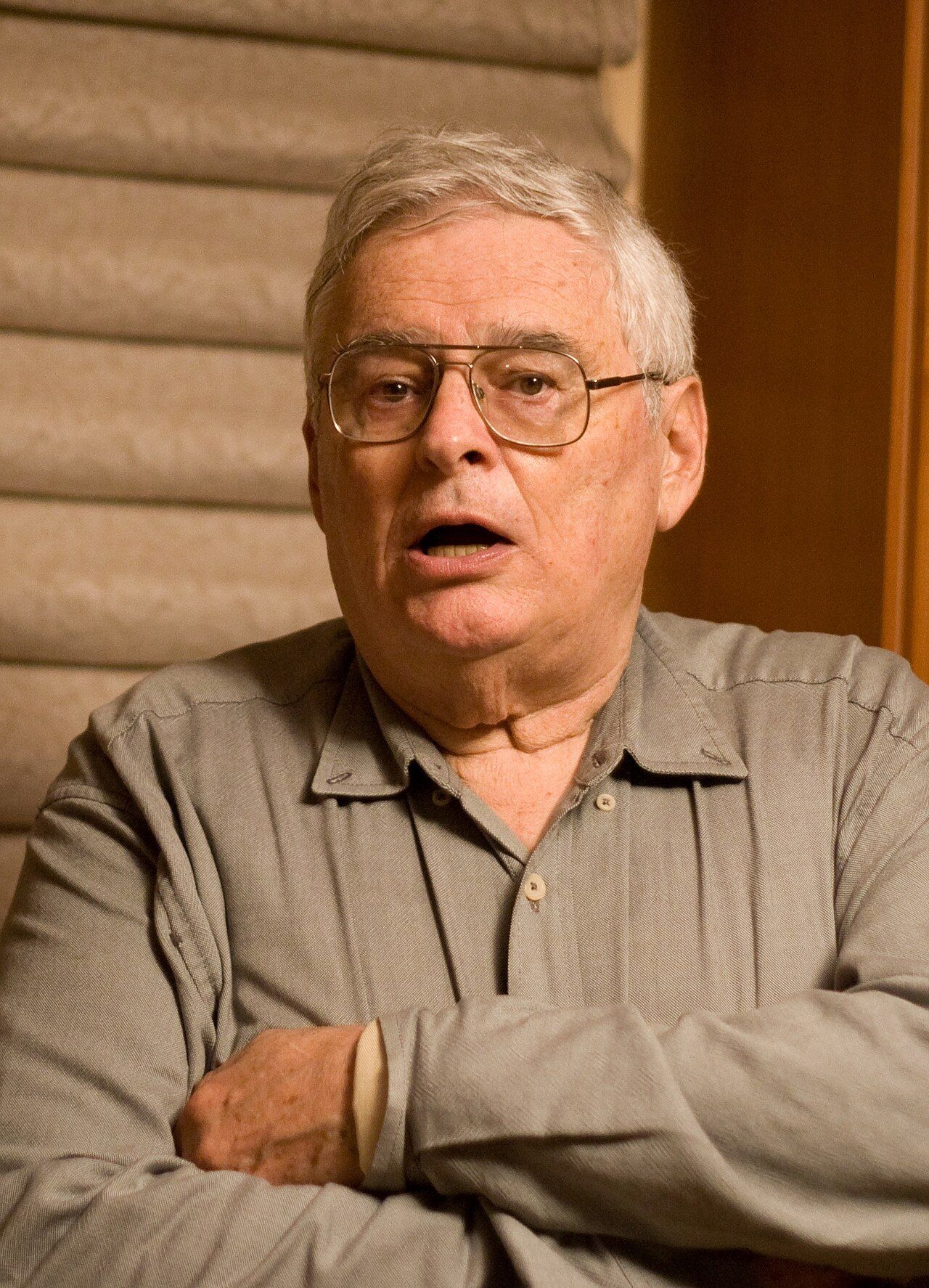

Jerry Fodor was born in New York City in 1935, studied at Columbia and took his doctorate at Princeton in 1960. He taught philosophy and psychology at MIT until 1986, then at the City University of New York, and from 1988 until his retirement in 2016 at Rutgers. He died in 2017.
In the 1960s, alongside Hilary Putnam and Noam Chomsky, he helped overturn the behaviourism then dominant in philosophy and psychology, an important step in the birth of cognitive science. He went on to defend a representational and computational theory of mind, a strong nativism about concepts, and the modularity of perception, and his work shaped not only philosophy of mind but also the cognitive sciences.
Key ideas
- The language of thought
- Thinking is a computational process over mental representations that are physically realised in the brain and built like sentences, with a syntax and a meaning composed from their parts.
- Intentional realism
- Folk psychology’s beliefs and desires are real states that represent the world and cause behaviour, and a scientific psychology should vindicate them rather than explain them away.
- The modularity of mind
- Perception and language are handled by specialised “modules” that work fast and are sealed off from the rest of what we believe, unlike the central systems that form beliefs and make decisions. Fodor resisted the claim that the whole mind is modular.
- Concepts are innate
- Since learning a concept seems to require already being able to represent its meaning, Fodor argued, against empiricists, that all lexical concepts are innate.
- Tradition
- Western
- Region
- United States
- Period
- Contemporary
Key works
- The Language of Thought, 1975
- The Modularity of Mind, 1983
Sources
- Bradley Rives, Jerry Fodor, Internet Encyclopedia of Philosophy