Philosopher
Ge Hong
283–343 CE
Also known as Ko Hung
Eclectic thinker of China's Period of Disunity who sought physical immortality through alchemy, and tried to reconcile Daoism with Confucianism, and Confucianism with Legalism.
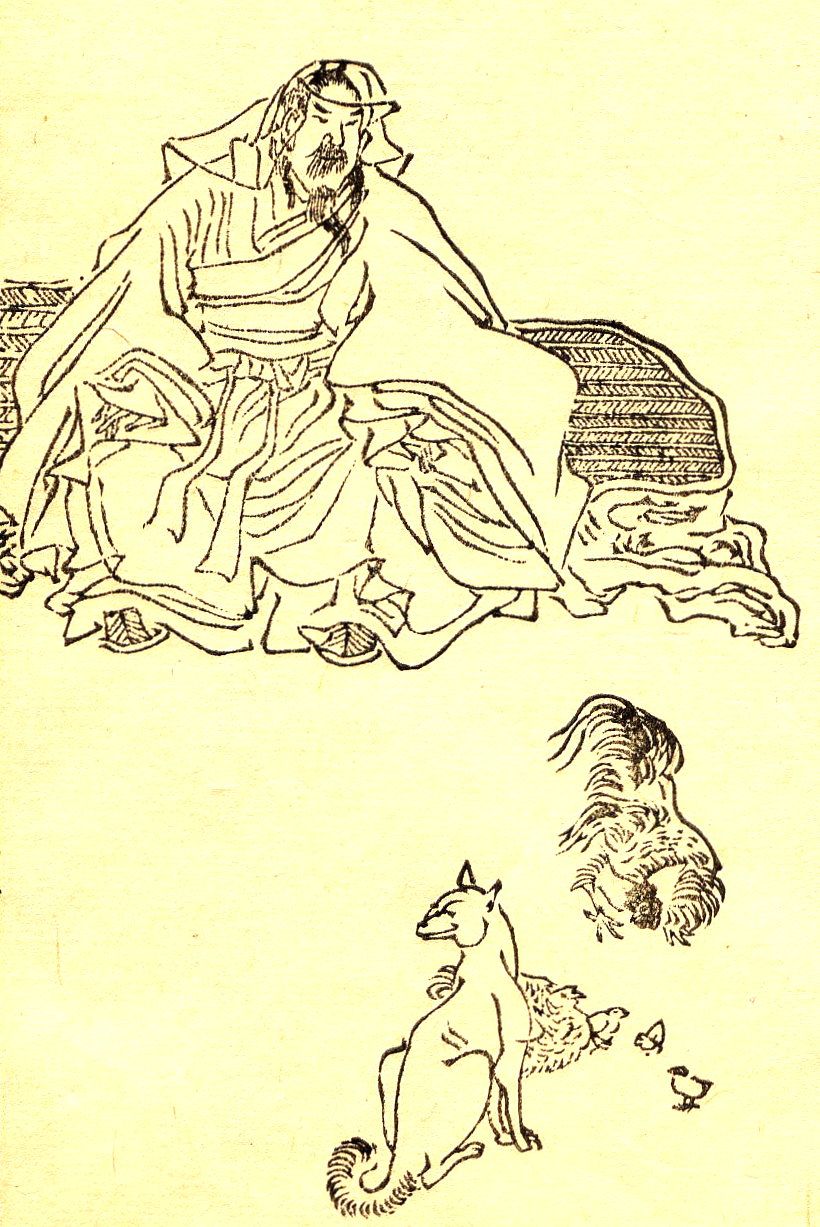

Ge Hong was born in 283 into a southern gentry family near present-day Nanjing, at a time when foreign regimes ruled northern China. After his father died the family fell into poverty and lost its library, and he educated himself by copying and reading books, from the Confucian classics to the philosophers. He studied the arts of immortality under the Confucian and Daoist adept Zheng Yin, led a militia against rebels at twenty, and spent long years in reclusion.
In that reclusion he wrote his two-part masterwork: the Daoist Inner Chapters, on the reality of immortality and how to reach it, and the Confucian Outer Chapters, on the ills of the world and their cure. He felt out of step with his age, a southerner when posts of substance went to northern émigrés, and too morally strict for the salons of “Pure Talk”. He died in 343 at Mount Luofu, still practising the arts of immortality.
Key ideas
- Immortality can be learned
- Anyone, through relentless effort and study, can attain physical immortality. Wealth and position get in the way, and prayers to the gods are useless, since they only record people’s misdeeds and merits.
- The mystery within
- Everything is pervaded by xuan, the mystery, which is the same as the Dao and the One and which creates and animates them. Immortality means keeping this oneness within oneself by preserving and refining one’s qi; attachment to outside things loses it.
- Virtue needs law
- A ruler should lead by moral example, as Confucians teach, but example alone cannot order people who forget righteousness in pursuit of profit. Clear laws and punishments are needed too, so Ge joined Confucian and Legalist ideas.
- Learn from every school
- Through diligent, broad study anything is possible, from ruling a state to attaining immortality. No one school’s teaching is enough, and every written work has something of worth.
Key works
- Inner Chapters of the Master Who Embraces Simplicity
- Read free at Wikisource (in Classical Chinese, inner and outer chapters together)
- Outer Chapters of the Master Who Embraces Simplicity
- Read free at Wikisource (in Classical Chinese, inner and outer chapters together)
Terms on this page
- xuan
- Dark, hidden or profound (玄); the word names a black tinged with dark red. The Laozi uses it of the Dao, too deep to describe, and the Neo-Daoist movement took its name, Xuanxue, from it.
- qi
- Vital force or material force (氣), the stuff of which all things are made. Neo-Confucians paired it with principle (li), and explained the differences between people by the qi each is endowed with.
Sources
- Keith Knapp, Ge Hong, Internet Encyclopedia of Philosophy