Philosopher
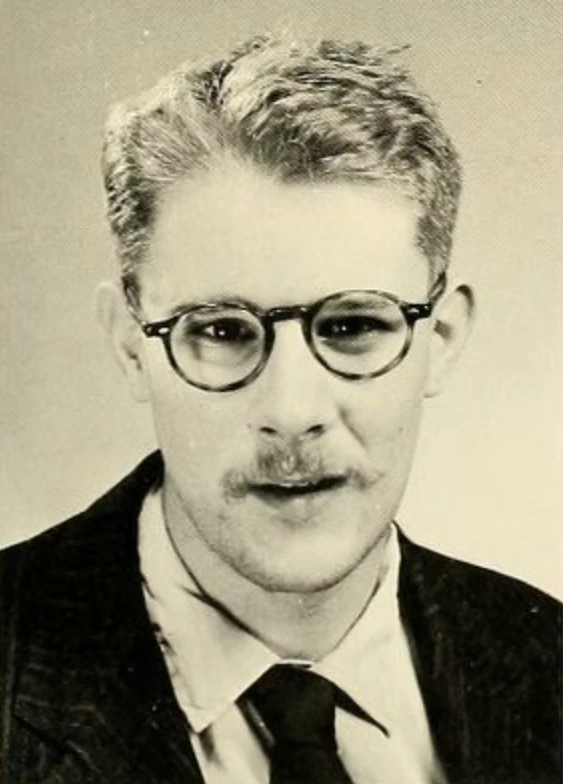
David Lewis
1941–2001
American philosopher, one of the most important of the 20th century, known for his modal realism, his Humean metaphysics and his analysis of convention.
_(cropped).webp)
David Lewis was born in 1941 in Oberlin, Ohio, to two academics. A year in Oxford as an undergraduate, where he heard J. L. Austin’s last lectures and was tutored by Iris Murdoch, turned him to philosophy. His Harvard dissertation under W. V. O. Quine became his first book, Convention (1969). After four years at UCLA he moved to Princeton in 1970 and stayed there for the rest of his life; he also visited Australia almost every year from 1979.
Lewis wrote on almost every area of philosophy: language, mathematics, science, decision theory, epistemology, ethics and aesthetics. In most of them he set out a large-scale theory and worked through its details with unusual clarity, so that his papers remained a rich source even for those who rejected his conclusions. His two most influential contributions are his materialist philosophy of mind and his metaphysics, above all the modal realism of On the Plurality of Worlds (1986).
Key ideas
- Modal realism
- The best theory of possibility posits a plurality of concrete possible worlds, as real as ours. Something is possible if it is true at one of them, and things have their possibilities through counterparts in other worlds.
- Humean supervenience
- There is nothing to reality but the arrangement of local natural properties across space and time. Laws, chances, causation and dispositions can all be explained in terms of that “Humean mosaic”.
- Convention without agreement
- A convention is a settled solution to a coordination problem: everyone conforms because everyone else does, and would prefer to keep it rather than see one person deviate, even though no one ever agreed to it. Language rests on conventions of this kind.
- An identity theory of mind
- Lewis reconciled the identity theory with functionalism: mental states are defined by their causal roles, and in us those roles are filled by physical states of the brain.
- Tradition
- Western
- Region
- United States
- Period
- Contemporary
- Themes
- What is ultimately real
Influences
Influenced by
David Lewis1941–2001
Influenced by
David Lewis1941–2001
Where these links come from
- David Lewis drew on David Hume. Source: Brian Weatherson, David Lewis, Stanford Encyclopedia of Philosophy
- David Lewis drew on Rudolf Carnap. Source: Hannes Leitgeb and André Carus, Rudolf Carnap, Stanford Encyclopedia of Philosophy
- David Lewis studied with W. V. O. Quine. Source: Brian Weatherson, David Lewis, Stanford Encyclopedia of Philosophy
- David Lewis studied with Iris Murdoch. Source: Brian Weatherson, David Lewis, Stanford Encyclopedia of Philosophy
Key works
- Convention, 1969
- Counterfactuals, 1973
- On the Plurality of Worlds, 1986
- Parts of Classes, 1991
Sources
- Brian Weatherson, David Lewis, Stanford Encyclopedia of Philosophy
- Hannes Leitgeb and André Carus, Rudolf Carnap, Stanford Encyclopedia of Philosophy